Cloud & DevOpsNote
Atlassian set an end date for Jira Data Center: self-hosting runs out, cloud is next
Atlassian's self-managed milestones from Server's end to Data Center's, and which cloud work-management tools can keep an Indian team's data in India, September 2026.

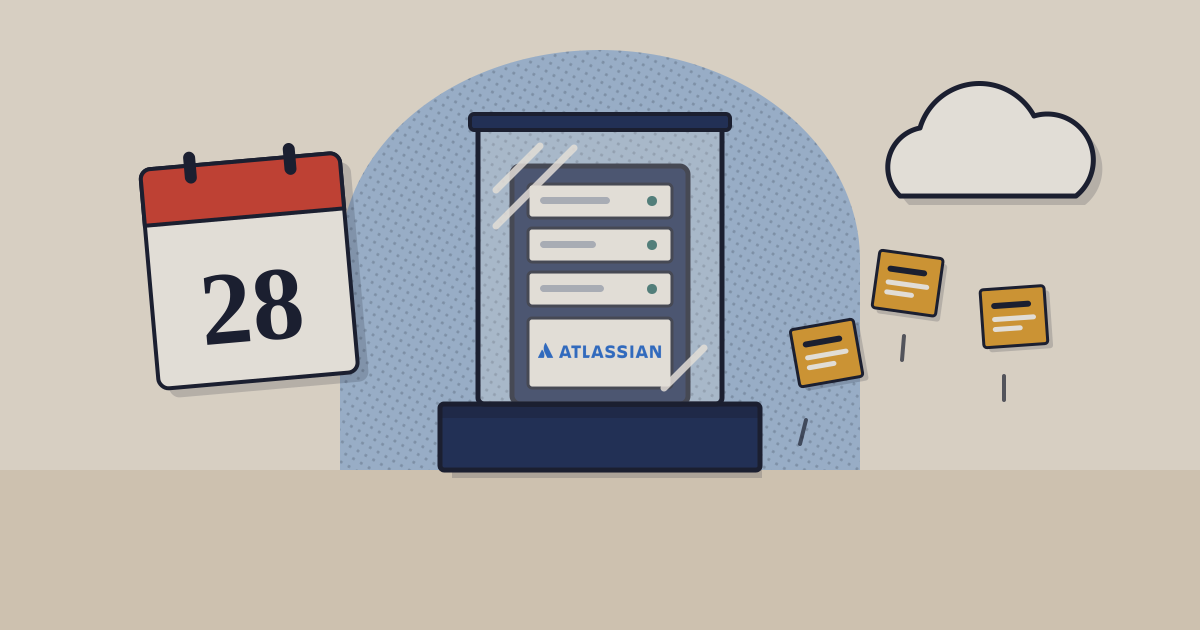
For the largest self-hosted project tool in Indian IT, the vendor has already answered the cloud question. Atlassian stopped selling Data Center, the self-managed edition of Jira and Confluence, to new customers on 30 March 2026. Existing customers can add users and apps until 30 March 2028, and on 28 March 2029 every Data Center subscription expires and the products turn read-only.1 Jira, Jira Service Management, Confluence and Crowd are in scope; Bitbucket and Bamboo are not.
The 2023 version of this piece listed the usual benefits of cloud project management: access from anywhere, real-time collaboration, no servers to patch. All true, and none of it a decision. The decision an Indian team faces in September 2026 is narrower: when to move off self-managed Jira, and where the data lands once it does.
01Nine years from the first notice to read-only
Data Center was the refuge for teams that would not move when Server ended. Atlassian announced the end of Server on 16 October 2020, stopped selling new Server licences on 2 February 2021 and ended support on 15 February 2024.2 Server prices for renewals and upgrades rose the day new sales stopped, and unpatched Server instances have been on their own since support ended. The Data Center notice repeats the pattern on a longer clock, as the timeline shows, and it covers the Marketplace apps built for those products too: they expire with the subscription.1
Atlassian's self-managed road closes over nine years: Server ended in 2024, Data Center turns read-only in 2029
Atlassian self-managed licensing milestones for Jira and Confluence, 2020 to 2029
Table view
| Date | Event | Detail |
|---|---|---|
| 16 Oct 2020 | End of Server announced | |
| 2 Feb 2021 | New Server licences no longer sold | Server prices for renewals and upgrades rise the same day |
| 15 Feb 2024 | Server support ends | Unpatched Server instances are on their own |
| 30 Mar 2026 | Data Center closed to new customers | |
| 30 Mar 2028 | Last day to add Data Center users and apps | |
| 28 Mar 2029 | Data Center and its apps expire; read-only | Jira and Confluence go read-only |
Source: Atlassian, Journey to Cloud announcement and Data Center end-of-life page · as of 30 September 2026
02Where the data sits once it moves
Cloud project management is not one hosting answer. Atlassian lists twelve data residency locations, India among them, for Jira, Jira Service Management, Jira Product Discovery, Loom and Confluence on its Standard, Premium and Enterprise plans. It also says, in as many words, that India is not the default location, even for an organisation based in India: an administrator has to pin it.3 Asana lists data centres in Europe, Australia, Japan and the United States, and none in India.4 monday.com states no India residency; its tenants sit in AWS regions in the US and Europe.5 Zoho, built in Chennai, keeps data in the data centre chosen at sign-up and runs one in India.6
03Buying it in India
Jira Cloud is free to ten users, then roughly US$7 to 8 a user a month on Standard and US$13 to 15 on Premium, billed in US dollars, with 18% GST on the invoice when bought through an Indian reseller.7 The Digital Personal Data Protection Act, 2023 does not require personal data to stay in India; it lets the government restrict transfers to countries it notifies. The DPDP Rules were notified on 13 November 2025 and the security-safeguard and breach duties apply from 13 May 2027, so the hosting region and sub-processor list belong in the purchase file now.8 CERT-In’s Directions of 28 April 2022 already require incidents reported within six hours and ICT logs kept for 180 days within Indian jurisdiction; check how long your plan keeps the audit log, and export it if the answer is shorter.9 TechBag resells Atlassian and monday.com; the Jira page carries the Cloud-versus-Data-Center comparison in full.
Sources
- Atlassian, Data Center end of life: milestones, scope and exclusions — undated page
- Atlassian, Journey to Cloud: end of Server sales and support — 16 October 2020
- Atlassian Support, Understand data residency (12 locations; India not the default) — undated page
- Asana, Privacy commitment (data centres in Europe, Australia, Japan and the US) — undated page
- TechBag, monday work management intel page (USD billing, 18% GST, no India residency, AWS US/EU) — as at 30 September 2026
- TechBag, Zoho vendor hub (data kept in the data centre chosen at sign-up; one in India) — as at 30 September 2026
- TechBag, Atlassian Jira intel page (Free to 10 users; Standard and Premium bands; USD billing; GST) — as at 30 September 2026
- MeitY, Digital Personal Data Protection Act, 2023 and DPDP Rules, 2025 — 13 November 2025
- CERT-In, Directions under section 70B(6) of the IT Act (six-hour reporting; 180-day logs) — 28 April 2022
Related on TechBag: the developer tools guide places Jira beside source control and CI; the monday work management page covers the residency trade-off for business teams.
Disclosure. TechBag is a software reseller: it earns a margin when a reader buys through it, including from vendors named here. The analysis is TechBag’s own; no vendor paid for or saw this piece before publication. Facts are labelled reported, TechBag count or our view.
Keep reading