Business email compromise cost US$2.77bn in a year; 5 of 14 filters print a price
FBI IC3 loss figures for 2024, TechBag’s count of 14 email filters on BEC detection, published price and Indian data centre, and the CERT-In and DPDP duties, as of September 2026.

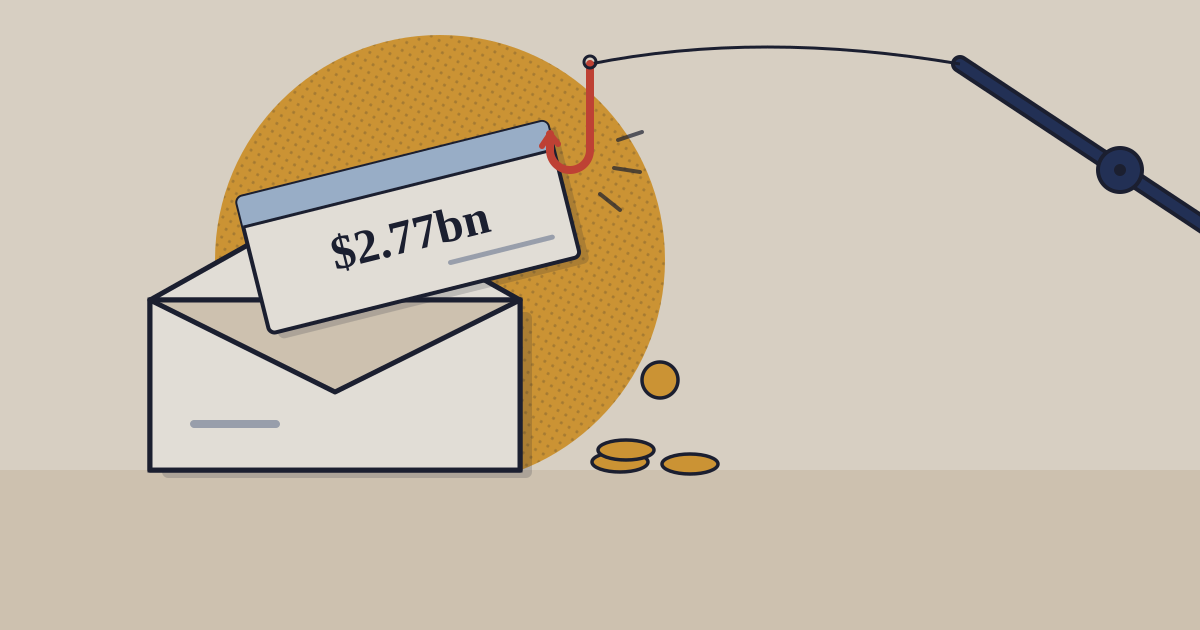
Business email compromise cost the victims who reported it to the FBI US$2.77 billion in 2024, from 21,442 complaints, which is about US$1,29,000 a complaint. Phishing and spoofing drew nine times as many complaints, 193,407, and US$70 million in losses, about US$362 each.1 That one contrast answers the question this piece asked in 2021. You do not buy email security to stop spam; your mail platform already does that. You buy it to stop the one message with no link, no attachment and no malware that asks accounts payable to change a supplier’s bank details. And of the 14 email filters in TechBag’s guide, only five print a price for doing so.
01What the 14 filters actually tell you, counted
TechBag’s email and collaboration security guide holds 22 products by SKU, of which 14 are filters and the rest are awareness, DMARC and collaboration add-ons.2 We counted four things across the 14 filters. Twelve document behavioural detection of business email compromise, the payload-free message; the other two, N-able Mail Assure and Kaspersky, document anti-phishing and malware filtering and nothing deeper. Ten carry any price at all, and five of those are published lists: Proofpoint Essentials, at US$2.75 to US$5.33 a user a month on its October 2021 US list, Barracuda, Trend Micro, Forcepoint and a Bitdefender small-bundle listing. The other five are reported ranges, and four are quote-only. Two document an Indian data centre for mail content: Proofpoint, with an India data centre since 2025, and Sophos, in the Sophos Central Mumbai region.2
Twelve of 14 filters detect a payload-free message; five print a price and two document an Indian data centre
Count of the 14 email filters in TechBag's email security guide meeting each test, vendor documentation, September 2026
Source: TechBag email & collaboration security guide, 22 products by SKU, 14 of them filters; TechBag count · as of 30 September 2026 · A reported range is a figure seen in a tender or reseller listing, not on the vendor's own price page
02The two cheap things to do before buying anything
The 2021 version of this piece advised strong passwords and avoiding public Wi-Fi. The 2026 version has two instructions, both free. First, publish SPF, DKIM and DMARC for every domain you send from. Since 1 February 2024 Google has required senders of 5,000 or more messages a day to Gmail to have all three, to keep the spam rate in Postmaster Tools under 0.30%, and to support one-click unsubscribe, and a DMARC policy at p=reject is what stops your own domain being used against your suppliers.3 Second, switch on what you own: the Defender or Gmail controls above are frequently licensed and never configured. Only then price a third filter, and price the tier that carries the behavioural layer, because in most of the guide’s records that is the top tier, not the entry one.2
03If you are buying this in India
Proofpoint’s published US$2.75 to US$5.33 a user a month is ₹234 to ₹453 at ₹85 to the dollar, plus 18% GST; every filter without a published list is a quote, which TechBag takes in INR with GST shown separately.2 A compromised mailbox is a reportable event twice over. CERT-In’s Directions of 28 April 2022 list unauthorised access and identity theft and spoofing among the incidents to be reported within six hours, and require ICT logs to be kept for 180 days within India, which is why the question of where the mail filter stores its logs matters as much as where it scans the message.5 Under the DPDP Rules, notified on 13 November 2025, the duty to notify the Data Protection Board and every affected person of a personal-data breach takes effect on 13 May 2027, and a mailbox full of customer correspondence is personal data.6 For the 12 filters with no documented Indian data centre, ask in writing where the message body is scanned and stored, before the trial.
Sources
- FBI Internet Crime Complaint Center, 2024 Internet Crime Report (crime types by complaints and by loss) — released April 2025
- TechBag, Email & Collaboration Security: how to choose (22 products by SKU) — vendor documentation verified 22 August 2026
- Google Workspace Admin Help, Email sender guidelines — requirements from 1 February 2024
- Microsoft, 2026 Microsoft 365 packaging and pricing updates — 16 February 2026
- CERT-In, Directions under section 70B(6) of the IT Act — 28 April 2022
- Legismith Partners, DPDP Rules 2025 commencement timeline — notified 13 November 2025
Disclosure. TechBag is a software reseller: it earns a margin when a reader buys through it, including from vendors named here. The analysis is TechBag’s own; no vendor paid for or saw this piece before publication. Facts are labelled reported, TechBag count or our view.
Keep reading