SecurityThreats & vulnerabilitiesAnalysis
40 hacks at 37 Korean financial firms in five weeks; regulator to inspect 580
What South Korea’s Financial Services Commission reported for 30 September to 3 November: 473,000 records, about ₩1 billion stolen, and the inspection of about 580 firms.

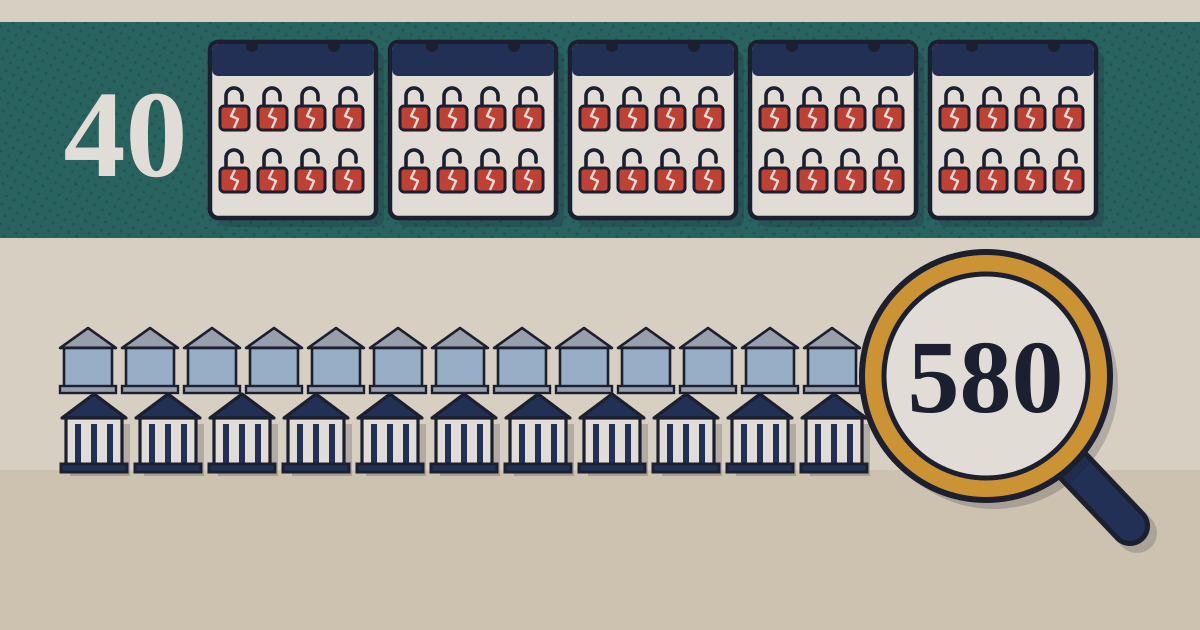
Thirty-seven financial companies in South Korea, from four banks to three crypto firms, reported 40 hacking incidents in the five weeks from 30 September to 3 November, the Financial Services Commission (FSC) said on 5 November.1 Two days later Mirae Asset Securities, which the Korea Herald calls the country’s leading brokerage, reported a further breach.6 The question for a financial firm anywhere is practical: which systems did the intruders come through, what did they actually take, and what is the regulator now demanding?
01Sixteen firms on 14 October, 37 by 3 November
On 14 October the FSC counted 16 companies and about 100,000 pieces of customer data.2 By the cut-off for its 5 November meeting the count stood at 37 companies and 40 incidents.1 The Korean release says who the later reports came from: since the sector-wide checklist finished on 14 October, breaches have mainly been reported by small and mid-sized securities firms and insurers, electronic-finance companies, peer-to-peer lenders and crypto exchanges.3
The count went from 16 firms to 37 in 20 days, and a new breach came after the cut-off
Regulator counts and company disclosures in South Korea's financial sector, 30 September to 7 November 2026
Show tableHide table
| Date | Event | Detail |
|---|---|---|
| 30 Sept 2026 | The FSC's count begins | The date from which the FSC counts breaches as confirmed |
| 6 Oct 2026 | Consumer alert, Level I | Caution on phishing; a one-month special response period starts |
| 14 Oct 2026 | 16 firms, about 100,000 records | Customer data; 555 firms finish a 12-point checklist |
| 17 Oct 2026 | Daishin detects access | A server linked to remote account opening; 38,490 customers' data confirmed on 28 October |
| 28 Oct 2026 | Brokers, a fund firm, an exchange | Daishin Securities, Mirae Asset Global Investments and Bithumb disclose breaches |
| 3 Nov 2026 | 37 firms, 40 hacks, 473,000 records | The cut-off of the FSC's count |
| 5 Nov 2026 | Plan to inspect about 580 firms | On 6 November the special response period is extended to the end of December |
| 7 Nov 2026 | Mirae Asset Securities: about 39,000 | Access on 4 and 5 November, after the FSC's cut-off |
Source: FSC releases of 6 and 14 October and 5 and 6 November 2026; company statements as reported by HuffPost Korea and The Korea Herald · as of 9 November 2026
The count is already behind events. Mirae Asset Securities says outsiders got in on 4 and 5 November, after the FSC’s cut-off.6 On 6 November the FSC extended its special response period, due to end on 5 November, to the end of December, saying more leaks were still being confirmed.4
02Every part of finance reported one; electronic-finance firms the most
The FSC’s list runs across nine sectors. Electronic-finance companies are the largest group at ten; banks number four.1 A hint of this came on 14 October. All 555 firms had filled in a 12-point self-assessment; 425 rated themselves “appropriate” and 130 reported something to fix, mostly security patches or control systems. Those gaps appeared more in electronic finance and peer-to-peer lending, which the FSC said “tend to have relatively lower cybersecurity capacity”.2 The FSC has not said how many of the 425 that rated themselves appropriate were later breached.
Electronic-finance firms were the largest group; non-traditional finance made up 17 of the 37
Financial companies reporting hacking incidents, by sector, 30 September to 3 November 2026
Source: FSC release, 5 November 2026 · as of 3 November 2026 · 17 of 37 is our sum of the three highlighted sectors
The FSC names no firm. Companies have named themselves: Daishin Securities, Mirae Asset Global Investments and the crypto exchange Bithumb in late October,7 and Mirae Asset Securities, days after sister companies including Mirae Asset Life reported leaks of their own.6
03What was taken, and a sentence that reads differently in Korean
The English release says the records were “mostly pertaining to the information about employees, and the names, resident registration numbers, and account numbers of customers”.1 Read quickly, that sounds like mostly employees. The Korean original lists the two together: mainly employee information or customers’ names, resident registration numbers and account numbers, collected in the course of business.3 The FSC publishes no split between staff and customers. What it does say is that account passwords and other information that could enable fraudulent payments have not been confirmed as leaked.3
The FSC counts about 473,000 records taken and about ₩1 billion stolen, with no customer funds lost yet
Personal records and funds reported lost to 3 November 2026; customer losses from phishing reported as of 6 November
473,000
records of personal information, to 3 November
₩1bn
stolen, mainly from accounts pooling customer money
0
customer account passwords confirmed leaked, as of 5 November
0
customer funds lost to phishing on leaked data, to 6 November
Source: FSC releases of 5 and 6 November 2026 (English and Korean) · as of 6 November 2026
The money is about ₩1 billion, or about US$745,000 by Yonhap’s conversion.6 Small crypto, electronic-finance and peer-to-peer firms reported it. The English says it came “mostly from their management accounts”;1 the Korean is more specific: crypto hot wallets, spendable points and peer-to-peer deposits, in accounts where the company holds customer money together.3 The FSC says individual users have not yet lost funds, and that as of 6 November no customer money had been reported lost to voice phishing or smishing tied to these leaks. Its consumer alert, first issued on 6 October, stays at Level I, Caution.345
04Where the FSC says they got in, and what it now requires
Only the Korean release says it plainly. The inspection covers authentication and access-control systems, sales and management APIs, and development, test and temporary-operation systems, which the FSC calls “the systems where recent breaches have mainly occurred”, along with peripheral systems it thinks have been neglected (our translation).3 The English version lists the systems without that phrase.1 The firms’ own accounts fit: Daishin, a server linked to remote account opening; Mirae Asset Global Investments, a work web system; Bithumb, an internal mobile groupware app;7 Mirae Asset Securities, a mobile-web phone-authentication login and an internal system.6
The plan starts with every external entry point at about 580 firms and ends in a new law
Measures announced at the 5 November 2026 meeting, with the FSC's stated dates
Step 1 of 6
1. Inspect every external entry point
About 580 firms. Registered systems by 30 November; systems missing from the asset register, and CEO and CISO controls, by 31 December. Firms check themselves first and must write down why they passed; the FSS and the Financial Security Institute go on site if the check looks thin.
Source: FSC release of 5 November 2026 (English and Korean) · as of 9 November 2026 · Plans and proposals; the rule changes and bills are not yet adopted
The sixth step runs the other way from what a reader might expect. Korean financial firms have had to keep internal networks apart from external ones; the FSC now wants that rule gone, so firms can use AI on defence, with zero trust and other substitutes in its place.13 Its summary line is that AI attacks are to be defended with AI.3
A financial company that cannot protect its customers’ information and assets has already lost its reason to exist.3
05India's NBFC wave: the same side doors, a different kind of loss
India’s lenders have been under attack in the same weeks, and the entry point looks familiar. CERT-In’s advisory of 4 November describes “Internet-exposed non-production environments (UAT/staging/testing) used as entry points, followed by movement to production environments using shared credentials, tokens or network paths”.9 The FSC names development and test systems too.3 Neither regulator links the two waves. What differs is what went missing, and who has counted it.
Korea's regulator has published a count; India's figures come from unnamed sources and a police complaint
What each country's regulator and reports state, South Korea to 7 November and India to 4 November 2026
India: not published by a regulator
- No count of incidents or firms in CERT-In’s advisories or any RBI notice we found
- No official loss figure; about ₹300 crore in two months is The Economic Times’ unnamed sources
- No victim named by CERT-In; one Mumbai case of about US$2 million comes from a police complaint Reuters read
- No sector-wide inspection list with dates that we found; Reuters reports the RBI asking banks to probe their API links
South Korea: published by the FSC
- 40 incidents at 37 firms, by sector, 30 September to 3 November
- About 473,000 records and about ₩1 billion in stolen funds
- The system types where breaches mainly occurred: sign-in, APIs, development and test
- About 580 firms to inspect, with deadlines of 30 November and 31 December
Source: FSC releases; CERT-In CIAD-2026-0058; The Economic Times; Reuters via The420.in · as of 9 November 2026 · We found no Indian regulator's count; neither regulator connects the two waves
Korea’s wave, so far, is mainly about records. India’s, as reported, is about money moved through payment and disbursement APIs: The Economic Times put losses at small NBFCs at about ₹300 crore, citing unnamed sources,10 and a police complaint read by Reuters puts one case, two Mumbai lenders and more than 700 transfers, at about US$2 million.11 That single reported case is more than Korea’s reported total of about US$745,000.6 We covered the Indian figures and who stands behind them in our 1 November note.
Sources
- Financial Services Commission, FSC Holds Meeting on Strengthening Cyber Defense Framework amid Growing AI Hacking Threats (English release) — 5 November 2026
- Financial Services Commission, Authorities Hold Meeting on Cybersecurity Management in Financial Sector to Bolster Anti-Hacking Measures — 14 October 2026
- Financial Services Commission, Korean release on the sector-wide meeting on security in the AI era (incident figures, systems inspected, deadlines, enforcement) — 5 November 2026
- Financial Services Commission, Korean release on preventing voice phishing after data leaks (special response period extended to end-December) — 6 November 2026
- Financial Services Commission, FSC-FSS Issue Consumer Alert over Potential Phishing Scams Following Data Breaches in Financial Sector — 6 October 2026
- The Korea Herald (Yonhap), Personal info of some 39,000 leaked from Mirae Asset Securities — 7 November 2026
- HuffPost Korea, report on the Daishin Securities, Mirae Asset Global Investments and Bithumb breaches (company statements) — 28 October 2026
- MTN, report on the Financial Security Institute's warning before the breaches (material released by a National Assembly member) — 11 October 2026
- CERT-In, CIAD-2026-0058: advisory on AI-driven attacks on BFSI entities — 4 November 2026
- The Economic Times, AI-powered cyberattacks siphon ₹300 crore from small NBFCs in two months — 29 October 2026
- Reuters, via The420.in: RBI seeks proof of cybersecurity compliance from banks after recent hacks — 30 October 2026
- CERT-In, Directions under section 70B(6) of the IT Act (six-hour reporting; Annexure I item iii) — 28 April 2022
Disclosure. TechBag is a software reseller: it earns a margin when a reader buys through it, including from vendors named here. The analysis is TechBag’s own; no vendor paid for or saw this piece before publication. Facts are labelled reported, TechBag count or our view.
Keep reading