The CrowdStrike outage deleted no data. 10 of 12 DR tools script the way back
What the 19 July 2024 outage demanded of recovery, and what TechBag’s count of 12 disaster-recovery products documents on runbooks, testing and India, as of September 2026.

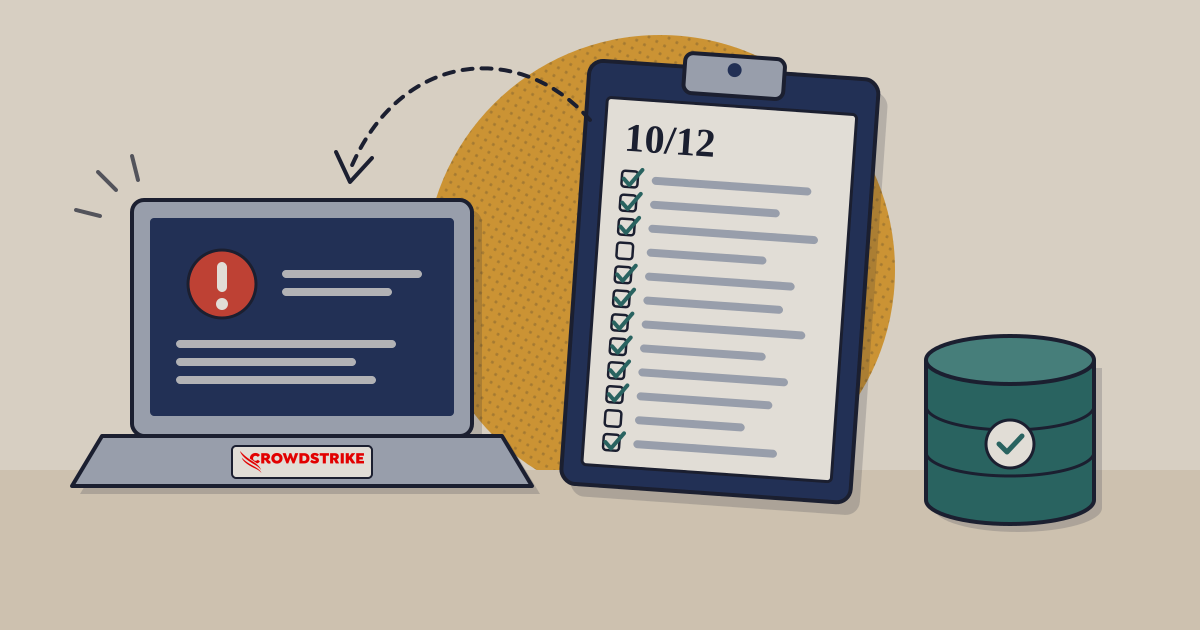
The CrowdStrike outage of 19 July 2024 destroyed no data. It stopped Windows machines from booting, and the fix for each one was to start it in Safe Mode and delete a single file, C-00000291*.sys.1 Our 2024 post answered that day with a pitch for backup software. The honest answer has two halves: for laptops and desktops, no backup product would have helped; for servers, the difference between a bad morning and a lost day was a rehearsed, ordered recovery.
01Laptops: the recovery key, not the backup
Restoring a laptop image would have worked, but it is the slow way to delete one file. What actually stopped people was disk encryption: Microsoft’s support note warned that a machine booted into recovery may ask for its BitLocker recovery key.2 Where those keys were stored on a directory server or a management console that had itself crashed, recovery waited for the server first. The protection for this half is cheap and unglamorous: escrow every recovery key in a system that does not run the same security agent, and test that a help-desk engineer can reach it with the main estate down.
02Servers: what the disaster-recovery products document
The faulty file reached sensors between 04:09 and 05:27 UTC, 09:39 to 10:57 in India.3 For a virtual server, that gives a clean target: a restore point or replica from before 09:39 IST, brought up in the right order, with the agent’s bad file removed before the network is restored. That is what disaster-recovery orchestration sells, so we counted what the twelve DR products in TechBag’s guide actually document.4
All 12 DR products document test failover; only 2 publish a price and only 1 provides an India failover target
Number of the 12 disaster-recovery products in TechBag's guide documenting each capability, guide as of 30 September 2026
Source: TechBag Disaster Recovery guide, vendor documentation verified 22 August 2026; TechBag count · as of 30 September 2026
Two cautions. Continuous replication is not protection against a bad update: a replica a few seconds behind production received the same file at the same moment, so you need the journal or snapshot from before, not the latest copy. And the runbook only helps if it was run in a test this year. Ten products can script the way back; whether yours will work is a fact about your last drill, not the brochure.
Buying it in India. Commvault lists its Cloud Backup & Recovery SaaS at US$58.50 to US$90 per TB a month, with an Indian SaaS region; Druva prices on quote per deduplicated TB and runs from AWS Mumbai.5 Both invoice in rupees through a reseller with 18% GST; TechBag quotes both, so weigh this note with that in mind. The rules that apply are dated: CERT-In’s Directions of 28 April 2022 set a six-hour reporting window for reportable incidents;6 the RBI told its regulated entities on 19 July 2024 to stay alert to operational resilience after counting 10 banks and NBFCs with minor disruption;7 SEBI’s CSCRF has bound regulated entities since 31 August 2025;8 and the DPDP Rules, notified 13 November 2025, bring the security-safeguard duties into force on 13 May 2027.9 For what happened on the day, see our account of the outage.
Sources
- CERT-In, CIAD-2024-0035: Outage of Microsoft Windows due to CrowdStrike agent Falcon Sensor update (workaround: Safe Mode, delete C-00000291*.sys) — 19 July 2024
- Microsoft Support, KB5042421: CrowdStrike issue impacting Windows endpoints (BitLocker recovery key) — undated page
- CrowdStrike, Technical Details: Falcon Content Update for Windows Hosts (04:09 to 05:27 UTC) — 20 July 2024
- TechBag, Disaster Recovery guide: 12 product records with RPO, runbooks, failback, testing, India target and price — verified 22 August 2026
- TechBag, Backup & Recovery guide: Commvault Cloud Backup & Recovery (US$58.50 to 90 per TB a month, India SaaS region) and Druva Hybrid Workloads (quote, AWS Mumbai) — verified 22 August 2026
- CERT-In, Directions under section 70B(6) of the IT Act (six-hour reporting) — 28 April 2022
- Reserve Bank of India, press release 2024-2025/739 on the impact of the outage on regulated entities — 19 July 2024
- SEBI, Cybersecurity and Cyber Resilience Framework (CSCRF) for SEBI Regulated Entities — 20 August 2024; in force 31 August 2025
- Legismith Partners, DPDP Rules 2025 commencement timeline — Rules notified 13 November 2025
Disclosure. TechBag is a software reseller: it earns a margin when a reader buys through it, including from vendors named here. The analysis is TechBag’s own; no vendor paid for or saw this piece before publication. Facts are labelled reported, TechBag count or our view.
Keep reading