Security operationsAnalysis
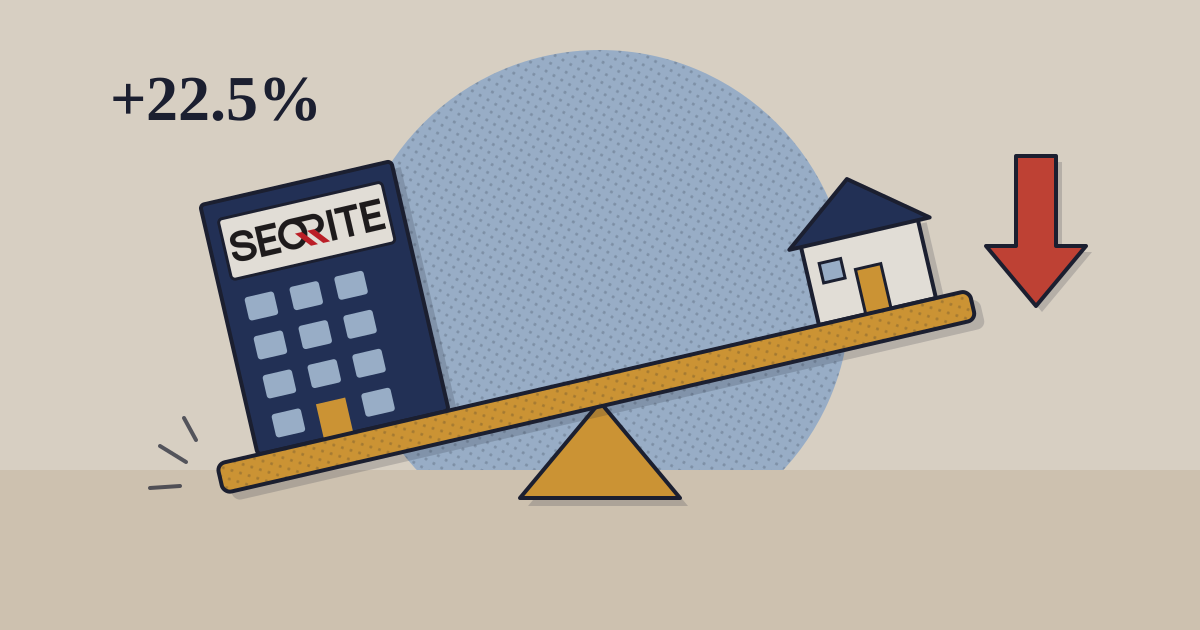
Seqrite is now over half of Quick Heal: enterprise up 22.5%, consumer down 24.7%
Quick Heal's FY26 segment revenue, the ten Seqrite products and what TechBag's guide rows document for each, and what an Indian buyer should ask, as of September 2026.

Our June 2024 post introduced Seqrite as a suite of six products and stopped there. The question an Indian IT head actually has is harder: is the enterprise arm of a consumer antivirus company a vendor to standardise on for five years, across endpoint, mobile, data and access? Two things have changed since 2024 that bear on the answer. Quick Heal’s own revenue has tipped towards the enterprise business, and Seqrite now sells into four security categories rather than one. This piece weighs both against what the products document today.
01The enterprise arm now carries the company
Quick Heal Technologies reported revenue of ₹261.0 crore for the year to 31 March 2026, down from ₹279.5 crore, with an EBITDA loss of ₹29.4 crore and a loss after tax of ₹10.9 crore.1 Inside that decline the two businesses went opposite ways. Enterprise revenue, which is Seqrite, grew 22.5% to ₹148.4 crore; consumer revenue, the Quick Heal antivirus most Indians know, fell 24.7% to ₹139.8 crore. The earnings summary records enterprise as now over half of revenue.2 The company also recorded an integrated cyber security solutions contract worth ₹64 crore during the year, without naming the client.1
Seqrite overtook Quick Heal’s consumer business in FY26 as the two moved in opposite directions
Quick Heal Technologies segment revenue, ₹ crore, years to March 2025 and March 2026
- FY25 (derived)
- FY26
Table view
| FY25 (derived) | FY26 | Change | |
|---|---|---|---|
| Enterprise (Seqrite) | 121.1 | 148.4 | 23% |
| Consumer (Quick Heal) | 185.7 | 139.8 | -25% |
Source: Quick Heal Q4 FY26 results (22 May 2026) and earnings summary (29 May 2026); FY25 derived by TechBag · as of 30 September 2026 · Segment figures are gross and do not sum to the ₹261.0 crore reported revenue; changes are rounded to whole percentages
02Six products in 2024, ten in 2026
The 2024 post listed Endpoint Security, EPS Cloud, EDR, Enterprise Mobility Management, DLP and XDR. TechBag’s Seqrite hub now carries ten products across four domains. The mobility product is now called mSuite; XDR is sold as HawkkHunt; and four products the 2024 post did not mention sit alongside them: Data Privacy, ZTNA, Encryption and Server Security.3 We do not know when each was launched and do not claim it; what matters is that the suite now reaches past the endpoint into data and access, the two categories the DPDP Act and VPN replacement projects are pushing Indian buyers towards.
The additions are not cosmetic. Data Privacy discovers and classifies personal data and produces DPDP-shaped reports; Encryption covers full disks and removable media with central key recovery; ZTNA replaces a VPN with per-application access, agent or agentless; Server Security extends the endpoint engine to Windows and Linux servers, physical or virtual. Seqrite’s pitch is that one console manages the endpoint products, mSuite, Data Privacy and ZTNA together.3 For a mid-market IT team of three people, one console and one renewal date are worth real money in hours, even before any licence discount for buying the bundle.
The suite grew from endpoint and mobile into data privacy, encryption and zero-trust access
Seqrite products named in our June 2024 post, against Seqrite products on TechBag’s hub, September 2026
2024: six products
- Endpoint Security (EPS)
- EPS Cloud
- EDR
- Enterprise Mobility Management
- Data Loss Prevention
- XDR
2026: ten products
- Endpoint Protection, Endpoint Protection Cloud, EDR, XDR (HawkkHunt)
- mSuite for Android and iOS (the old EMM)
- DLP, plus Data Privacy for DPDP discovery
- Encryption: full disk and removable media
- ZTNA: VPN replacement, SaaS-delivered
- Server Security for Windows and Linux
Source: TechBag Seqrite hub as committed 30 September 2026 · as of 30 September 2026
03Broad: six guides, level with CrowdStrike
One way to measure a suite is to count how many separate buying decisions it competes in. TechBag keeps a decision guide per category, and as of 30 September 2026 Seqrite had products on six of them: endpoint protection (four products), DLP, DSPM, encryption and rights (two rows), UEM and MDM, and zero-trust access. That is ten rows for nine distinct products, since Data Privacy appears on two guides.4 Among the vendors that compete with Seqrite on the endpoint guide, only Sophos, Fortinet and Trend Micro appear on more.
Seqrite competes on six TechBag guides, as many as CrowdStrike and more than Microsoft or ESET
Number of TechBag decision guides listing at least one product, vendors on the endpoint protection guide, 30 September 2026
Source: TechBag decision guides as committed 30 September 2026; TechBag count · as of 30 September 2026 · Measures TechBag’s coverage of each vendor, not product quality or market share
Breadth cuts both ways. Six guides means six places where Seqrite can be the convenient answer because the agent is already installed, and the guides themselves say so: the DLP, Encryption and ZTNA rows each describe a product “commonly bought alongside” or “frequently bundled with” Seqrite endpoint protection.4 That is the consolidation argument, and it is real. It is also how a buyer ends up with a DLP chosen for its agent rather than for the data paths it can see. The test is to judge each add-on against the specialist on its own guide, then decide whether the single console is worth the gap.
04Thin on the evidence a buyer can check
Breadth tells you where Seqrite competes; the guide rows tell you how deep each product goes, and here the record is thinner. Only Endpoint Protection carries a price, in rupees from ₹799 per endpoint a year; EDR is an add-on reported at about ₹350 over the core tier; everything else is quoted.4 Each guide row also records a limitation. The DLP is a module on the endpoint agent covering USB, print and endpoint channels, with no network or cloud inspection. Data Privacy finds and reports personal data on endpoints and file shares but does not remediate, and its cloud storage coverage is thin. mSuite manages Android and iOS but not Windows. ZTNA documents SAML identity integration only. Ransomware recovery on the endpoint products restores from Seqrite’s own backup rather than rolling the file back.4
Nine India-built products, one printed price, and no documented scale above 2,000 endpoints
Seqrite products on TechBag decision guides, by what the row documents, 30 September 2026
9 of 9
Built in India, with India hosting or an on-premises option
TechBag count
1 of 9
Print a price: Endpoint Protection, from ₹799 per endpoint a year
TechBag count
0 of 5
Rows with a scale field that document more than 2,000 endpoints
TechBag count
≈ ₹350
EDR add-on per endpoint a year over the core tier, reported
TechBag endpoint guide
Source: TechBag decision guides as committed 30 September 2026; TechBag count · as of 30 September 2026
Independent testing is the other gap. As our Seqrite and Kaspersky comparison set out, Seqrite scored full marks in AV-TEST’s early-2026 business round but has no AV-Comparatives or MITRE ATT&CK Evaluations result to set beside the global vendors.5
Five questions turn a Seqrite pitch into something you can compare with a global vendor’s:
- Your device count, in writing. Ask for a reference customer at or above your number of endpoints, since no Seqrite row on our guides documents more than 2,000.
- Rollback or restore. Ask how a ransomware-encrypted file comes back, how long the local backup is kept, and how much disk it takes on each device.
- Where the cloud console runs. Endpoint Protection Cloud is India-hosted on our record; ask for the same statement for ZTNA and Data Privacy if you take them as a service.
- Telemetry out. Ask whether EDR and XDR events export to your SIEM in a standard format, and at what retention.
- A price for every line. Get each quoted product priced per unit for three years, so the bundle can be compared line by line with buying the endpoint alone.
Sources
- Quick Heal Technologies, Q4 FY26 results release (revenue, EBITDA, PAT, ₹64 crore contract), via CXOToday — 22 May 2026
- Quartr, Quick Heal Technologies Q4 FY26 earnings summary (enterprise ₹148.4 crore, +22.5%; consumer ₹139.8 crore, −24.7%) — 29 May 2026
- TechBag, Seqrite vendor hub (ten products across endpoint, mobile, data and access) — as committed 30 September 2026
- TechBag, decision guides for endpoint protection, DLP, DSPM, encryption and rights, UEM and MDM, and zero-trust access (Seqrite rows, prices, limitations, scale fields) — as committed 30 September 2026
- TechBag blog, Seqrite at ₹1,250 vs Kaspersky at ₹5,200 (AV-TEST, AV-Comparatives and MITRE records) — 3 February 2025; facts checked September 2026
- CERT-In, Empanelled Information Security Auditing Organisations (no Quick Heal or Seqrite entry) — undated list, described by CERT-In as kept up to date
- MeitY, Digital Personal Data Protection Act, 2023 (Schedule penalties) and DPDP Rules, 2025 (notified 13 November 2025; substantive duties from 13 May 2027) — 13 November 2025
- CERT-In, Directions under section 70B(6) of the IT Act (six-hour reporting; 180-day logs within India) — 28 April 2022
Disclosure. TechBag is a software reseller: it earns a margin when a reader buys through it, including from vendors named here. The analysis is TechBag’s own; no vendor paid for or saw this piece before publication. Facts are labelled reported, TechBag count or our view.
Keep reading