Cloud & DevOpsNote
Kubernetes runs at 8% CPU and 20% memory; the optimiser is the cheap part
Cast AI's 2026 utilisation figures, PerfectScale's ownership and free tier since DoiT bought it, and what to fix before paying for a Kubernetes cost tool, as of September 2026.

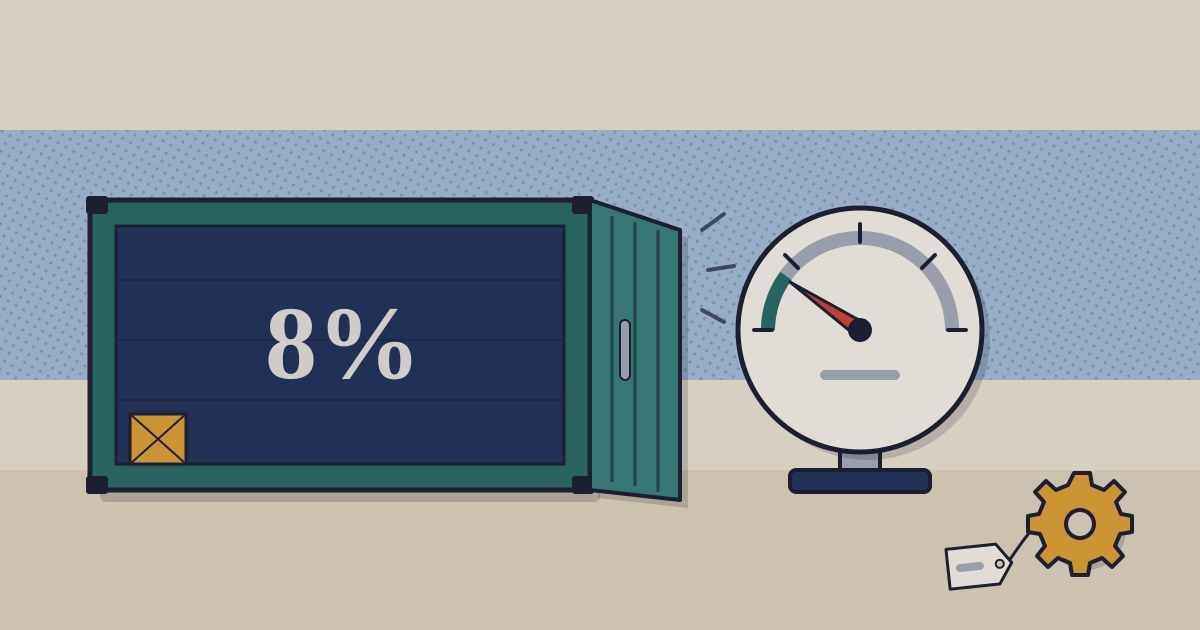
The average Kubernetes cluster used 8% of its provisioned CPU and 20% of its memory in Cast AI’s 2026 report, down from 10% and 23% a year earlier.1 2 That gap is what PerfectScale and its rivals are sold against. The 2024 version of this piece promised “up to 60%” savings, an average 40% and a 20% productivity gain; we could trace none of them, and the press release in which DoiT bought PerfectScale quotes no savings figure at all.4 The question a platform team is really asking is whether buying an optimiser closes the gap, or only shows it more clearly.
01The gap, measured, and getting wider
Clusters used 8 of every 100 CPUs they paid for in 2026, fewer than in 2025, and memory and GPUs were no better
Average utilisation of provisioned capacity across clusters before optimisation, %, Cast AI 2026 report, with the 2025 values
8%
CPU utilisation
10% in the 2025 report
20%
Memory utilisation
23% in the 2025 report
5%
GPU utilisation
A new measure in the 2026 report
Source: Cast AI, 2026 State of Kubernetes Optimization Report (press release and author's summary) · as of 21 April 2026 · vendor data; tens of thousands of clusters on AWS, GCP and Azure
Cast AI sells Kubernetes automation, so read the numbers as a vendor’s telemetry, measured before its own product touched the clusters. The direction is still useful. The new 2026 measure is worse: GPUs averaged 5% utilisation.1 The cause is not mysterious. The scheduler reserves what a pod requests, not what it uses, and the people who set requests are rewarded for uptime, not for thrift. Every team pads its numbers; the cloud bill pays for the padding.
02What PerfectScale is now, and what it costs
DoiT, a cloud reseller and FinOps company, announced the acquisition on 4 February 2025. PerfectScale continues to operate independently and is sold as an add-on to DoiT Cloud Intelligence customers.4 Its pricing page meters on monthly vCPU consumption: free up to 300 vCPUs a month, with the Advanced and Expert plans priced per vCPU on quote.3
03Buying in India
Paid plans are quoted in US dollars; through a reseller the invoice is in rupees with 18% GST added. An optimiser with automation switched on has write access to production clusters, which makes it a privileged third party. RBI’s Directions of 31 July 2026 require banks to hold vendor contracts with audit and RBI inspection rights.6 SEBI’s CSCRF has applied to regulated entities since 31 August 2025.7 And the CERT-In Directions of 28 April 2022 still set six hours to report an incident, including one that starts with a vendor’s agent.8 Start in recommendation mode, grant write access per namespace, and put the vendor’s access in the contract. TechBag’s observability & APM guide prices the monitoring that should sit beside it.
Sources
- Cast AI, press release: 2026 State of Kubernetes Optimization Report (CPU 8%, memory 20%, GPU 5%) — 21 April 2026
- Cast AI, 2026 State of Kubernetes Resource Optimization: CPU at 8%, memory at 20% (prior-year 10% and 23%) — 21 April 2026
- PerfectScale, pricing and plans (free to 300 vCPUs a month; Advanced and Expert on quote) — vendor pricing page, undated
- PerfectScale, press release: DoiT acquires PerfectScale — 4 February 2025
- Kubernetes autoscaler project, Vertical Pod Autoscaler — project documentation, undated
- RBI, Cybersecurity, Technology Risk and Resilience Framework Directions, 2026, via practitioner summary — 31 July 2026 RBI PDF not fetched.
- SEBI, Cybersecurity and Cyber Resilience Framework (CSCRF) for SEBI Regulated Entities — 20 August 2024; in force 31 August 2025
- CERT-In, Directions under section 70B(6) of the IT Act (six-hour reporting) — 28 April 2022
Disclosure. TechBag is a software reseller: it earns a margin when a reader buys through it, including from vendors named here. The analysis is TechBag’s own; no vendor paid for or saw this piece before publication. Facts are labelled reported, TechBag count or our view.
Keep reading