Klarna's bot did 700 agents' work; 15 months later it was hiring humans
Klarna's February 2024 claim, its May 2025 walk-back and Gartner's survey of 5,728 customers: where AI belongs in a support queue, as of September 2026.

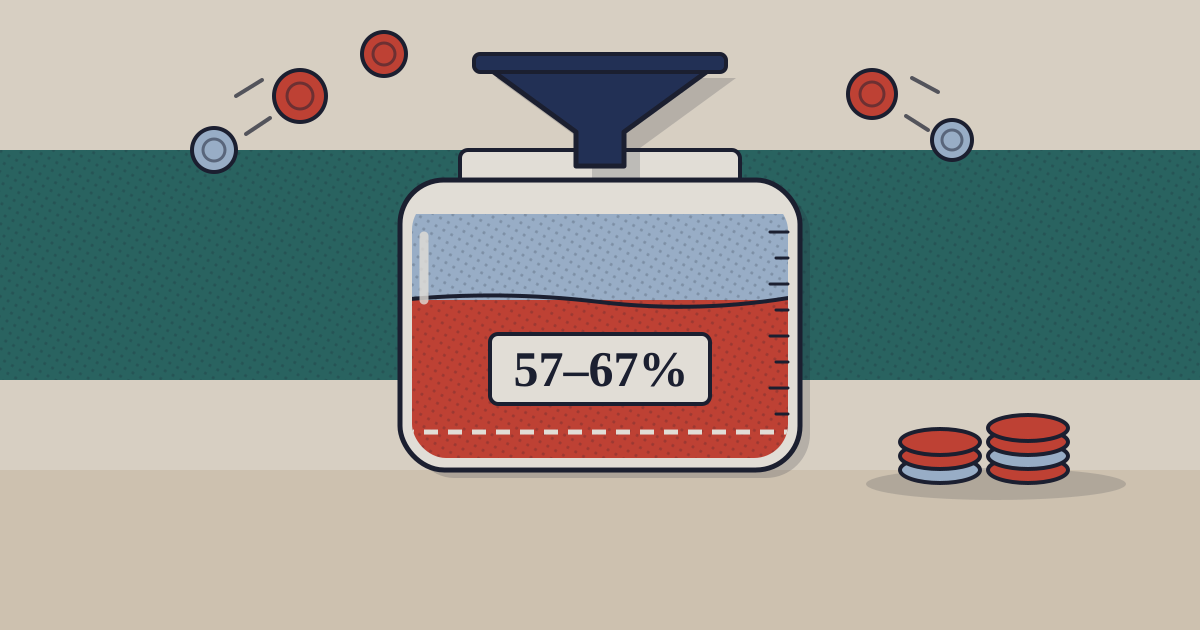
AI belongs on the routine two-thirds of a support queue and fails the moment it stands between a customer and a person. Klarna proved the first half in February 2024, when its assistant took 2.3 million conversations in a month.1 It proved the second half in May 2025, when its chief executive said the company would hire human agents again.2 In between, Gartner found that the top fear among 5,728 customers was not a wrong answer but a closed door.4
The 2023 version of this piece listed ten ways to use AI in service, from chatbots to fraud detection, and opened with five statistics. The buyer’s question is narrower: how much of the queue can a bot take, and what does it cost you when it takes too much?
01The 700-agent month, and the walk-back
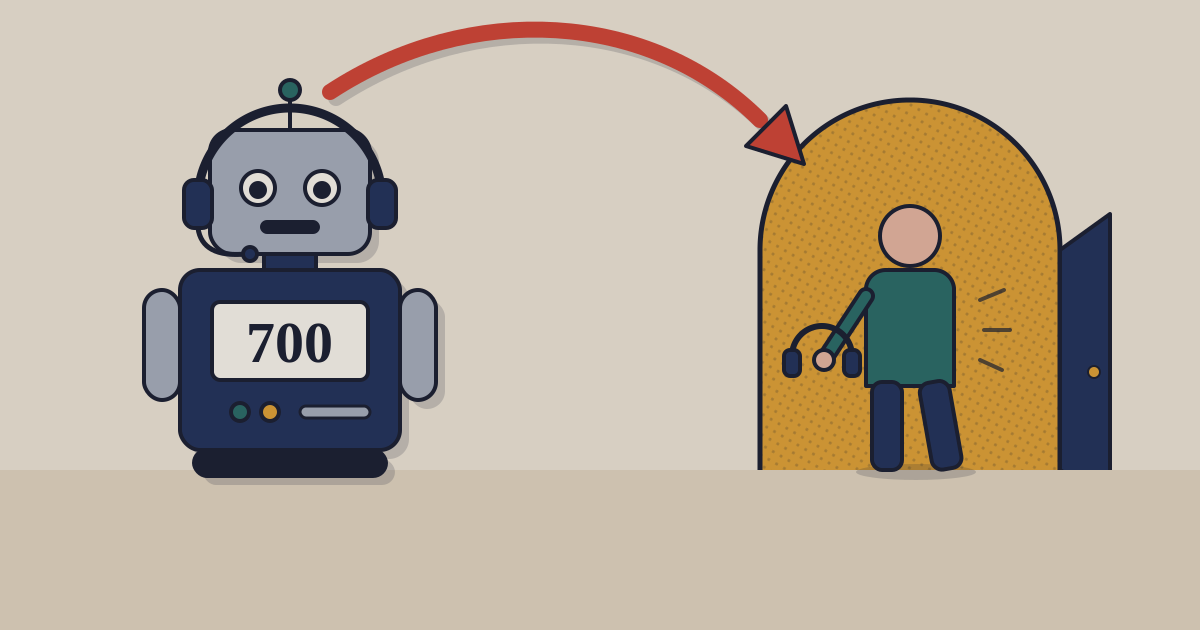
Klarna’s release of 27 February 2024 is the most quoted number in this market. In its first month the assistant handled two-thirds of customer-service chats, did “the equivalent work of 700 full-time agents”, cut the time to resolve an errand from 11 minutes to under 2, reduced repeat inquiries by 25%, and ran in 23 markets and more than 35 languages. Klarna estimated a US$40 million profit improvement for 2024.1
700
full-time agents' worth of work, done by Klarna's assistant in its first month
Two-thirds of chats, February 2024. Fifteen months later Klarna said it would hire human agents again.
Fifteen months later Sebastian Siemiatkowski told Bloomberg that “investing in the quality of human support is the way of the future for us” and that “there will always be a human if you want.” Klarna had paused hiring for more than a year and its headcount had fallen 22% to about 3,500, mostly by attrition.2
02The fear is the closed door, not the wrong answer
Gartner surveyed 5,728 customers in December 2023 and published on 9 July 2024: 64% would prefer companies did not use AI in customer service, and 53% would consider switching to a competitor if they found out a company was going to.3 The breakdown of their concerns is the useful part.
Customers fear losing the route to a person more than they fear a wrong answer
Share of customers naming each concern about AI in customer service, survey of 5,728, December 2023
Source: Gartner customer survey, as reported by DIGIT · as of 9 July 2024
Gartner’s own advice follows from it: a chatbot should tell the customer, up front, that it will hand over to an agent when it cannot solve the problem.3 Our rule for a pilot is the same in three lines. Put the route to a person on the first screen. Measure resolution and repeat contacts, not deflection. Keep the bot on the routine requests, such as order status, password resets and refunds within policy, until those numbers hold for a quarter.
03Buying it in India
The AI agent is now the larger line on a small team’s helpdesk bill: five published price lists charge US$0.49 to US$2.00 per AI-handled conversation, and they count different things.5 Most are in US dollars; bought through an Indian reseller they arrive as an INR invoice with 18% GST, bought direct from abroad the GST is yours to self-account under reverse charge. The transcripts are personal data under the DPDP Act, 2023; its Rules were notified on 13 November 2025 and the substantive duties apply from 13 May 2027.6 A breach of the bot vendor’s platform is reportable to CERT-In within six hours under its Directions of 28 April 2022.7 Banks add RBI’s Directions of 31 July 2026, which require audit and RBI inspection rights in vendor contracts.8 Ask where the transcripts are stored before you ask what the bot costs.
Sources
- Klarna, Klarna AI assistant handles two-thirds of customer service chats in its first month — 27 February 2024
- Entrepreneur, Klarna is hiring customer service agents after AI couldn’t cut it, citing Bloomberg — 9 May 2025
- Gartner, Survey finds 64% of customers would prefer that companies didn’t use AI for customer service — 9 July 2024
- DIGIT, 64% of people don’t want companies to use AI in customer service (concern breakdown) — 9 July 2024
- TechBag blog, An AI support chat costs US$0.49 to US$2.00: five price lists, compared — 14 January 2025 Prices as stated in that post.
- DPDP Rules 2025, commencement timeline — notified 13 November 2025
- CERT-In, Directions under section 70B(6) of the IT Act (six-hour reporting) — 28 April 2022
- RBI, Cybersecurity, Technology Risk and Resilience Framework Directions, 2026, via practitioner summary — 31 July 2026 RBI PDF not fetched.
Related on TechBag: the per-conversation price comparison sets the five AI price lists side by side; the service desk guide covers the platforms these agents run inside.
Disclosure. TechBag is a software reseller: it earns a margin when a reader buys through it, including from vendors named here. The analysis is TechBag’s own; no vendor paid for or saw this piece before publication. Facts are labelled reported, TechBag count or our view.
Keep reading