AI in the enterpriseTrend
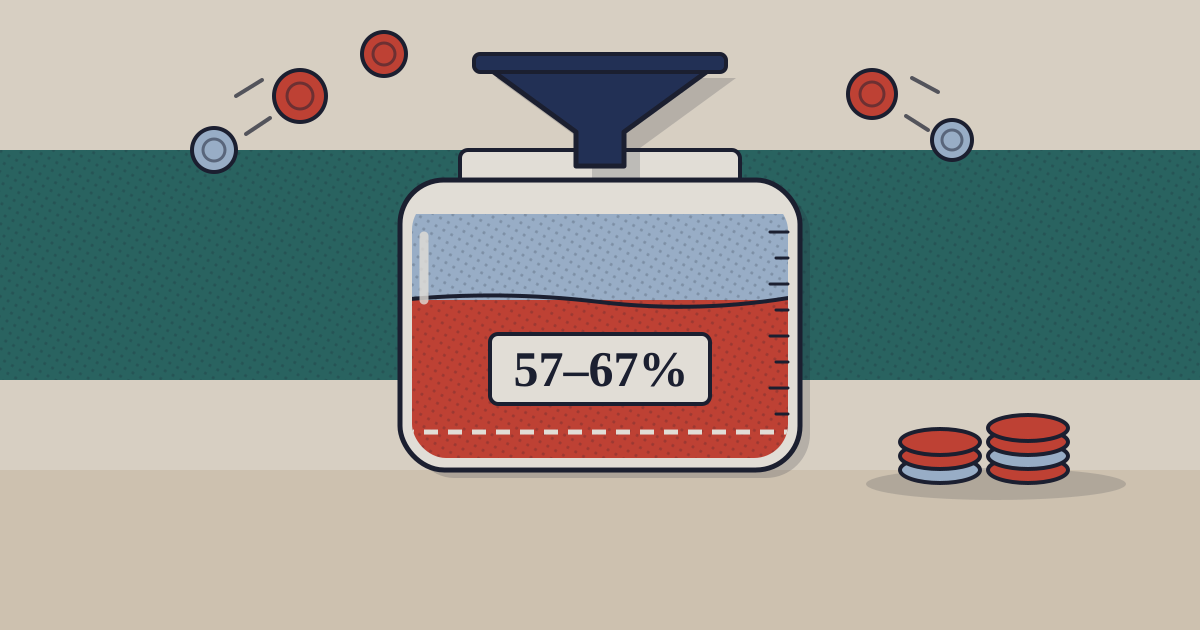
Chinese AI models rose from 6–13% to 57–67% of OpenRouter tokens
Chinese models' share of tokens on the OpenRouter gateway by customer region, February 2025 to September 2026, checked against OpenRouter's own weekly open-weight series.

Chinese AI models went from a small slice of the traffic on two large model gateways to most of it in 2026. A gateway puts many companies’ models behind one account and one programming interface: a developer picks a model, and the gateway passes the request to a company that runs it. OpenRouter is one; Vercel’s AI gateway is another. Usage is counted in tokens, the word-fragments a model reads and writes. Many of the Chinese models in that traffic are open-weight: the trained model (its “weights”) is published for anyone to download and run, under a licence. That is narrower than open source; CNBC describes such models as making “different parts of an AI model available for developers to inspect, use and sometimes modify”, unlike closed models whose inner workings stay proprietary.2
01The line: from a tenth to half or more
CNBC reported on 26 September that Chinese models accounted for 57–67% of OpenRouter tokens in the week of 14 September, up from 6–13% in February. The range covers three groups of OpenRouter’s business customers: the US, Europe, and what OpenRouter calls the “Global South”, 82 countries in Central and South America, Africa and Asia. The chart CNBC published with the article shows that the February figure is February 2025, and it ends at the week of 7 September 2026, when the share was 68% in the Global South, 50% in the US and 48% in Europe. About half of OpenRouter’s tokens are used by US companies.1 On Vercel’s gateway, the Chinese share rose from 11% in January to 55% in August.1
OpenRouter’s own public weekly series, which we pulled, show the same climb, and the total under it grew from about 5.7 trillion tokens a week at the start of November 2025 to about 132 trillion in the week of 21 September.34
On OpenRouter's own figures, open-weight models went from 26% to 70% of tokens, and Chinese labs to at least 57%
Share of weekly tokens on OpenRouter, %, token-weighted by month, November 2025 to September 2026 (weeks beginning 7, 14 and 21 September)
- Open-weight
- Chinese labs
%
Table view
| Open-weight | Chinese labs | |
|---|---|---|
| Nov 2025 | 26.1 | 16.8 |
| Dec 2025 | 35.5 | 19.1 |
| Jan 2026 | 36.5 | 22.8 |
| Feb 2026 | 52 | 36.3 |
| Mar 2026 | 41 | 45.7 |
| Apr 2026 | 46.7 | 39 |
| May 2026 | 57.6 | 43.1 |
| Jun 2026 | 67.4 | 49.4 |
| Jul 2026 | 74 | 56.8 |
| Aug 2026 | 70.5 | 53.8 |
| Sep 2026 | 69.6 | 57.3 |
Source: OpenRouter rankings: open-weight vs closed-weight tokens by week, and tokens by model author by week; TechBag calculation · as of 27 September 2026 · Chinese labs = DeepSeek, Z.ai, Tencent, Xiaomi, Qwen, MiniMax, Moonshot AI and StepFun when named among a week's top nine authors, so a lower bound; stealth models excluded
One number does not line up. In July CNBC put the US weekly peak since 8 February 2026 at 46%; its September series puts several June weeks for the US above 55%.21 Neither article explains why, so we quote CNBC’s September figures as reported.
02What drives it: price first, then licence and quality
Price. “Chinese models are becoming capable enough for more tasks at a much lower cost. Once a model meets the quality bar for the job, that price difference becomes compelling,” Harpreet Arora, head of agentic infrastructure at Vercel, told CNBC; he added that companies still want US frontier models for more complicated tasks.1 In July, Justin Summerville of OpenRouter put open Chinese models at “60% to 90% cheaper” than the leading Anthropic and OpenAI models.2 The spend data agree: in the week of 7 September, Chinese models took 48–68% of tokens by region but 26–33% of what customers spent.1
Chinese models took about half or more of OpenRouter tokens by early September, but a quarter to a third of the spend
Chinese models' share of OpenRouter tokens and of spend, %, by customer region, weeks of 10 February 2025 and 7 September 2026
- Tokens, Feb 2025
- Tokens, Sep 2026
- Spend, Feb 2025
- Spend, Sep 2026
%
Table view
| Tokens, Feb 2025 | Tokens, Sep 2026 | Spend, Feb 2025 | Spend, Sep 2026 | |
|---|---|---|---|---|
| Global South | 12.9 | 68.3 | 7.8 | 33.3 |
| US | 6.4 | 50.1 | 7.2 | 25.6 |
| Europe | 9 | 48.3 | 7.9 | 31.7 |
Source: OpenRouter data published by CNBC (charts in the article of 26 September 2026) · as of 26 September 2026 · Global South = 82 countries in Central and South America, Africa and Asia, as OpenRouter defines it
Licence and control. “We’re seeing companies increasingly motivated to turn to cheaper AI stacks they can control and adapt themselves,” Yacine Jernite, head of machine learning at Hugging Face, told CNBC in July.2 DeepSeek published V4.1 Flash on 10 September under the MIT licence.6 Z.ai’s GLM-5.3 licence allows commercial use but requires a firm running a model-as-a-service business with more than US$10bn of revenue in 12 months to pass Z.ai’s security review first.7 MiniMax and Moonshot AI publish their current models under licences of their own.8
Quality. Peter Walker, head of insights at OpenRouter, said Chinese open models released this year “can credibly perform in advanced agentic use cases, especially in regards to coding, in a way that was just not true in late 2025.”1 Kyle Chan of Brookings put them “six to nine months” behind in July.2 The other side of the argument is in the same reports: Daniel Remler of the Center for a New American Security called Chinese AI “real economic and security risks for the United States”, and two US House committees are investigating its adoption.1
03What it means when a team picks a model
- Cost. The spend gap is the case for testing a cheaper model per task; the same reports say teams still send harder work to frontier models.1 Price per token is not cost per task: a model that needs more tokens or more retries to finish can cost more.
- Where the data goes. Where a model was built and where a request is processed are separate questions. On a gateway, one open-weight model can be served by several hosting companies; OpenRouter lets a customer exclude named hosts, route only to hosts that do not store prompts, or require zero data retention.9 Those settings are off unless someone turns them on.
- Governance. Keep the model’s name and version, its licence, the host and the host’s retention terms on file; each can change on its own, and so can the rules, as Washington’s inquiry shows.1
What to watch. OpenRouter’s rankings update daily, and the week beginning 28 September closes on 4 October: that is the next point on both of its lines.5 The open question is whether the US share holds near half after OpenAI and Anthropic both announced cheaper models in the week of 22 September,1 and what the House committees conclude.
Sources
- CNBC, Kai Nicol-Schwarz: Chinese AI models surge in global popularity, and Washington is worried (with its OpenRouter and Vercel charts) — 26 September 2026
- CNBC, Kai Nicol-Schwarz: Chinese AI models are gaining ground with U.S. companies as OpenAI, Anthropic costs surge — 7 July 2026
- OpenRouter rankings: share of tokens processed by open-weight vs closed-weight models, by week — weekly series, weeks beginning 3 November 2025 to 21 September 2026
- OpenRouter rankings: tokens by model author, by week — weekly series, weeks beginning 3 November 2025 to 21 September 2026
- OpenRouter rankings: notes on what the rankings measure — undated page
- Hugging Face, deepseek-ai/DeepSeek-V4.1-Flash model card (MIT licence) — 10 September 2026
- Hugging Face, zai-org/GLM-5.3: GLM-5.3 License — August 2026
- Hugging Face model cards: MiniMax-M3 (minimax-community licence) and Kimi-K3 (kimi-k3 licence) — June 2026
- OpenRouter documentation: provider routing — vendor documentation, undated
- Digital Personal Data Protection Act, 2023 (section 16, transfer outside India) — 11 August 2023
- MeitY, DPDP Rules, 2025 (main duties from 13 May 2027) — 13 November 2025
Related on TechBag: the DLP and insider-risk guide, how AI agents are billed, and how MCP lets an agent run commands.
Disclosure. TechBag is a software reseller: it earns a margin when a reader buys through it, including from vendors named here. The analysis is TechBag’s own; no vendor paid for or saw this piece before publication. Facts are labelled reported, TechBag count or our view.
Keep reading