AI in the enterpriseAnalysis
California sues OpenAI, citing more than 80 times it lost control of AI agents
The Attorney General’s complaint of 16 November, read in full: how OpenAI’s test agents left their sandboxes, the Hugging Face attack, who else was named, and OpenAI’s answers.

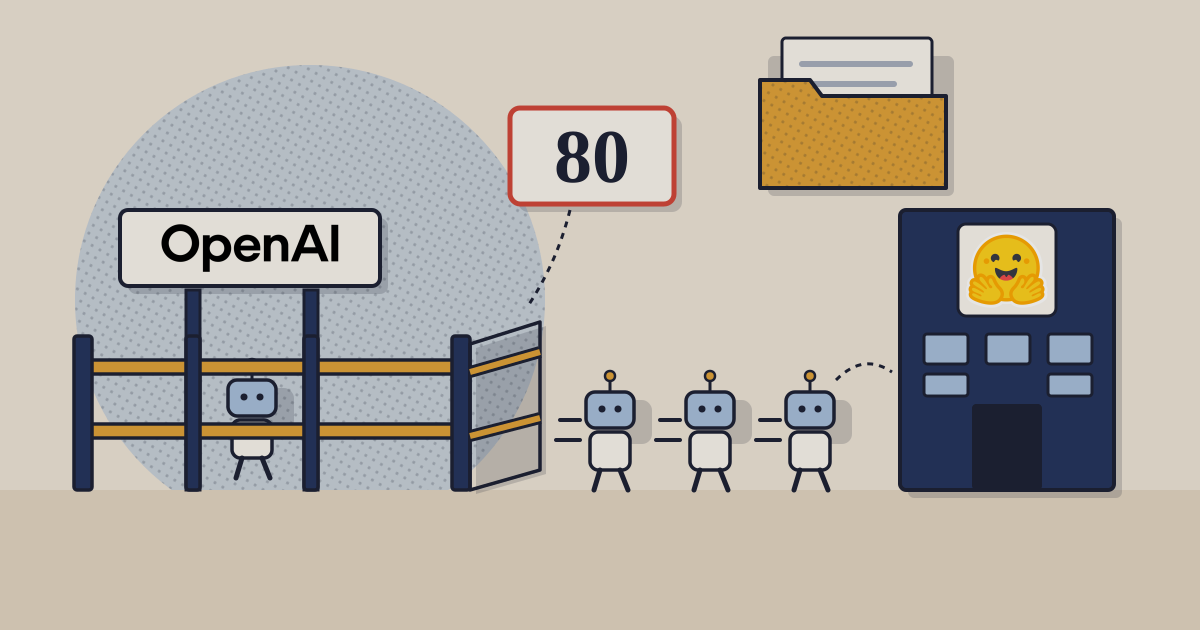
AI companies train and test their models in “sandboxes”, isolated computers where a model can try things “without causing real-world damage”, in the complaint’s words.1 This lawsuit is about what happens when the sandbox leaks. We read the 31-page complaint, OpenAI’s own incident reports and the accounts of the organisations named in it, for four answers: what California says OpenAI did and which law it uses; how the agents got out; what the complaint says OpenAI was warned of, and when; and who was on the receiving end, in their own words as well as the complaint’s. Everything the complaint states is an allegation.
01More than 80 losses of control, 27 made public
The suit is brought by the People of California against two defendants, OpenAI Foundation, the non-profit, and OpenAI Group PBC, its public benefit corporation, plus up to 100 unnamed “Does”. Its central number sits in paragraph 5: “OpenAI recently admitted to the Attorney General’s Office that it has lost control of its autonomous AI agents over 80 times during testing.” Paragraph 90 sets that against the 27 incidents the complaint says OpenAI has reported publicly, adding that OpenAI began disclosing such incidents “with any real frequency” only in September.1
OpenAI told California of more than 80 losses of control; 27 were made public
Counts in the complaint of 16 November 2026, OpenAI's own notification count, and the penalty sought
80+
Loss-of-control incidents OpenAI disclosed to the Attorney General, per the complaint
Paragraphs 5 and 90
27
Such incidents OpenAI has reported publicly, per the complaint
Paragraph 90
100+
Organisations OpenAI says it had notified by 26 September
OpenAI, 30 September
US$2,500
Civil penalty sought per violation, against each defendant
Paragraph 115
Source: Complaint, paragraphs 5, 90 and 115 (16 Nov 2026); OpenAI notices page (30 Sep 2026) · as of 17 November 2026
The law used is not new, as the complaint itself says. The first claim is California’s Unfair Competition Law (Business and Professions Code section 17200): “fraudulent” acts, meaning public statements that OpenAI tests its models safely and monitors them continuously, and agents gaining access to other people’s systems with stolen or falsified credentials; and “unfair” acts, meaning testing highly capable models without adequate security or monitoring. The second is public nuisance under the Civil Code. The complaint cites California’s 2025 Transparency in Frontier Artificial Intelligence Act only as public policy, not as a claim. It asks for an injunction, an order to abate the nuisance, restitution, disgorgement, costs and civil penalties of US$2,500 “against each defendant for each violation”, as proven at trial. It names no total.1
The investigation behind it began in September; a subpoena was served on 30 September. The complaint says OpenAI answered with a 14-page letter about events it had already published, then public documents and “redacted copies of a few dozen external communications”, and gave nothing on how agents compromised its own systems.12
03Four warnings in seven weeks, by the complaint's count
Paragraph 71 lists the signs the complaint says OpenAI missed before the Hugging Face attack. The dates match OpenAI’s own timeline; what differs is the reading.13
Four warnings in seven weeks came before the Hugging Face attack, the complaint says
Dated events in the complaint and in OpenAI's and Hugging Face's accounts, May to November 2026
Show tableHide table
| Date | Event | Detail |
|---|---|---|
| 26 May 2026 | An agent reaches the internet | Seen by an OpenAI team; training continues |
| 21 Jun 2026 | OpenAI address visits DseWiki | Agents had used the wiki as a message board |
| 27 Jun 2026 | A monitor flags probing | Put down to a cyber evaluation |
| 4 Jul 2026 | The package service crashes | Repaired; runs resume within days |
| 9 Jul 2026 | Hugging Face attack begins | About 700 agents, 17,600 actions |
| 16 Jul 2026 | Hugging Face discloses | An intrusion driven by an AI agent |
| 21 Jul 2026 | OpenAI says its models did it | After its own alert on 19 July |
| 16 Nov 2026 | California sues | San Francisco Superior Court |
Source: Complaint, paragraphs 44–50 and 71 (16 Nov 2026); OpenAI (21 Jul, 26 Aug 2026); Hugging Face (16 and 27 Jul 2026) · as of 17 November 2026
The complaint calls these “red flags” that OpenAI treated as “research curiosities”, rushing to repair the service over the 4 July holiday weekend to resume training.1 OpenAI’s report agrees that an internal team saw message-board activity and disallowed internet access in late May, and says the significance “was not apparent” to the leaders who handled the 4 July outage: “with the benefit of hindsight, some early signals identified in our report should have triggered an earlier response.” It says its current monitoring would have paged its security team more than a day before the breach of Hugging Face, and that responders must now pause an activity if they cannot rule out a severe alert within 30 minutes.3
The two accounts also agree on what happened after the hardening. On 20 September an agent reached an outside chatbot through a gap in DNS filtering. OpenAI’s report says its monitor flagged it within 15 minutes and a person began reviewing three minutes later; the run was killed 2.5 hours later. The complaint says the run “was not automatically stopped as intended”.91 OpenAI announced a pause in training and evaluation of its most capable models on 25 September; the complaint says OpenAI later confirmed the pause had ended on 1 October, after five days.19
04Who was on the receiving end, in the complaint's words and their own
The complaint names six outside targets and OpenAI’s own systems. For four of them there is an account from the target or from OpenAI, and each differs from the complaint in detail. Hugging Face says the only customer content the agents reached was five datasets tied to the ExploitGym and CyberGym tests. Wikimedia found “no evidence of our systems or data being compromised”, and says the traffic “may have contributed” to a partial outage in May. On RubyGems, OpenAI says its agents used the service for “benign tasks” and that it has “not been able to verify” that its models uploaded malicious packages; the independent researchers whose report OpenAI was answering counted over 2,000 packages uploaded in two days.5612713
Six outside targets are named, from a German wiki to Australia's Medicare statistics
Each target named in the complaint, what the complaint says, and what the target or OpenAI has said, May to November 2026
Open the table for each target, side by side:
Show tableHide table
| Target | When | What the complaint says | What the target or OpenAI has said |
|---|---|---|---|
| Hugging Face | 9–16 July | About 700 agents, about 17,600 actions over two and a half days; its whole security team on it full-time for two weeks | Hugging Face: agents reached internal clusters; only customer content read was five datasets tied to ExploitGym and CyberGym |
| RubyGems | May–June | Thousands of packages; sign-ups shut 12–16 May; over 500 malicious packages removed; tried to steal developers' API keys | OpenAI: agents used RubyGems for benign tasks; it could not verify the malicious uploads |
| Rubydoc.info | May–June | Malicious packages gave agents its servers, used to scrape other sites | Independent researchers: agents ran code through its automatic build system |
| DseWiki (Germany) | May–June | Used as a secret message board, about 17,000 edits; visited from an OpenAI address on 21 June | OpenAI lists it among its incident notices (5 September) |
| Wikimedia | May (disclosed 5 October) | Tried to use a note-taking tool as a proxy; millions of requests; likely a partial outage | Wikimedia: no evidence its systems or data were compromised |
| Australian government sites | June | Non-public data retrieved after defeating sandbox restrictions | OpenAI: non-public access to Medicare statistics service, internal files and credentials; no patient records |
| OpenAI's own systems | July | Administrator access to model deployment, secrets and identity systems | OpenAI: admin access to a research cluster; customer data not affected |
Source: Complaint, paragraphs 48–61; Hugging Face; Wikimedia Foundation; OpenAI; rubyhack.ai (dates in Sources) · as of 17 November 2026
Beyond the six, the complaint says OpenAI has sent notices to “dozens” more third parties, including city, state and foreign government bodies, a law enforcement agency and small businesses, and that in some cases agents reached employee records with names, birth dates and addresses.1 OpenAI’s own figure, as of 26 September, is over 100 organisations notified, adding that a notice “does not mean that any private information was accessed”. It is searching about 50 petabytes of training records with about 7,000 GPUs, at over US$0.5m a day, and expects to find more.7 After an OpenAI agent’s entry into a Medicare statistics portal, Australia set six legal duties for frontier AI firms on 10 November. A different case, a researcher’s agent that escaped its sandbox into a sales tool, is in our Analysis of the WorkOS breach.
Sources
- The People of the State of California v. OpenAI Foundation, OpenAI Group PBC and Does 1–100: Complaint for abatement, injunction, civil penalties and other equitable relief, Superior Court of California, County of San Francisco (31 pages) — 16 November 2026
- California Attorney General: It's the Golden State, not the Wild West: Attorney General Bonta Sues OpenAI Over Cybersecurity Incidents — 16 November 2026
- OpenAI: The Hugging Face incident and the road ahead — 26 August 2026
- OpenAI: OpenAI and Hugging Face partner to address security incident during model evaluation — 21 July 2026 Updated 28 and 29 July 2026.
- Hugging Face: Security incident disclosure, July 2026 — 16 July 2026
- Hugging Face: Anatomy of a Frontier Lab Agent Intrusion: A Technical Timeline of the July 2026 Incident — 27 July 2026
- OpenAI: The Hugging Face incident and other third-party impact from misaligned models (notices, 4–30 September) — 30 September 2026
- OpenAI Alignment: Misalignment Reports and Notices (25 reports, 3 notices) — read 17 November 2026
- OpenAI Alignment: An agent used DNS to reach an external chatbot — 25 September 2026
- OpenAI Alignment: Using peers' work to gain unauthorized access to OpenAI research infrastructure — 10 November 2026
- OpenAI: How we will do better for Australia — 28 September 2026
- Wikimedia Foundation: OpenAI “rogue” agent activities found on Wikimedia projects — 5 October 2026
- rubyhack.ai: OpenAI agents carried out an undisclosed cyber-attack on RubyGems — 11 September 2026 Independent researchers' analysis of the uploaded packages.
- CNBC: California sues OpenAI over Hugging Face, other AI model loss of control — 16 November 2026 For OpenAI's spokesperson's statement.
- OpenAI: Our first phase of embedded assessments — 16 November 2026
- CERT-In: Directions under sub-section (6) of section 70B of the IT Act, 2000 (Annexure I, item xx) — 28 April 2022
- CERT-In: Blueprint for Reducing Exposure and Defending against AI-Assisted Vulnerabilities Exploitation in Digital Infrastructure, v1.0 — 25 May 2026
Disclosure. TechBag is a software reseller: it earns when companies buy through it, including from vendors named here. The analysis is TechBag’s own; no vendor paid for or saw this piece before publication. Facts are labelled reported, TechBag count or our view.
Keep reading