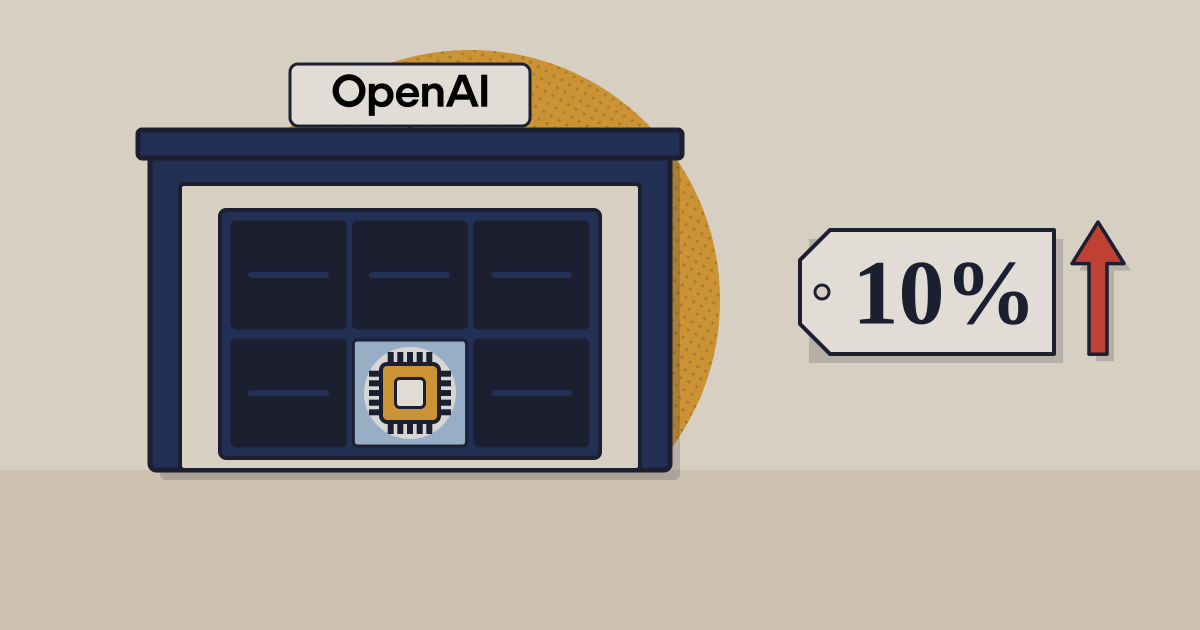
Gemini 4 Carbon’s price doubles on 1 December; Claude Fable 5.2 costs 20% less than 5.1
Google’s and Anthropic’s price pages, 9 to 12 November: per-million-token rates for Gemini 4 Carbon, Gemini 4 Hydrogen and Claude Fable 5.2, and one month’s bill on each.

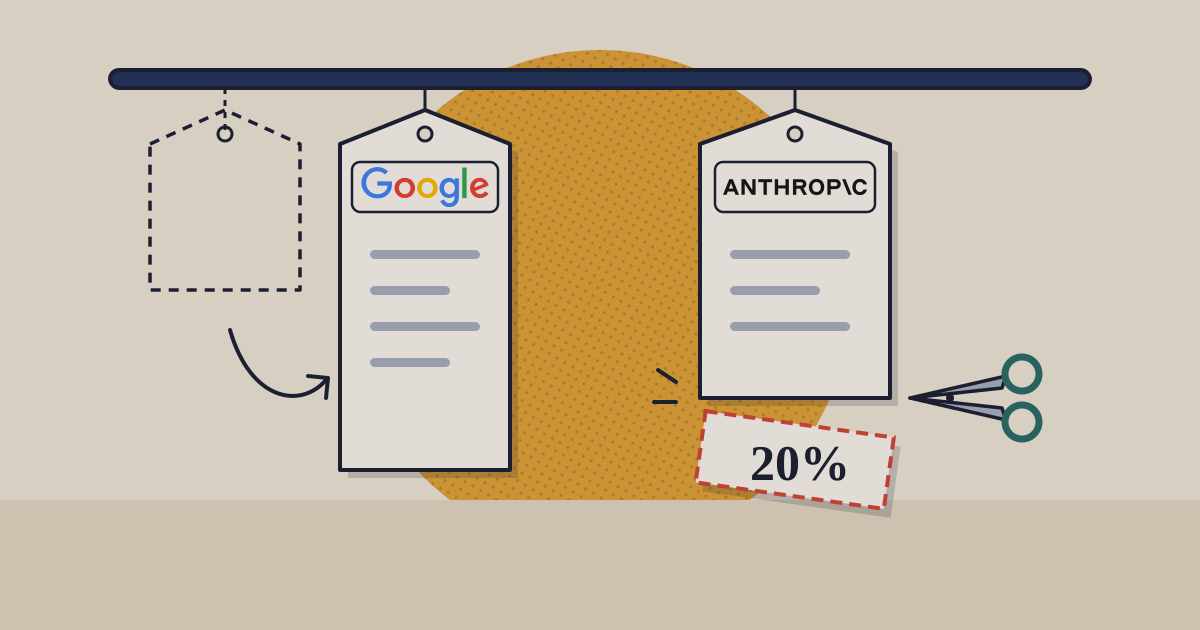
Google made Gemini 4 Carbon generally available on 10 November at an introductory US$2 per million input tokens and US$10 per million output tokens, through 30 November. From 1 December the same model costs US$4 and US$20.12 A day earlier, on 9 November, Anthropic launched Claude Fable 5.2 at US$8 and US$40, against the US$10 and US$50 that Fable 5.1 still lists at: 20% less on both.56 On 12 November Google added a cheaper model, Gemini 4 Hydrogen, at US$1.50 and US$7.50.1
2×
Gemini 4 Carbon’s price from 1 December: US$4 in, US$20 out per million tokens
−20%
Claude Fable 5.2 against Fable 5.1, on input and on output
Anthropic
US$1.50
Gemini 4 Hydrogen input per million tokens; output US$7.50
US$0.20
cached input per million tokens, on Fable 5.2 and on Carbon from 1 December
Anthropic, Google
01What each company changed
Carbon is the model Google calls its “most capable reasoning model”; it is not on the free tier.2 Its price matches Gemini 4 Argon, released on 13 October, which also doubles on 1 December.12 The two charge the same per token but not per task: Google says Carbon “spends more thinking tokens per turn” than Argon, and thinking tokens are billed as output.42
Hydrogen is on the free tier and, for paying users, costs the same across its whole 1 million-token context window.3 That is twice what Gemini 3.8 Flash charges today, US$0.75 and US$3.75, and exactly what 3.8 Flash will charge from 1 January, when its own introductory price ends.2 Google says Hydrogen finishes tasks 2.5 times faster than 3.8 Flash at its default setting, and that partners saw token use fall by 12% to 23% against 3.8 Flash.3
Fable 5.2 shares its underlying model with Claude Mythos 5.2, which carries fewer cybersecurity and biology safeguards, costs the same, and is open only to organisations admitted to Anthropic’s verification programmes.5 Anthropic says Fable 5.2 generates output up to 30% faster than Fable 5.1 and, at the middle effort setting that is the default in its apps, can accomplish “challenging tasks with fewer tokens” than 5.1. An optional fast mode costs US$16 and US$80.56 These speed and token figures are each company’s own.
02One month’s bill, and what it leaves out
On the same tokens, Fable 5.2 saves US$400 a month and Carbon costs US$400 more from December
Monthly list-price bill for 100 million input and 20 million output tokens, US$, standard paid tier, as listed in November 2026
Source: Google, Gemini Developer API pricing; Anthropic, Claude Platform pricing · as of 14 November 2026 · TechBag arithmetic on list prices; no batch, caching or fast mode
The bill counts tokens, and the same job does not use the same tokens on every model. Thinking is billed as output, and how much a model thinks varies by model and by the effort setting chosen.24 Tokens are not one unit across companies either: Anthropic’s page says its newer tokenizer produces about 30% more tokens for the same text than its earlier models did.6 Both companies take 50% off for batch jobs that can wait.26 So the useful test is a week of your own traffic sent to each candidate, priced on the tokens it actually used.
What to watch: 1 December, when Carbon and Argon double and calls to Gemini 2.5 Pro and 2.5 Flash move to other models (our Note on that change), and 1 January, when 3.8 Flash doubles to Hydrogen’s price.2
Sources
- Google: Gemini API release notes — entries of 13 October and 10 and 12 November 2026
- Google: Gemini Developer API pricing (Gemini 4 Carbon, Gemini 4 Argon, Gemini 4 Hydrogen, Gemini 3.8 Flash) — rates through 30 November and 31 December 2026, and from 1 December 2026 and 1 January 2027
- Google: Introducing Gemini 4 Hydrogen — 12 November 2026
- Google: What's new in Gemini 4 Carbon — 10 November 2026
- Anthropic: Introducing Claude Fable 5.2 and Claude Mythos 5.2 — 9 November 2026, edited 11 November 2026
- Anthropic: Claude Platform pricing — Claude Fable 5.2 rates, from 9 November 2026
Disclosure. TechBag is a software reseller: it earns when companies buy through it, including from vendors named here. The analysis is TechBag’s own; no vendor paid for or saw this piece before publication. Facts are labelled reported, TechBag count or our view.
Keep reading