SecurityThreats & vulnerabilitiesAnalysis
Ransomware hit a cloud provider: 206 of 495 customers had a copy it could return
IDC Frontier's seven notices on the IDCF Cloud attack, 7 to 27 October, Telangana's TG-iPASS outage from 22 October, and who holds the backup when the provider itself is hit.

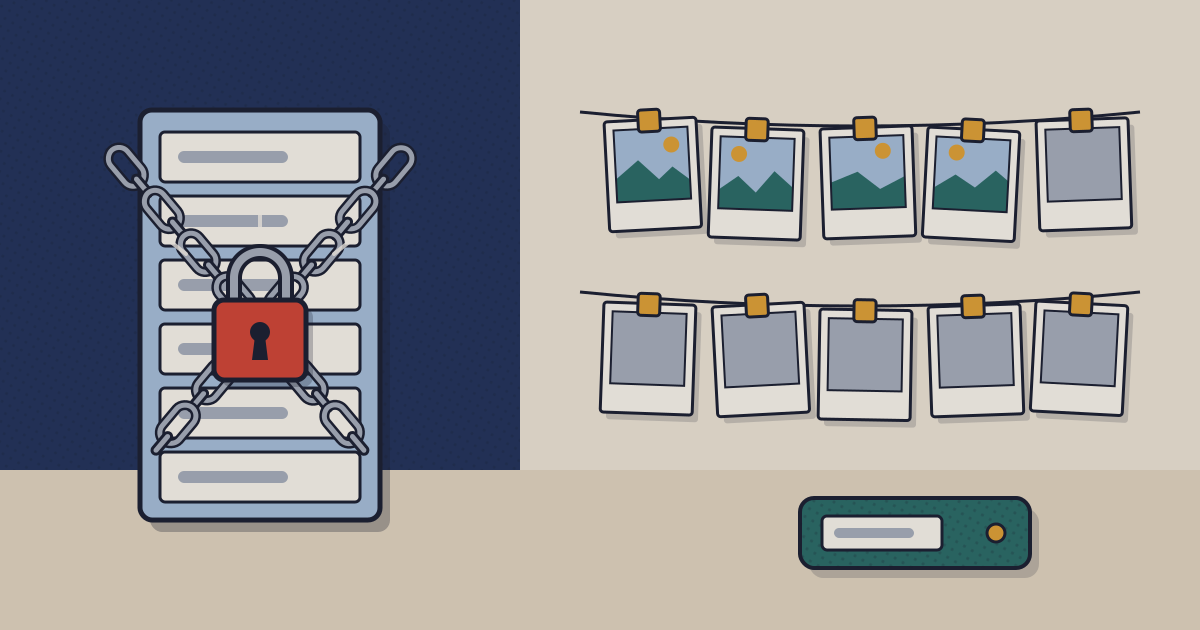
Most ransomware planning assumes the attacker reaches your servers. On 7 October an attacker reached the layer underneath them: the platform a cloud provider uses to run every customer’s servers at once. When that happens, the provider’s own snapshots can be inside the same blast radius, and the question a buyer has to answer is short. Who owns the backup, and who restores? This piece reads IDC Frontier’s seven notices in the original Japanese, sets them beside its contract terms and an Indian case from the same month, and ends with the questions to put to a provider now.
01Eight hours from the first failure to the word ransomware
At about 03:40 Japan time on Wednesday 7 October, virtual servers in four zones of IDCF Cloud’s East Japan Region 1 (tesla, henry, pascal and joule) stopped and could not be restarted. IDC Frontier’s first notice that day was titled 「当社サービスの一部システムに対する不正アクセスについて」, “On unauthorised access to some systems of our service”.1 Its second, the same day, called it 「第三者からのランサムウェア攻撃」, “a ransomware attack by a third party”, affecting 495 companies and local governments that contract IDCF Cloud. It had disconnected the region from the network and shut its systems down.2
The final report of 27 October gives the hours. The provider began investigating a possible cyberattack at about 06:20, stopped the region’s customer portal at 06:48 and disconnected the four zones’ storage at 07:00. It identified ransomware at 11:42, then between 12:15 and 14:05 stopped the portals in every other region and cut their external network links. An outside security firm joined at 16:00.7 The region’s other two zones (radian and newton), East Japan Regions 2 and 3, and West Japan Region 1 had no confirmed unauthorised access.3
Customers were told to restore from their own copies on day two; the cause was named on day twenty
IDC Frontier's notices on the IDCF Cloud attack, 7 to 27 October 2026 (dates in Japan time)
Table view
| Date | Event | Detail |
|---|---|---|
| 7 Oct 2026 | Encrypted: 495 customers | Four zones of East Japan Region 1 stop at about 03:40; ransomware identified at 11:42 |
| 8 Oct 2026 | “Only your own backups” | Third report: restoration possible only from backups customers hold themselves |
| 10 Oct 2026 | Migration guidance | Procedures for moving to an alternative environment |
| 14 Oct 2026 | No data taken; 194 retrievable | No exfiltration from customer servers; snapshot backups retrievable for 194 |
| 17 Oct 2026 | Backup handover begins | Retrieved backup data handed to customers |
| 18 Oct 2026 | Backup service resumes | IDCF Cloud Backup back; the snapshot function stays suspended |
| 20 Oct 2026 | 206 retrievable | Twelve more customers' snapshot backups confirmed |
| 27 Oct 2026 | Cause named | Open-source flaw in the portal's login; up to 71 portal accounts queried |
Source: IDC Frontier, notices 1 to 7 (第1報 to 第7報), idcf.jp · as of 27 October 2026
Japanese coverage tracked the customers who spoke up. Ibaraki Prefecture’s website went down at about 04:00, and Nissui Logistics said all 17 of its sites were back to normal on 20 October, 13 days after the attack.9 Images that circulated on social media claimed the attacker had encrypted every datastore and destroyed hundreds of thousands of snapshots. IDC Frontier has not confirmed those figures, and we leave them out of every chart.9 The provider says it has had no contact with the attacker and has neither negotiated nor paid.7
02The way in: the customer portal, then the platform under every server
The seventh report gives the cause in one sentence: a vulnerability in open-source software used by the IDCF Cloud Portal’s authentication system was exploited. From there the attacker 「管理コンソールを経由して仮想化基盤の管理者権限を不正に取得し」, “illegitimately obtained administrator rights over the virtualisation platform via the management console”.7 IDC Frontier does not name the software or a CVE. ITmedia’s @IT reports speculation on social media about which component it was and says the provider has not identified it.10
One login flaw led to administrator rights over the layer that runs every customer's servers
The attack path as IDC Frontier described it in its final report, 27 October 2026
- 01
A flaw in the portal's login
Open-source software in the IDCF Cloud Portal’s authentication system is exploited. The component is not named.
- 02
Into the management console
From the authentication system, the attacker reaches the console that operators use to run the platform.
- 03
Administrator of the virtualisation platform
Administrator rights over the layer beneath the virtual servers, not over any one customer’s machine.
- 04
Four zones encrypted
Virtual servers of 495 customers in tesla, henry, pascal and joule stop. Separately, registration details of up to 71 companies are improperly looked up.
Source: IDC Frontier, seventh report (第7報), 27 October 2026 · as of 27 October 2026
The portal side was a separate, smaller exposure. IDC Frontier found improper look-ups of registration information for up to 71 companies, up from the 48 it reported on 14 October; up to 31 of those records may include a person’s name in an email address, and up to four customers had their portal passwords changed by the attacker, since reset.57 For the servers themselves, the finding is plain: 「お客さまの仮想サーバー内のデータの外部への流出はありませんでした」, “there was no leakage of data from customers’ virtual servers to the outside”.7
The fixes it lists: the portal rebuilt in a new environment, every portal server credential changed, the compromised authentication system replaced by an external identity provider, access limited to customers’ IP addresses, and multi-factor authentication required. It also says it will scan open-source components on a fixed schedule using SoftBank’s patching service and keep a company-wide software bill of materials.7
03206 of 495 customers had copies the provider could hand back
On 8 October the third report set the terms of recovery for the four zones. Extracting or restoring data there was expected to be difficult, and 「データの復元はお客さま自身が保持しているバックアップデータからのみ可能となります」: “data can be restored only from backup data that customers hold themselves”. Affected customers were asked to rebuild in a separate environment.3 From 9 October the provider proposed migration environments and would start or stop a customer’s virtual servers on request, since the self-service consoles were off.4
Six days later the picture improved for some. Among customers who had used IDCF Cloud’s snapshot function, the fifth report confirmed backup data could be retrieved for 194; by 20 October that was 206. Handover of retrieved data began on 17 October.57
The provider could retrieve snapshot backups for about four in ten affected customers
Customers whose snapshot backup data IDC Frontier confirmed as retrievable, share of the 495 affected, 14 and 20 October 2026
39.2%
Retrievable by 14 October
194 of 495 customers
41.6%
Retrievable by 20 October
206 of 495 customers
Source: IDC Frontier, fifth and seventh reports; shares computed by TechBag · as of 27 October 2026 · The remaining customers are not known to have lost data: IDC Frontier has not said how many held their own backups
04The terms put the backup on the customer, and the attack tested that line
None of this departs from IDC Frontier’s published service conditions. They say data a customer builds belongs to the customer (「構築したアプリケーション等のデータはお客さまに帰属いたします」), and that 「これらのデータの保管はお客さまの責任の下、バックアップなどを行うものとします」: “the customer, under its own responsibility, keeps this data, including by taking backups”. The same page excludes liability for damage caused by data being altered, deleted, lost or erased.8
The snapshot function is the provider’s convenience, not the customer’s backup. When IDCF Cloud Backup resumed on 18 October, the snapshot function was still suspended for safety checks; the resumed service was offered so customers could copy data out and restore it to another cloud or on-premises.6 Provider-level copies have been lost before. In August 2023 the Danish hosts CloudNordic and AzeroCloud said attackers had encrypted all server disks, primary and secondary backups included, after servers were joined to the wider network during a data centre migration; “the majority of our customers have consequently lost all their data with us”.11
A provider's snapshot sits inside the platform that was attacked; a customer-held copy is the restore path the provider named
What each kind of copy did in the IDCF Cloud attack, 7 to 27 October 2026, against the provider's service conditions
The provider's snapshot
- Lives on the attacked platform; the snapshot function was still suspended on 18 October
- Retrieved by the provider on its schedule: handover began on 17 October, day 10
- Retrievable for 206 customers, all of whom had used the function
- Service conditions exclude liability for data altered, deleted or lost
A copy the customer holds off the platform
- The only restore path IDC Frontier named on 8 October for the four zones
- Restorable to another cloud or on-premises, where affected customers had to rebuild
- What the service conditions already ask of the customer
- Safe only if it sits outside the provider's admin plane, unlike CloudNordic's backups in 2023
Source: IDC Frontier, third, sixth and seventh reports and service conditions; BleepingComputer on CloudNordic · as of 27 October 2026
05Who restores: six questions to settle before your provider is hit
The IDCF case turns the usual cloud diagram upside down. By IDC Frontier’s account, the way in was not through any customer’s own servers, yet customers lost the use of them for days, because the compromise sat in a layer a customer cannot see or patch. What a customer does control is where its copies live and who can reach them.
Six questions settle who restores before the provider is the one hit
TechBag's checklist for a cloud or hosting contract, drawn from the IDCF Cloud notices, October 2026
Step 1 of 6
1. Where do the provider's snapshots live?
Same storage and same admin plane as your servers, or separate? Ask for the answer in writing; IDC Frontier suspended its snapshot function after the attack.
Source: IDC Frontier notices and service conditions; CERT-In Directions of 28 April 2022; TechBag analysis · as of 2 November 2026
Sources
- IDC Frontier, 当社サービスの一部システムに対する不正アクセスについて (first notice) — 7 October 2026
- IDC Frontier, 【第2報】当社サービスの一部システムに対する不正アクセスについて (second report) — 7 October 2026
- IDC Frontier, 【第3報】当社サービスの一部システムへの不正アクセスによる障害について (third report) — 8 October 2026
- IDC Frontier, 【第4報】不正アクセスによる障害への対応体制について (fourth report) — 9 October 2026
- IDC Frontier, 【第5報】不正アクセスによる障害に関する調査の進捗について (fifth report) — 14 October 2026
- IDC Frontier, 【第6報】バックアップサービスの提供再開について (sixth report) — 18 October 2026
- IDC Frontier, 【第7報】不正アクセスに関する調査結果および今後の対応について (seventh report: findings and measures) — 27 October 2026
- IDC Frontier, サービス提供条件 (IDCF Cloud service conditions) — undated; current version
- Japan Cyber Watch, IDCF Cloud unauthorised access and outage (timeline, customer disclosures, unverified attacker claims) — 7 October 2026, updated 27 October
- @IT (ITmedia), クラウドの「中枢」を奪われたら何が起きる? 495社の仮想サーバを止めたIDCFランサムウェア攻撃の全容 — 29 October 2026
- BleepingComputer, Hosting firm says it lost all customer data after ransomware attack (CloudNordic, AzeroCloud) — 23 August 2023
- Telangana Today, TG-iPASS portal services disrupted since October 22 after suspected ransomware attack — 26 October 2026
- Urban Acres, TG-iPASS cyberattack exposes Telangana's digital governance risk (complaint details: time, Cloud4C) — 25 October 2026
- The Times of India, TG-iPASS recovers data after ransomware attack — 25 October 2026
- VERIS Community Database, incident record summarising the TOI report (TG-iPASS, Cloud4C) — 27 October 2026
- CERT-In, Directions under section 70B(6) of the IT Act (six-hour reporting, Annexure I, 180-day logs) — 28 April 2022
Related on TechBag: the backup and recovery guide, the disaster recovery guide, and our earlier piece on attackers going for the backups.
Disclosure. TechBag is a software reseller: it earns a margin when a reader buys through it, including from vendors named here. The analysis is TechBag’s own; no vendor paid for or saw this piece before publication. Facts are labelled reported, TechBag count or our view.
Keep reading