SaaS & business softwareAnalysis
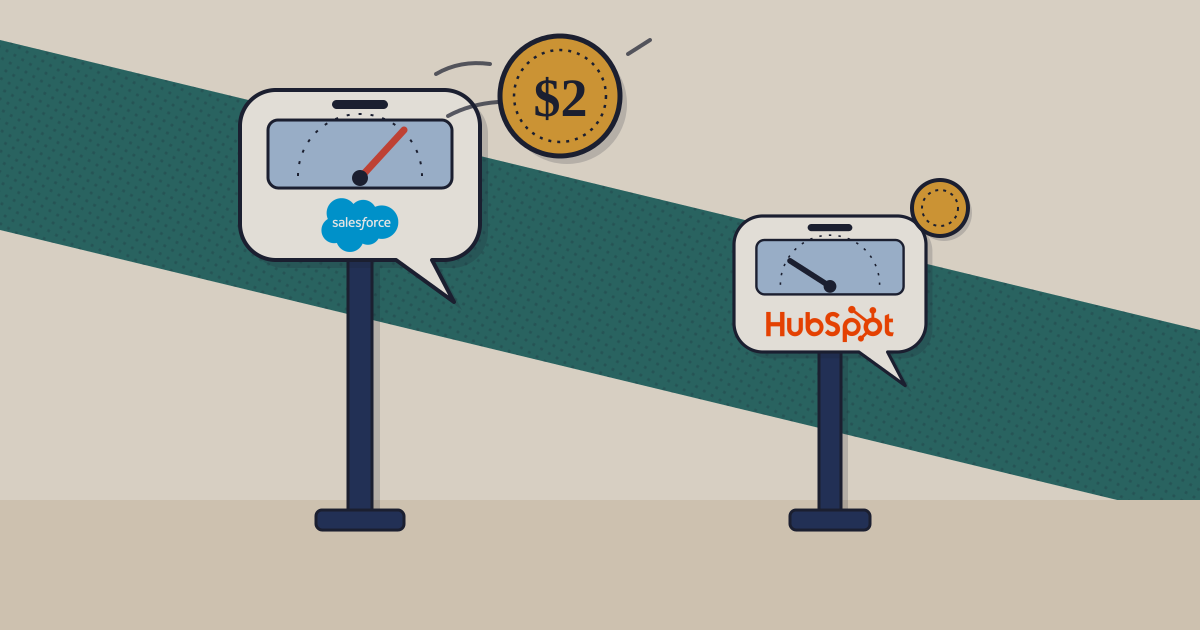
Salesforce charges US$2 a conversation; HubSpot 50 cents. CRM is now a system of action
What four vendors’ pricing pages say an AI agent costs on top of the CRM seat, in US$ and INR, and what the DPDP Rules make of an agent acting on customer data. Checked September 2026.

An earlier version of this piece argued that the CRM was stopping being a filing cabinet and becoming the place where sales and service work actually gets done. Now the argument needs numbers. Four vendors sell most of the CRM seats Indian businesses buy: Salesforce, HubSpot, Zoho and Microsoft. Each now sells an agent layer with a name (Agentforce, Breeze, Zia, Copilot) and a price list. The question an Indian buyer is trying to settle is simple: what does the agent cost on top of the seat, what exactly does it do when it “acts”, and who is answerable when it acts on a customer’s personal data. The rest of this piece is those three questions, answered from the vendors’ own pages as they stood at the end of September 2026.
01The seat still costs more than the agent
Start with the licence a human needs before any agent can run. Salesforce lists five Sales Cloud editions: Starter at US$25, Pro at US$100, Core at US$195, Advanced at US$395 and Max at US$550 a user a month, billed annually, and states that “AI can be added to Core and above”. The Agentforce for Sales add-on is “from US$125 a user a month”, so the cheapest agent-ready Salesforce seat is Core plus the add-on, US$320. Max bundles the add-on and 2.75 million Flex Credits per org per year.2 Salesforce’s India pricing page shows the same figures in US dollars, not rupees.
HubSpot lists Sales Hub Starter at US$20 a seat a month, Professional at US$100 and Enterprise at US$150, in US dollars “subject to applicable tax”, and includes 500, 3,000 and 5,000 HubSpot Credits a month respectively.3 Zoho lists its CRM in rupees for Indian buyers: Standard ₹800, Professional ₹1,400, Enterprise ₹2,400 and Ultimate ₹2,600 a user a month billed annually (US$14, US$23, US$40 and US$52 on the US price list), with Zia Agents, anomaly detection and the prediction tools named on the Enterprise edition page.7 Microsoft’s India page lists Dynamics 365 Sales Professional at ₹5,410, Sales Enterprise at ₹8,735 and Sales Premium at ₹12,480 a user a month paid yearly, GST on top; the US page has them at US$65, US$105 and US$150. Sales Enterprise is where “Copilot in Dynamics 365 and agentic capabilities” begin; Premium adds 1,000 Copilot Credits per user per month.10 11
Salesforce's cheapest agent-ready seat lists at eight times Zoho's, and the climb from its own entry seat is the steepest
US$ list price per user per month, billed annually: the entry edition against the lowest edition on which the vendor's own agents run, September 2026
- Entry edition
- Cheapest agent-ready edition
Table view
| Entry edition | Cheapest agent-ready edition | Change | |
|---|---|---|---|
| Salesforce Sales Cloud | 25 | 320 | 1180% |
| Microsoft Dynamics 365 | 65 | 105 | 62% |
| HubSpot Sales Hub | 20 | 100 | 400% |
| Zoho CRM | 14 | 40 | 186% |
Source: Salesforce, HubSpot, Zoho and Microsoft pricing pages; entry editions are Salesforce Starter, Dynamics 365 Sales Professional, HubSpot Starter and Zoho Standard; Salesforce's agent-ready figure is Core (US$195) plus the Agentforce for Sales add-on (US$125) · as of 30 September 2026 · Zoho lists ₹2,400 and Microsoft ₹8,735 on their India pages for the agent-ready edition; Salesforce and HubSpot publish US dollars only
02System of action, mechanically
“System of action” is a phrase every one of the four vendors now uses in some form, so it is worth saying what it means in plumbing terms. A system of record is written by people and read by software. A system of action reverses one of those arrows: software writes to the record, and people read what it wrote. The whole thing is four steps, and the vendors’ own documents name each one.
Four steps, one of them billed: the metered step is the write, not the read
The mechanism every vendor's agent follows, with the step each price list charges for, September 2026
- 01
Record changes
A form fill, a stage change, an inbound email, a schedule. Salesforce calls this a trigger or a conversation, HubSpot a workflow enrolment, Zoho a Zia Agent trigger, Microsoft an agent watching qualified leads.
- 02
Agent reasons
The model reads the record and whatever it is grounded in. Salesforce names topics and the Atlas Reasoning Engine; Zoho runs Zia LLM at 1.3, 2.6 and 7 billion parameters in US, Indian and European data centres.
- 03
Agent writes
A field is updated, an email drafted or sent, a task created, a meeting booked. This is the metered step: 20 Flex Credits a standard action, 50 HubSpot Credits a resolved conversation.
- 04
Human reviews
Someone approves, corrects or reverses it, and the log shows which agent acted on which trigger. No vendor bills for this step, and it is the one a buyer should insist on.
Source: Salesforce Agentforce pricing (Flex Credits per action); HubSpot Credits rate sheet; Zoho Zia Agents page; Microsoft Dynamics 365 Sales pricing · as of 30 September 2026
The reason the third step is the billed one is not technical. Reading a record costs the vendor a database call; writing one creates a unit the vendor can count, and every price list in this piece counts it. Salesforce’s pricing page puts it plainly: standard Agentforce actions cost 20 Flex Credits each and voice actions 30.1 HubSpot’s knowledge base says credits “are used only when specific actions are performed, like executing a Breeze action in a workflow”, and that unused credits “expire at the end of each usage period and do not roll over”.5 Zoho’s Zia LLM, announced on 17 July 2025 in three sizes, is the only one of the four models a buyer can point to a named Indian data centre for.9
03The price of the work, in three currencies
Convert the published credit rates into dollars and the agent layer becomes comparable for the first time. One US dollar buys 200 Salesforce Flex Credits, 125 Microsoft Copilot Credits in the standard pack, or 100 HubSpot Credits. Multiply by what each vendor says a unit of work costs and you get a price per action that none of them prints on the page.
A resolved customer conversation lists at US$0.50 on HubSpot and US$2 on Salesforce; a single action is US$0.10 on both
US$ list price per unit of agent work, derived from each vendor's published credit rate, September 2026
Source: Salesforce Agentforce pricing (US$500 per 100,000 Flex Credits; 20 or 30 credits an action; US$2 a conversation); HubSpot Product and Services Catalog rate sheet at US$0.010 a credit; TechBag arithmetic · as of 30 September 2026 · Microsoft publishes no per-action rate; Zoho charges no fee beyond model tokens, so neither is charted
The units are not the same unit. A Salesforce “conversation” is an exchange with a customer however many actions it takes; a HubSpot resolved conversation is billed only if the agent closes it. A Salesforce standard action is one step of a multi-step task; a HubSpot Data Agent prompt is one answer about one record. Comparing them is fair only at the level of a budget line, which is where a buyer works. And the included allowances are smaller than they sound.
Zoho has chosen not to play this game. Its Zia Agents page says “Zia Agents are free; you only pay your LLM vendor for the tokens you consume”, that Zoho-hosted models come with up to 30 million tokens a month at no charge, and that agents do not need their own CRM licences.8 That is a pricing position, not a charity: it makes the ₹2,400 Enterprise seat the whole bill for most Indian teams, and it is the sharpest contrast on offer to Salesforce, whose agent pricing has moved from US$2 a conversation in 2024 to Flex Credits in 2025 to per-user add-ons, as TechBag’s Agentforce page records.13
04Record versus action: what changes in the contract
Put the two models side by side and the commercial differences are not about intelligence at all. They are about who did the writing, how it is billed and who answers for it.
The contract changes in five places, and four of them are about who did the writing
System of record against system of action, as the four vendors' 2026 price lists and documentation describe them
System of record
- Per-user licence at a fixed annual price; the bill is known in advance
- People write to the record; software reads it for reports
- The audit question is who edited which field, and when
- The data-protection exposure is storage: where the record sits and who can see it
- GST is 18 percent of a figure you already know
System of action
- Seat plus metered agent work, in credits that expire monthly and overage billed in arrears
- Software writes to the record and to the customer: emails, field updates, bookings
- The audit question is which agent acted on which trigger, and who approved it
- The exposure is processing: an agent acting on personal data for a purpose the notice must cover
- GST is 18 percent of a figure that moves with usage, under reverse charge if the vendor bills in dollars
Source: Salesforce, HubSpot, Zoho and Microsoft pricing pages and credit documentation; DPDP Rules 2025 commencement schedule · as of 30 September 2026
The monthly expiry of included credits is the tell. A vendor that lets allowances lapse is pricing for habit, not for value, and a buyer should negotiate a credit cap, a monthly usage report and the review step as contract terms rather than settings. Of the four, only Zoho’s model has no expiring unit to negotiate over.
05Count the agents, not the adjectives
Our earlier version leaned on analyst phrases about “agentic” platforms. A cheaper test is to count what each vendor is willing to name on its own agent page. Salesforce names seven pre-built agents: Service Agent, Sales Development Representative, Sales Coach, Merchandiser, Buyer Agent, Personal Shopper and Campaign Optimizer.6 Microsoft’s Dynamics 365 Sales pricing page names four: Sales Qualification, Sales Opportunity, Sales Research and Sales Close, the last still in preview.10 HubSpot names three agents, Customer, Prospecting and Data, plus the Breeze Assistant and an agent builder for the rest.15
Salesforce names seven pre-built agents on its page, Microsoft four, HubSpot three; Zoho claims 25-plus and names three
Distinct pre-built agents named on each vendor's own agent or pricing page, TechBag count, September 2026
Source: Salesforce Agentforce page; Microsoft Dynamics 365 Sales pricing page; HubSpot AI agents page; Zoho press release of 17 July 2025 for the claim · as of 30 September 2026 · Use-case cards and custom agent builders are not counted; Zoho is not charted because its Zia Agents page lists no agents by name
None of the four pages publishes a task success rate, a resolution rate or an error rate for its agents. That is the number a buyer would most like to have and the one no price list carries, which is why the review step in Section 2 is not optional: it is the only place the accuracy figure will ever be measured, and it will be measured on your customers.
Sources
- Salesforce, Agentforce pricing (Flex Credits, conversations, add-ons) — undated page
- Salesforce India, Sales Cloud pricing (editions, Agentforce for Sales add-on, Flex Credit bundles) — undated page
- HubSpot, Sales Hub pricing (seats, included HubSpot Credits) — undated page
- HubSpot, Product and Services Catalog: HubSpot Credits rate sheet and credit pricing — undated page
- HubSpot Knowledge Base, Manage HubSpot Credits — last updated 16 September 2026
- Salesforce, Agentforce (named pre-built agents) — undated page
- Zoho, Zoho CRM Enterprise edition pricing (INR and USD price lists; Zia features) — undated page
- Zoho, Zia Agents in Zoho CRM (pricing FAQ) — undated page
- Zoho press release: Zia LLM, prebuilt agents, Agent Studio, MCP (Bengaluru) — 17 July 2025
- Microsoft, Dynamics 365 Sales pricing (US) — undated page
- Microsoft, Dynamics 365 Sales pricing (India, INR, GST on top) — undated page
- Microsoft, Copilot Studio (Copilot Credit packs) — undated page
- TechBag, Salesforce Agentforce intel page (pricing history) — 2026
- Legismith Partners, DPDP Rules 2025 commencement timeline — Rules notified 13 November 2025
- HubSpot, Breeze AI agents (named agents, agent builder, credits) — undated page
- Digital Personal Data Protection Act, 2023, Schedule (penalties) — 11 August 2023
- India Briefing, Digital services in India: OIDAR, GST applicability and reverse charge — updated 29 September 2023
Related on TechBag: the Agentforce intel page tracks the pricing history above; the Zoho CRM page carries the INR editions and the Zoho One arithmetic; the HubSpot Sales Hub page covers seats and tiers; and the catalogue lists every CRM TechBag covers.
Disclosure. TechBag is a software reseller: it earns a margin when a reader buys through it, including from vendors named here. The analysis is TechBag’s own; no vendor paid for or saw this piece before publication. Facts are labelled reported, TechBag count or our view.
Keep reading