Stage EDR content, not just the agent: Falcon now allows a 72-hour delay
How CrowdStrike's 2024 root-cause fixes made vendor content something a customer can stage, and four rollout questions for any EDR vendor, as of September 2026.

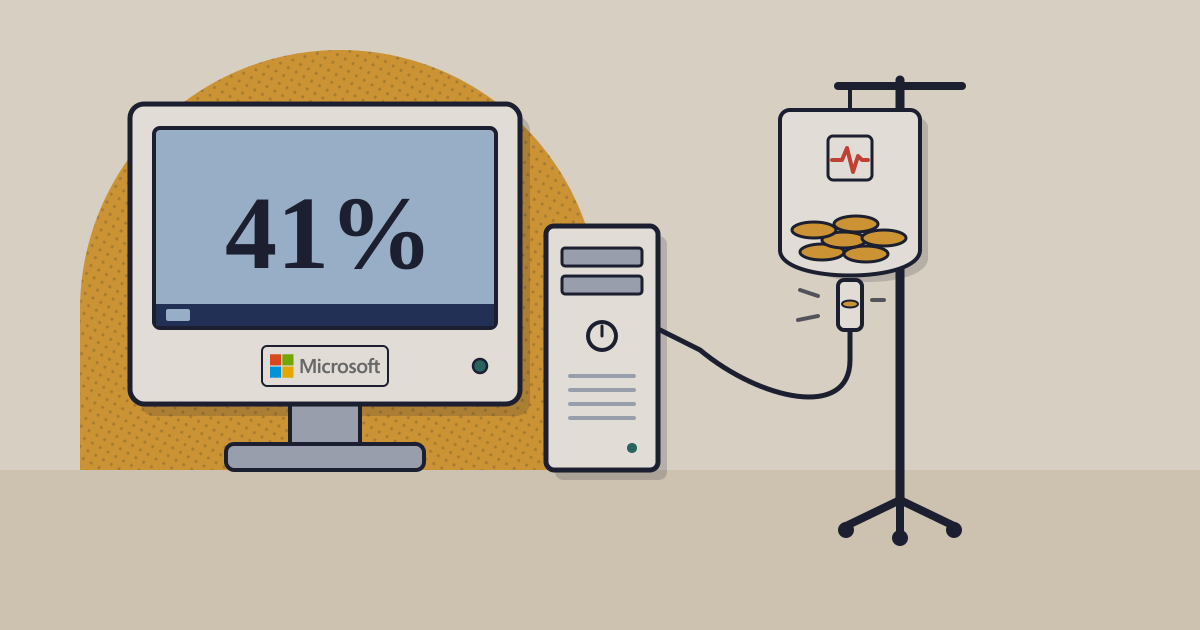
The decision that matters most when you implement EDR is not which features you switch on. It is how the vendor’s updates reach your machines, and whether you, not the vendor, decide which machines get them first. CrowdStrike’s faulty content update of 19 July 2024 is the case that settled the point; our account of that day has the timeline and the cost. This note is about the rollout lesson.
Our 2024 post on this subject listed “gradual rollout” as its first implementation tip: start in detect-only mode, pilot with a small group, then deploy. That advice is still right, and it covers the agent you install. It says nothing about the content the vendor pushes to that agent every day, which is what failed. The question a buyer should now ask is who controls that second stream, and how fast it can reach every machine at once.
01What failed was content, not the agent
CrowdStrike’s root-cause analysis of 6 August 2024 is specific. A new template for one sensor channel, Channel File 291, expected one more input field than the sensor supplied, and Windows hosts that received the file crashed.2 Before that day, Falcon customers could already hold their sensor one or two versions behind the latest (N-1 or N-2) through sensor update policies, and the vendor’s own review says the incident was not triggered by a sensor release.1 A team that had done the textbook thing, pinning the agent and piloting new versions, was exposed anyway, because the policy governed the agent and not the content.
The fix list that followed has two items a buyer can verify: every template instance now goes out in a staged rollout through deployment rings, and “customers can choose where and when Rapid Response Content updates are deployed”.2 That choice now exists as a policy object of its own, separate from the sensor version policy.3
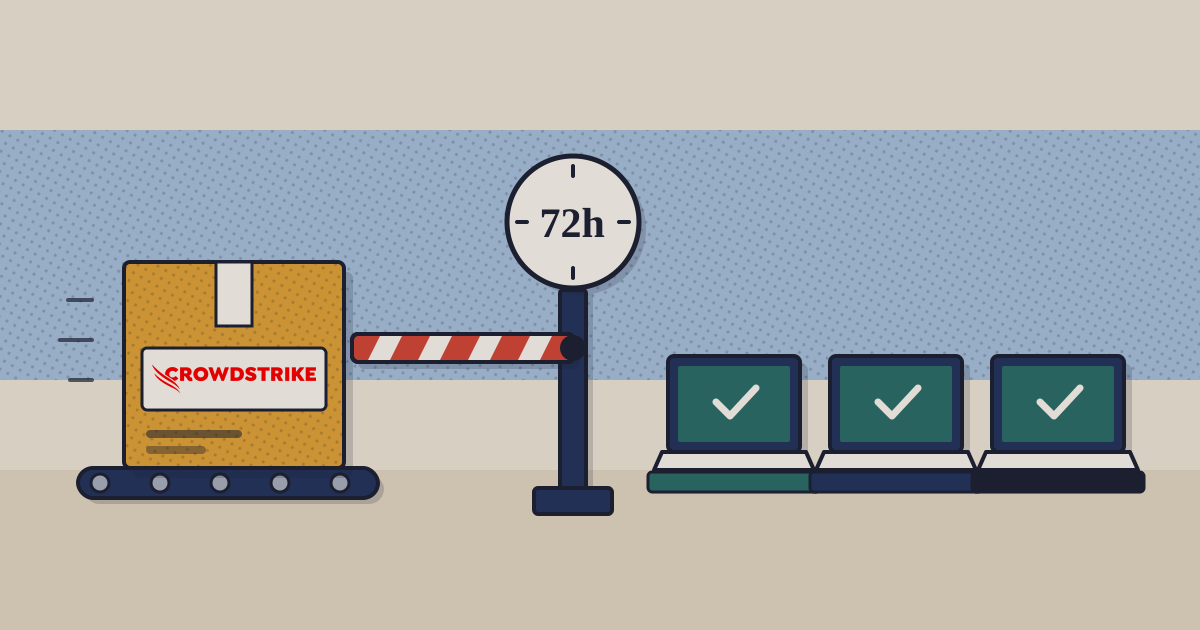
Falcon now gives the customer a second dial: content can be staged, delayed up to 72 hours or paused
Update controls a Falcon customer sets: sensor version policy and content update policy, as documented by CrowdStrike
N-2
Oldest sensor version a customer could pin, before and after July 2024
CrowdStrike PIR
4
Content categories with their own setting, Rapid Response among them
CrowdStrike docs
EA · GA · pause
Ring choices per category: early access, general availability, or hold
CrowdStrike docs
0 to 72 h
Delay a customer can add on the general-availability ring
CrowdStrike docs
Source: CrowdStrike preliminary post-incident review; CrowdStrike developer documentation, content update policy resource · as of 30 September 2026 · System-critical content cannot be paused; the delay applies only to the general-availability ring
Those four tiles are an implementation plan. A pilot group of ordinary office PCs on early access sees new content first; the bulk of the fleet sits on general availability with a delay of a few hours; servers and branch terminals that must not stop sit on the longest delay you can defend. The cost is real: a machine on a 24-hour delay receives a new detection a day after your pilot group does, which matters during an active campaign. That trade-off is yours to write down, and pause is not a setting to leave on.
02Four questions to put to any EDR vendor before rollout
- Which update streams exist, and which can I stage? Agent versions, detection content, and cloud-side models are different streams. Ask for each one in writing.
- Can I put a pilot ring ahead of production? A handful of machines from IT and one branch, a day ahead of everyone else, is cheap insurance. A vendor that cannot do this for content should say so.
- What happens in detect-only mode? The original advice holds: run the first weeks in audit, tune exclusions for your line-of-business software, then turn on blocking by group.
- How do I recover a machine that will not boot? Know where your disk-encryption recovery keys live and who can reach them at night, before you need them.
03Buying it in India
EDR is mostly priced in US dollars per device per year and invoiced in rupees through a reseller with 18% GST. TechBag’s endpoint protection guide lists CrowdStrike Falcon Insight at US$184.99 a device a year, while Seqrite’s EDR is quoted in rupees.4 CERT-In’s Directions of 28 April 2022 require a reportable incident to reach CERT-In within six hours and ICT logs to be kept for 180 days within India; your EDR console is usually where those logs and that clock start.5 The DPDP Rules, notified on 13 November 2025, bring the security-safeguard and breach-notice duties into force on 13 May 2027.6
Sources
- CrowdStrike, Falcon content update preliminary post-incident review — 24 July 2024
- CrowdStrike, Channel File 291 incident root-cause analysis — 6 August 2024
- CrowdStrike developer documentation, content update policy resource (four categories; ga, ea or pause; delay 0 to 72 hours) — undated page
- TechBag, Endpoint protection guide (36 products: depth, rollback, India, price) — version committed 30 September 2026; vendor documentation verified 22 August 2026
- CERT-In, Directions under section 70B(6) of the IT Act (six-hour reporting; 180-day logs) — 28 April 2022
- MeitY, Digital Personal Data Protection Act, 2023 and DPDP Rules, 2025 — 13 November 2025
Disclosure. TechBag is a software reseller: it earns a margin when a reader buys through it, including from vendors named here. The analysis is TechBag’s own; no vendor paid for or saw this piece before publication. Facts are labelled reported, TechBag count or our view.
Keep reading