Data & privacyAnalysis
7 of 18 DLP tools watch email, laptop and cloud; none documents a PAN detector
Channel by channel: what the 18 DLP and insider-risk products in TechBag's guide cover, what the two with a list price cost in rupees, and what none documents, September 2026.

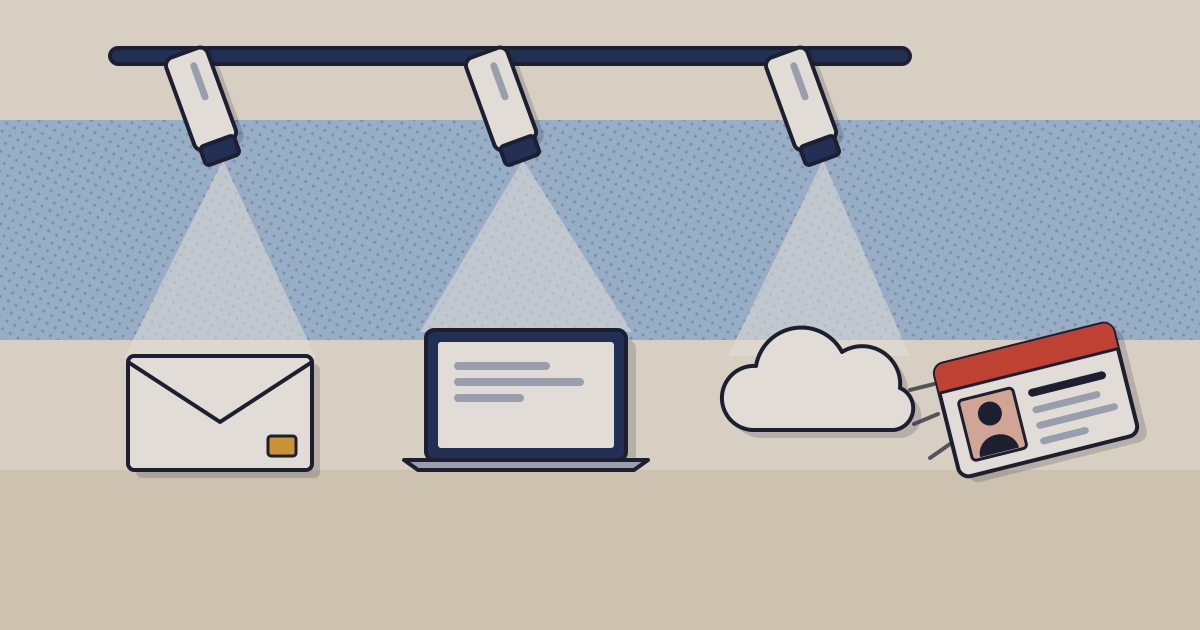
Data loss prevention inspects content at an exit and applies a rule: this file holds a card number, so it may not leave. Our 2024 post described the idea well enough and stopped there. The question a buyer actually has is narrower. Which product covers the exits my data really leaves by, do I already own one, what does it cost in rupees, and will it recognise an Indian identity number when it sees one? We counted the answers across the 18 products in our DLP guide as it stood on 30 September 2026.
01Seven of eighteen watch all three exits the 2024 post promised
The guide records, for each product, the channels its vendor documents: endpoint, email, web, cloud applications, removable media, print and AI prompts. Endpoint is the most common at 14 of 18. Email follows at 13, cloud at 11. Only 7 products document all three of the exits our 2024 post described.1
Endpoint is the most-covered exit; only 2 of 18 products watch what staff paste into AI tools
DLP and insider-risk products documenting each channel, of 18 in TechBag's guide, September 2026
Source: TechBag DLP & insider-risk guide, vendor-doc-verified 24 August 2026, TechBag count · as of 30 September 2026
The gaps follow the architecture. Inline platforms such as Zscaler and Netskope see web, cloud and email traffic that passes through them, and nothing on the device: no USB, no print. Endpoint-first products such as Trellix DLP Endpoint and Seqrite DLP are strong on the USB stick and blind to the cloud copy. The AI-prompt channel, the newest way data leaves, is documented by just two: Cyera Omni DLP and Seclore AI-DLP. A buyer who writes “DLP” in a requirement without naming the exits will get a working product watching the wrong door.
The 2024 post also missed a second question: not what left, but who is behaving differently. Content rules catch a file with a card number in it. They do not catch the employee who copies a little more each week in the month before resigning. Only 5 of the 18 products have what the guide rates as a full behavioural insider-risk engine; 4 have none, and 9 rely on rules and keywords rather than machine-learning classification, which means someone maintains the patterns by hand.1 If the incident that started your project was a leaver, shortlist from the five, not from the channel chart.
02Six of eighteen are modules you may already own
Twelve of the 18 are products you can buy on their own. The other six are modules of platforms carded in other categories: Zscaler and Netskope in SASE, CrowdStrike on the endpoint, Proofpoint and Mimecast in email, and Coro’s small-business platform. In each case the data control sits inside a subscription the buyer may already hold.1 The cheapest finding in any DLP project is that it was already paid for.
Two other constraints cut the list faster than any feature comparison. Fourteen of the 18 need their own endpoint agent, which has to coexist with the EDR, device-management and SASE agents already on the laptop; only four need none. And nine can run on your own infrastructure, which matters to the Indian estates whose classified content and incident evidence cannot sit in a vendor’s cloud.1
Check four entitlements before buying a standalone DLP product
The order in which TechBag checks for an already-licensed data-loss control, most likely first, September 2026
- 01
Microsoft 365
E5 adds automatic classification, endpoint DLP and insider-risk management. E3 carries manual and basic labelling only.
- 02
Your SASE contract
Data protection is a base module at Zscaler and Netskope, not an add-on in most plans.
- 03
Your email security
Proofpoint and Mimecast sell DLP and insider risk beside the filter. If email is the main exit, it is one line away.
- 04
Your endpoint agent
CrowdStrike sells Falcon Data Protection on the agent you already run. Narrower, but no second agent.
Source: TechBag DLP & insider-risk guide, cost section · as of 30 September 2026
03Two of eighteen print a price, and the licence is the small number
Sixteen of the 18 are quote-only or sold inside a platform. The two that publish are Forcepoint DLP, from about US$52 a user a year at entry and rising for the full channel stack, and Safetica, at US$72 to US$144 a user a year across its tiers.1 At our guide’s conversion of ₹83 to the dollar, that is about ₹4,316 a user a year for Forcepoint and ₹5,976 to ₹11,952 for Safetica.
The only published DLP prices run from about ₹4,300 to ₹12,000 a user a year
Published list price, ₹ per user per year before 18% GST, converted from USD at ₹83, September 2026
Source: TechBag DLP & insider-risk guide (vendor list prices), vendor-doc-verified 24 August 2026 · as of 30 September 2026 · 16 of 18 products are quote-only or priced inside a platform
For a 200-person company that is roughly ₹8.6 lakh a year for Forcepoint at entry and ₹12 lakh to ₹23.9 lakh for Safetica, before GST. Neither figure is the real budget. The guide’s assessment is that classification and policy tuning commonly cost more than the licence in the first year. Someone has to decide what “confidential” means in your organisation, write it down, and cut the false positives until blocking is safe to switch on.
04None of the eighteen documents an Indian ID detector
A DLP classifier is only as useful as the patterns it knows. US products ship detectors for social security numbers and US card formats. We looked for documented PAN, Aadhaar or GSTIN detection across all 18 products and found it for none.1 That does not prove they cannot be configured to find them, since most allow custom patterns, but it means the work and the testing fall to you.
Four of eighteen are built in India; none documents Indian identity-number detection
DLP and insider-risk products in TechBag's guide, by India attribute, of 18, September 2026
- Yes
- No
Table view
| Yes | No | |
|---|---|---|
| Document PAN, Aadhaar or GSTIN classification | 0 | 18 |
| Built in India: Data Resolve (2), Seqrite, Seclore | 4 | 14 |
| Document an India data region: Zscaler, Netskope | 2 | 16 |
| Document India residency at all | 6 | 12 |
Source: TechBag DLP & insider-risk guide, vendor-doc-verified 24 August 2026, TechBag count · as of 30 September 2026
Being built in India does not change the classifier result: Data Resolve, Seqrite and Seclore do not document Indian data-type detection either. The product that does is outside our 18. Microsoft Purview publishes a built-in sensitive-information type for the India Permanent Account Number, matched on the ten-character format plus nearby keywords.2 For an estate on Microsoft 365, that is one more reason to test what is already licensed before buying. For everyone else, make PAN and Aadhaar detection a proof-of-concept test on your own records, not a datasheet question.
Sources
- TechBag, DLP & insider-risk guide (version of 30 September 2026) — vendor-doc-verified 24 August 2026
- Microsoft Learn, India permanent account number (PAN) entity definition (Microsoft Purview) — page updated 15 June 2026
- Digital Personal Data Protection Act, 2023, Schedule (penalties) — 11 August 2023
- DPDP Rules 2025, commencement timeline — notified 13 November 2025
- CERT-In, Directions under section 70B(6) of the IT Act — 28 April 2022
- RBI, Cybersecurity, Technology Risk and Resilience Framework Directions, 2026, via practitioner summary — 31 July 2026 RBI PDF not fetched.
Related on TechBag: the DLP & insider-risk guide filters all 18 products by channel, deployment and India attributes; the DSPM guide covers finding the data before you guard its exits.
Disclosure. TechBag is a software reseller: it earns a margin when a reader buys through it, including from vendors named here. The analysis is TechBag’s own; no vendor paid for or saw this piece before publication. Facts are labelled reported, TechBag count or our view.
Keep reading