AI in the enterpriseAnalysis
EU AI Act now applies, but its high-risk rules slipped 16 months
What the EU AI Act began to require on 2 August 2026, what the digital omnibus moved to December 2027 and August 2028, and who owes what, as of 4 August 2026.

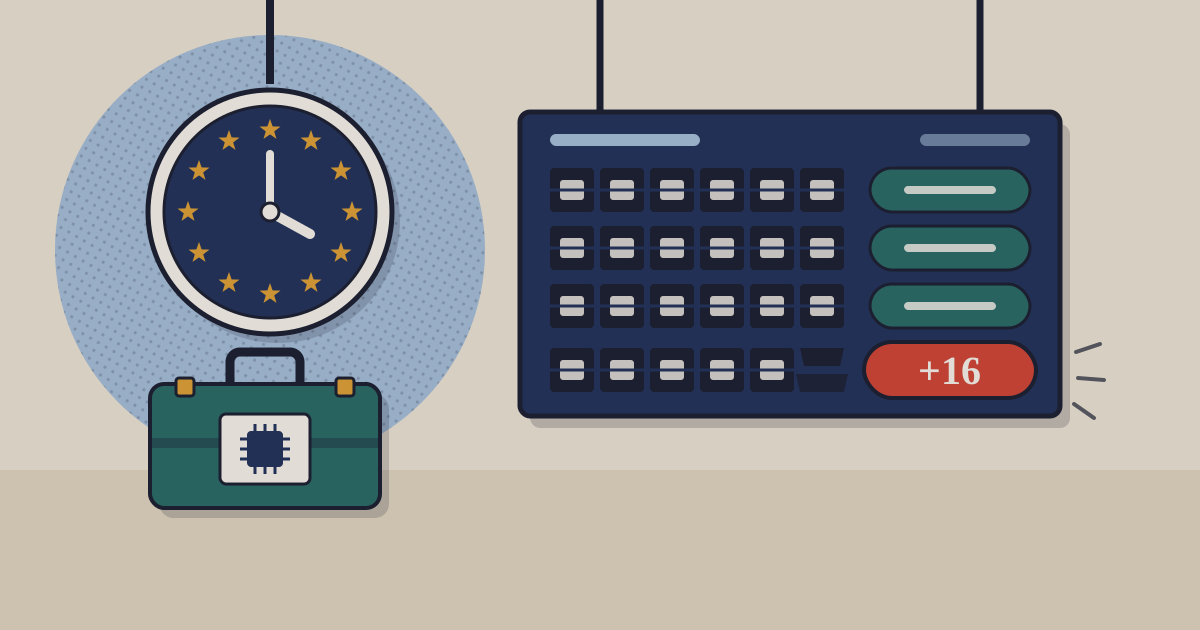
For two years, compliance teams were told that 2 August 2026 was the day the EU AI Act arrived in full. It did arrive, in part. The question for anyone who builds or runs AI that touches Europe, from a chatbot on an EU retailer’s site to a CV screener sold to a German employer, is narrower: which duties apply this week, which were pushed back and by how much, and whether you are a “provider” or a “deployer” in the Act’s terms, because that decides what you owe.
01What is live on 4 August, and what was already live
The AI Act entered into force on 1 August 2024 and switches on in stages.1 Three stages are behind us. Since 2 February 2025 eight practices have been banned outright, among them social scoring, manipulative techniques that cause significant harm, untargeted scraping of faces to build recognition databases, and emotion recognition at work and in schools. Since 2 August 2025 providers of general-purpose AI models, the large models other products are built on, have owed technical documentation, information for the companies building on them, a copyright policy and a public summary of their training content.1
On 2 August 2026 the Act became applicable as a whole, with the exceptions the omnibus carved out. In practice three things changed this week. Article 50’s transparency duties now bind. The European Commission’s power to fine general-purpose model providers, held back a year by Article 113, is now in force. And national market-surveillance authorities can enforce the transparency rules against anyone in scope.14
The bans, model duties and transparency rules are live; the high-risk regime is 16 and 24 months away
Application dates of the EU AI Act as amended by Regulation (EU) 2026/1744, February 2025 to August 2028
Table view
| Date | Event | Detail |
|---|---|---|
| 2 Feb 2025 | Bans and AI literacy | Eight prohibited practices; staff AI literacy |
| 2 Aug 2025 | General-purpose AI models | Documentation, copyright policy, training summary |
| 27 Jul 2026 | Omnibus in force | Published 24 July; moves the high-risk dates |
| 2 Aug 2026 | Act applies | Article 50 transparency; Commission can fine model providers |
| 2 Dec 2026 | Marking grace ends; new ban | Machine-readable marking for systems already on sale; nudifier and CSAM generators banned |
| 2 Aug 2027 | Older models, sandboxes | Pre-August 2025 models comply; national sandboxes due |
| 2 Dec 2027 | Annex III high-risk | Hiring, credit, education, biometrics and more |
| 2 Aug 2028 | Annex I high-risk | AI inside regulated products |
Source: Regulation (EU) 2024/1689, Article 113; Regulation (EU) 2026/1744; Gibson Dunn; Sidley Austin · as of 4 August 2026 · Dates after 4 August 2026 are fixed in law, not forecasts. Models on sale before 2 August 2025 have until 2 August 2027 to comply.
Article 50 is the part most firms will meet first. A provider must design any AI system that talks to people so they know it is an AI, unless that is obvious, and must mark synthetic audio, images, video and text in a machine-readable way so that it can be detected as artificial. A deployer must tell people when it runs emotion recognition or biometric categorisation on them, and must disclose deepfakes and AI-written text published to inform the public on matters of public interest, unless a human has reviewed it and taken editorial responsibility.1 A customer-support bot is not high-risk under the Act. It is, from this week, a system that has to say what it is.
02What the omnibus moved, and how it became law with six days to spare
The Commission proposed the “Digital Omnibus on AI” on 19 November 2025 as targeted simplification.3 A first round of three-way talks on 28 April 2026 ended without a deal; negotiators reached a provisional agreement on 6 May, and member-state representatives confirmed it on 13 May.4 The European Parliament adopted it on 16 June.5 The final act, Regulation (EU) 2026/1744, is dated 8 July 2026, was published in the Official Journal on 24 July26 and entered into force three days later, on 27 July.5 Until that publication, law firms had warned that the new dates would bind only once the text appeared in the Journal.4 It appeared in time.
Annex III high-risk rules moved 16 months and Annex I rules 12; transparency and the model duties did not move
When each obligation applies, in months after the AI Act entered into force on 1 August 2024: original Act vs as amended in July 2026
- Original Act
- As amended
Table view
| Original Act | As amended | Change | |
|---|---|---|---|
| Annex III high-risk | 24 | 40 | 67% |
| Annex I high-risk | 36 | 48 | 33% |
| National sandboxes | 24 | 36 | 50% |
| Marking, systems on sale | 24 | 28 | 17% |
| Article 50 transparency | 24 | 24 | 0% |
| General-purpose AI models | 12 | 12 | 0% |
| Prohibitions (Article 5) | 6 | 6 | 0% |
Source: Regulation (EU) 2024/1689, Article 113 (original); Regulation (EU) 2026/1744; Gibson Dunn; Sidley Austin · as of 4 August 2026 · TechBag arithmetic on the legal dates. The percentage beside each value is the change in that month count, not a measure of burden. Marking: the grace period covers only systems placed on the market before 2 August 2026.
The omnibus did more than move dates. It added a ninth ban, on systems that generate child sexual abuse material or non-consensual intimate imagery, the so-called nudifier apps, applying from 2 December 2026. It softened the AI-literacy duty that has applied since February 2025, which law firms read as a duty to support staff literacy rather than to guarantee a level of it. It extended to all AI systems the legal basis for processing sensitive personal data to detect and correct bias, under a strict-necessity test. It kept the duty to register Annex III systems a provider judges not to be high-risk, with a simpler procedure. And it extended some small-business relief to small mid-cap companies.45
03Provider or deployer: the role decides the duty
The Act hangs almost every obligation on one of two roles. A provider develops an AI system, or has one developed, and places it on the market or puts it into service under its own name or trademark. A deployer uses an AI system under its own authority in a professional activity.1 A software company selling a CV-screening product is its provider; the employer that screens applicants with it is the deployer. The same company can be both: a provider of what it sells and a deployer of the tools it runs internally.
Providers carry the build-time duties and most of the 2027 workload; deployers carry the duties of use
Obligations by role under the EU AI Act as amended, and when each applies, as of 4 August 2026
Provider (builds it, sells it under its name)
- Now: chatbots tell people they are talking to an AI; synthetic content is marked machine-readably (2 December 2026 for systems already on sale).
- Now: no prohibited practice; support staff AI literacy.
- Model providers, now: documentation, copyright policy and training summary; Commission fines possible from 2 August.
- From 2 December 2027 (Annex III): risk management, data governance, technical documentation, logging, human-oversight design, conformity assessment, CE marking, EU database registration.
- Outside the EU: appoint an authorised representative in the EU before selling a high-risk system there.
Deployer (uses it under its authority)
- Now: tell people when emotion recognition or biometric categorisation is used on them.
- Now: disclose deepfakes, and AI-written public-interest text that no human editor has taken responsibility for.
- Now: no prohibited practice; support staff AI literacy.
- From 2 December 2027 (Annex III): use as instructed, assign trained human oversight, keep logs at least six months, tell workers’ representatives before use at work, inform people a decision concerns.
- Credit and insurance deployers, and public bodies: a fundamental-rights impact assessment before first use.
Source: Regulation (EU) 2024/1689, Articles 4, 5, 16, 22, 26, 27, 50 and 53, with the dates set by Regulation (EU) 2026/1744 · as of 4 August 2026
Roles can change hands. A distributor, importer or deployer becomes the provider of a high-risk system if it puts its own name or trademark on one, makes a substantial modification, or changes a system’s intended purpose so that it becomes high-risk, for example by pointing a general chatbot at loan decisions.1 For Annex III systems that rule bites from 2 December 2027, but the contracts that decide whose name is on the product are being signed now.
04What getting it wrong can cost
The penalty tiers are set as a fixed sum or a share of total worldwide annual turnover for the preceding financial year, whichever is higher. The share is of the whole group’s worldwide turnover, not its EU sales. For small and medium-sized firms, and since the omnibus for small mid-caps on the middle and lower tiers, the cap is whichever is lower.17 Member states set the penalties for operators; the Commission alone fines general-purpose model providers.1
Breaking a transparency or deployer duty can cost up to €15 million or 3% of worldwide turnover
Maximum fixed fine by type of breach under the EU AI Act, € million; the turnover alternative is in the note
Source: Regulation (EU) 2024/1689, Articles 99 and 101, as amended by Regulation (EU) 2026/1744 · as of 4 August 2026 · Each cap is the fixed sum or a share of worldwide annual turnover, whichever is higher: 7% for prohibited practices, 3% for operator duties and for general-purpose model providers, 1% for misleading information. For SMEs, and small mid-caps on the lower two tiers, the lower of the two applies.
The middle tier is the one that matters this week, because it covers the Article 50 transparency duties as well as the deployer and provider duties that arrive in 2027.1 A chatbot that does not say it is a chatbot is now, in principle, a breach in that tier.
Sources
- Regulation (EU) 2024/1689, the Artificial Intelligence Act: Articles 2, 3, 4, 5, 16, 22, 25, 26, 27, 50, 53, 99, 101, 111 and 113 — 13 June 2024, published 12 July 2024
- Regulation (EU) 2026/1744, Digital Omnibus on AI, amending Regulations (EU) 2024/1689, 2018/1139 and 2023/1230 — 8 July 2026, published 24 July 2026
- European Commission, Digital Omnibus on AI Regulation Proposal — 19 November 2025
- Gibson Dunn, EU AI Act Omnibus agreement: postponed high-risk deadlines and other key changes — 27 May 2026
- Sidley Austin, Data Matters: EU lawmakers reach provisional agreement to delay key EU AI Act obligations — 22 June 2026
- MySolution, Omnibus digitale sull'IA: pubblicato il Regolamento UE 2026/1744 che modifica l'AI Act — 28 July 2026
- AI Act consolidated text with the omnibus amendments: Annex III, Articles 99 and 113 — text as amended by Regulation (EU) 2026/1744, 24 July 2026
- Business Today, Govt tightens rules on AI-generated content, mandates labels and faster takedowns — 10 February 2026
- Entrepreneur India, India's AI guidelines adopt a softer approach — 10 November 2025
Disclosure. TechBag is a software reseller: it earns a margin when a reader buys through it, including from vendors named here. The analysis is TechBag’s own; no vendor paid for or saw this piece before publication. Facts are labelled reported, TechBag count or our view.
Keep reading