Data & privacyNote
DoT had ISPs block 129 betting sites on two court orders the courts disowned
What DoT’s 2 September letter, its email trail and the courts’ statements record: how two orders in High Courts’ names reached India’s ISPs, July to November.

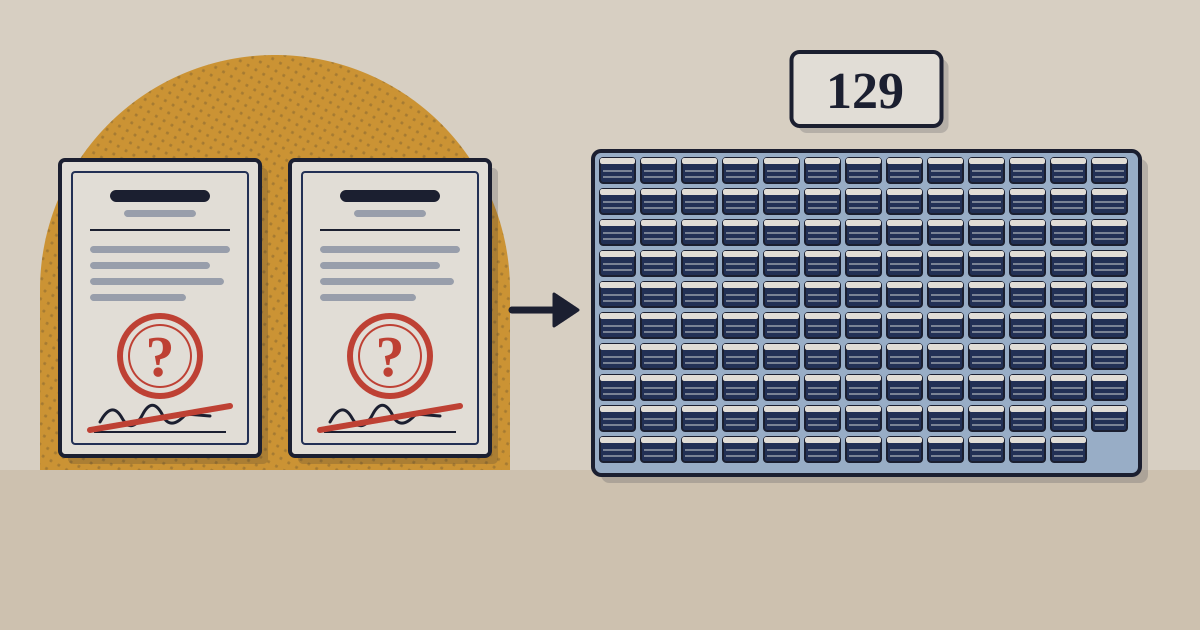
India’s internet providers were told this year to block 129 betting websites on two High Court orders the courts have since disowned. The Department of Telecommunications (DoT) instructed them to block 34 sites on 21 July, on an order in the Rajasthan High Court’s name, and 95 on 2 September, on one in the Allahabad High Court’s name, Reuters reported on 11 November.3 DoT’s letter of 2 September, still on its website on 12 November, encloses that order and the emails that brought it.1
34
sites ISPs were told to block on 21 July (Rajasthan order)
Reuters
95
sites ISPs were told to block on 2 September (Allahabad order)
DoT letter
2,700+
ISPs DoT says it instructs one by one, by email and its website
DoT
42
posts and accounts in separate fake reports to X in Delhi Police’s name
IFF
01How an order reaches an ISP, as the record shows it
On 22 August an email signed “Kartikey Pandey, Senior Advocate”, from an address at legal-lawassosciate.com, reached DoT’s law director and the telecom secretary’s office. It enclosed an order dated 14 August in a case numbered Writ-A No. 30480 of 2026, Sahil Singh v MeitY, and a list of 95 domains, and asked for blocking within 24 hours. The order itself says it is to be served “exclusively” from that address.1
On 24 August DoT’s law division passed it to the Director General Telecom, noting that “only a copy of the order” had come, without the petition. On 28 August DoT asked the sender for the list in Excel. On 2 September it wrote to “All Licensees with Internet Service Authorization” to block the 95 sites, copying the electronics ministry, MeitY, “to take action as per the said Court order”, and the sender as “Senior Advocate”.1 A standing note attached to the letter says more than 2,700 ISPs, connected in a mesh, are instructed one by one by email and through DoT’s website.1 The email trail DoT published contains no message to the court or to the standing counsel the order names.1
02What the courts said
ISPs were told to block 34 sites two days after one order arrived, and 95 eleven days after the other
Dates in DoT's letter of 2 September and in Reuters' reporting, July to November 2026
Show tableHide table
| Date | Event | Detail |
|---|---|---|
| 19 Jul 2026 | Order in Rajasthan HC’s name emailed to DoT | 8:59pm, from an ‘Aryan Chaudhary’ (Reuters) |
| 21 Jul 2026 | DoT tells ISPs to block 34 sites | |
| 14 Aug 2026 | Date on the order in Allahabad HC’s name | |
| 22 Aug 2026 | That order emailed to DoT | asks for blocking within 24 hours |
| 2 Sept 2026 | DoT tells ISPs to block 95 sites | |
| 6 Nov 2026 | Allahabad HC goes to police; X tells Delhi HC of fake reports | |
| 11 Nov 2026 | Reuters reports the two orders |
Source: DoT letter of 2 September 2026; Reuters via MediaNama, 11–12 November 2026; IFF and MediaNama, 6 November 2026 · as of 12 November 2026
The Allahabad High Court filed a police complaint on 6 November, and police registered a case of forgery and cheating against unknown persons; the judge’s office told them “no such order has been passed by Her Ladyship.” The Rajasthan High Court’s registrar told Reuters its order “appears to be fraudulent” and is not on its server. Reuters could not establish who forged the orders, and DoT did not respond to it.3 On 12 November DoT’s July–September list of blocking letters held the 2 September letter but none dated 21 July; the list shows it was last changed at 7:41pm IST on 11 November.2
03A separate case: takedown reports in Delhi Police’s name
On 6 November X told the Delhi High Court that two takedown reports filed through its public form in the name of Delhi Police’s Special Commissioner (Crime) came from an email that appears to be fake, that it had complained to the police and would not act on them. Justice Amit Mahajan recorded the statement and closed the petitions.5 The reports, of 31 October and 2 November, named 42 posts and accounts, including the whole accounts of the Internet Freedom Foundation (IFF), SFLC.in and @geoblockedindia, and the second cited a three-hour removal window.4 IFF is a petitioner in the case, and these details come from its account.
The rule behind that window is explained in our Analysis of India’s three-hour takedown rule.
Sources
- Department of Telecommunications, DGT HQ: Writ-A No. 30480 of 2026, instructions to all licensees with internet service authorisation, with enclosures (file 4-10/2025-DGT/4) — 2 September 2026
- Department of Telecommunications: Blocking notifications/instructions to internet service licensees under court orders (July–Sept 2026) — 11 November 2026 (last changed; read 12 November)
- MediaNama: 129 betting websites blocked on fake court orders, citing Reuters of 11 November — 12 November 2026
- Internet Freedom Foundation (a petitioner): Takedown reports in the Delhi Police’s name were “fake”, X tells the Delhi High Court — 6 November 2026
- MediaNama: Impostor sent fake Delhi Police takedown notices against IFF, SFLC.in, X tells Delhi HC — 6 November 2026
Disclosure. TechBag is a software reseller: it earns when companies buy through it, including from vendors named here. The analysis is TechBag’s own; no vendor paid for or saw this piece before publication. Facts are labelled reported, TechBag count or our view.
Keep reading