SecurityThreats & vulnerabilitiesNote
One Optimizely flaw put malware in 188 site scripts, at Zoom, CNN and the BBC
Report URI’s check of 1,611 Optimizely scripts and Optimizely’s notice, 16–17 November: how one flaw let attackers rewrite 178 organisations’ code, and what it stole.

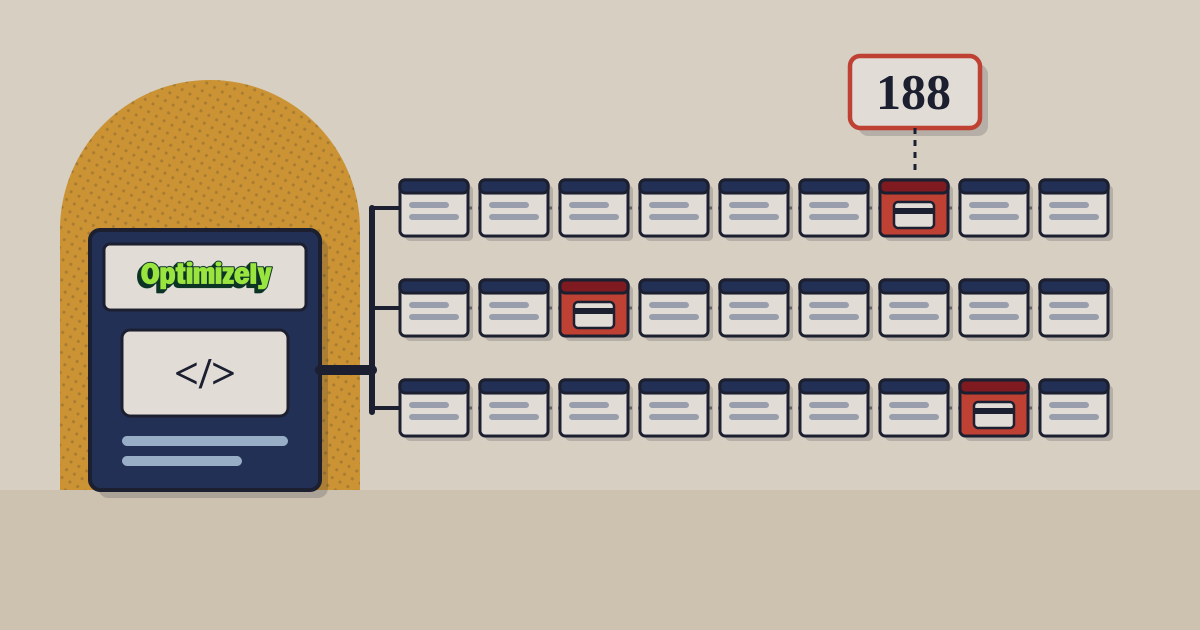
For about 19 hours on 16 November, the JavaScript that Optimizely serves to its customers’ websites carried malware. Report URI, a script-monitoring company, fetched 1,611 Optimizely snippets it could find and found the code in 188 of them, belonging to 178 organisations, among them Zoom, the BBC, CNN, Salesforce, GitLab and HSBC.1 The 1,611 is Report URI’s sample, not Optimizely’s customer count; it says the real number is likely higher. Optimizely said early on 17 November that an unauthorised party “exploited a vulnerability in Experimentation” to add malicious JavaScript to some customer projects, and that the flaw is fixed and the code removed.2
188
infected snippets among the 1,611 Report URI checked
Report URI
178
organisations those 188 snippets belong to
Report URI
~19h
from the first injection seen to every file clean
Report URI
~US$7,000
in crypto received by the attackers’ wallets on 16 November
Report URI
01Trusted file, rewritten contents
Optimizely’s experimentation product works by having each site load a snippet from cdn.optimizely.com. Besides Optimizely’s own code and the customer’s experiments, the snippet carries “Project JavaScript”, custom code the customer writes in its dashboard that runs on every page. The attacker wrote a loader into that field and left the rest untouched, so the file still came from Optimizely’s own host, with its certificate. Report URI found three versions: a plain script tag, the same address hidden in base64, and a full inline copy that runs if the address is blocked. Sites that serve the snippet from their own domain were hit too, because the content comes from the same Optimizely project. Smartsheet’s snippet was cleaned once and then infected again, and the snippets for Optimizely’s own website and login page carried the code as well.1 Optimizely told BleepingComputer the flaw sat in its “Experimentation account signup flow”; it says it has blocked that path, ended sessions, revoked tokens, reset affected accounts and notified all affected customers.3
The payload, rebuilt 26 times during the day, swapped cryptocurrency wallet addresses on the page and in the clipboard, skimmed card numbers typed into a site’s own forms (not hosted payment frames such as Stripe’s), sent cookies and screenshots out, and on iPhones and iPads loaded the Coruna and DarkSword exploit kits.1 BleepingComputer says scans on urlscan.io show the script loading, or trying to load, on sites including Zoom, KLM, the BBC, CNN, Smartsheet and Salesforce; Salesforce said it had disabled Optimizely scripts across its instances while it investigates.3
Malware ran in Optimizely snippets for about 19 hours before every file was clean
Optimizely Web snippet compromise, 16 to 17 November 2026, in UTC (IST in each detail)
Show tableHide table
| Date | Event | Detail |
|---|---|---|
| 16 Nov, 04:21 UTC | First injection seen | In the BBC’s snippet; 9:51am IST |
| 16 Nov, 08:28 UTC | Payload on bbc.com | Wallet-address swapper; 1:58pm IST |
| 16 Nov, 13:43 UTC | Card skimmer added | 7:13pm IST |
| 16 Nov, 17:13 UTC | iOS exploit added | Every visit on iOS 18.6 or earlier; 10:43pm IST |
| 16 Nov, 19:24 UTC | 186 of 1,611 infected | Report URI’s sweep; 12:54am IST, 17 Nov |
| 16 Nov, 23:11 UTC | All files clean | 4:41am IST, 17 Nov |
| 17 Nov, 00:37 UTC | Payload domain held | Stops resolving; 6:07am IST |
| 17 Nov, 01:02 UTC | Optimizely’s notice | Status page; 6:32am IST |
Source: Report URI (investigation and 17 November update); Optimizely status page · as of 17 November 2026, 10:30pm IST
02What a site owner and a visitor should check
Report URI crawled the affected organisations’ own sites. Of the 159 it could rate, 68 had no Content Security Policy and 50 had one that let both the payload and the data theft through; 24 blocked the payload outright with a restrictive list of script sources. Allowing cdn.optimizely.com did not help, since the code came from there; HSBC’s policy stopped the remote file but allowed unsafe-eval, which Optimizely’s own documentation tells customers to permit, so the inline copy still ran.1
Sources
- Scott Helme (Report URI), World’s Largest Brands Infected With Malware Via Optimizely — 16 November 2026, updated 17 November 09:17 UTC
- Optimizely Service Status, Web Experimentation Security Incident — 17 November 2026, 01:02 UTC
- BleepingComputer, Optimizely hack infected CNN, Fox News, BBC, Salesforce sites with malware (with Optimizely’s and Salesforce’s statements) — 16 November 2026, 21:12 ET
Disclosure. TechBag is a software reseller: it earns when companies buy through it, including from vendors named here. The analysis is TechBag’s own; no vendor paid for or saw this piece before publication. Facts are labelled reported, TechBag count or our view.
Keep reading