Security operationsAnalysis
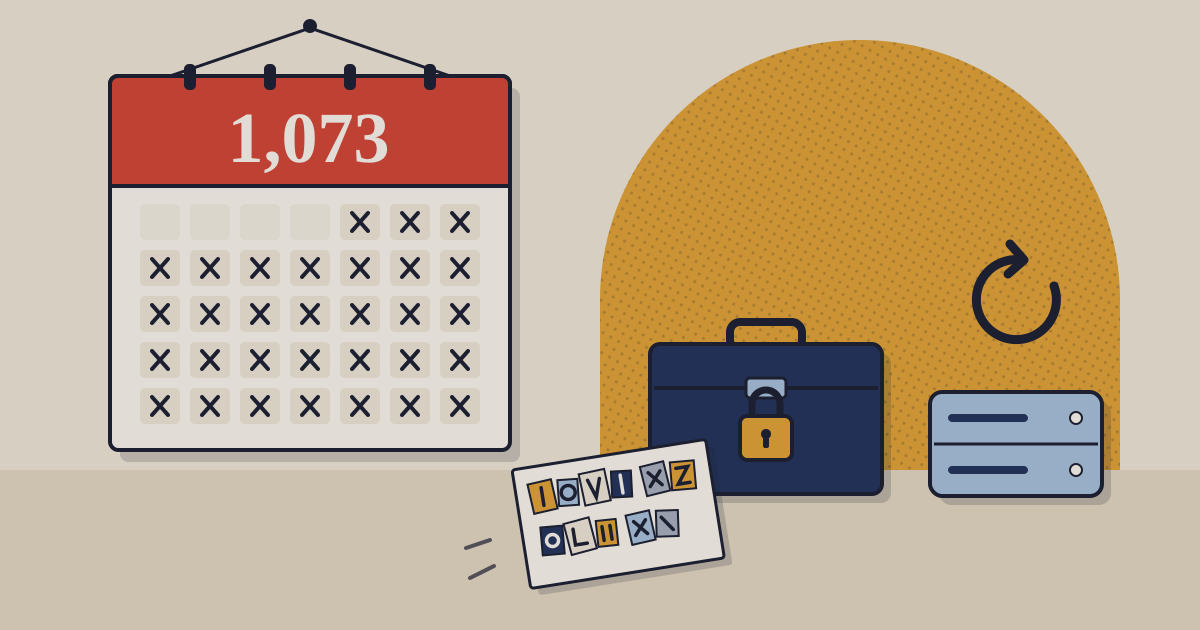
Ransomware victims hit 1,073 in August, the year's high; most don't pay
NCC Group's victim counts, Coveware's payment data and Verizon's DBIR, January to August 2026, and what they change for backup, detection and response.

Two numbers that look as if they cannot both be true moved together this year: more organisations named as ransomware victims, and fewer of them paying. If you run IT or security, the question is what that combination says about the attack you should plan for, and whether the backup, detection and response you bought for the old attack still covers the new one. We read NCC Group’s monthly counts, three quarters of Coveware’s incident data, Verizon’s Data Breach Investigations Report and one Indian disclosure, and set them against what the products in our guides document. Our earlier piece on why 3-2-1 backup is not enough covers attacks on the backups themselves; this one is about the attack that does not need them.
011,073 in August: the second record month in a row
NCC Group counted 2,165 ransomware attacks in the first quarter of 2026 and 2,229 in the second, a rise of 3%.2 That is a flat year: about 720 to 740 a month. Then the summer broke the pattern. NCC’s August report puts July at 973 and August at 1,073, 12% higher, and its head of cyber intelligence, Matt Hull, called August “the second consecutive month of highest ransomware levels for the year.”1 He put it down to “rapid advancements in AI and ongoing geopolitical volatility”; NCC gives no measurement behind that attribution, so we treat it as the firm’s view.
After a flat first half, July and August each set the year's high
Ransomware attacks recorded by NCC Group: monthly average for each quarter, then July and August 2026
attacks
Table view
| Attacks recorded | |
|---|---|
| Q1 avg | 722 |
| Q2 avg | 743 |
| July | 973 |
| August | 1,073 |
Source: NCC Group, Threat Pulse for June (Q1 and Q2 totals) and for August 2026, via Infosecurity Magazine · as of 23 September 2026 · Q1 and Q2 bars are quarterly totals divided by three (TechBag arithmetic)
Two cautions before reading too much into it. August is a 2026 high, not an all-time one: NCC’s record month is still February 2025, at 1,099.3 And the latest month is a floor, not a final count. When NCC first reported July, in late August, it gave 894 attacks;3 a month later the same July stood at 973.1 That is 79 more victims, 9%, added a month after the fact (our arithmetic). A victim that is never named publicly never enters a count like this at all.
02Who: one veteran, one newcomer and a long tail of brands
Five groups accounted for 455 of August’s 1,073 victims. Qilin led with 164; by NCC’s count it had been the most active group for five consecutive quarters to June.12 The one to watch is second. The Gentlemen, a ransomware-as-a-service operation that GuidePoint says emerged in August 2025, went from 35 victims in the last quarter of 2025 to 182 in the first of 2026,4 238 in the second by NCC’s count,2 and 116 in August alone.1 A year from launch to the top two.
The Gentlemen, a year-old brand, named the second-most victims in August
Ransomware victims attributed to each group by NCC Group, August 2026
Source: NCC Group, Threat Pulse for August 2026, via Infosecurity Magazine · as of 23 September 2026
Below the top five, the names churn. NCC flagged a new group, CRPxO, claiming 36 victims in July, and warned that its evidence was inconsistent and that new groups often exaggerate.3 Another newcomer, KryBit, entered NCC’s top ten in the second quarter.2 And the league table depends on who is counting. Coveware, which negotiates for victims, saw a different top five in its second-quarter cases: Lone Wolf 17%, ShinyHunters 12%, Akira 9%, The Gentlemen 8% and DragonForce 4%.6 In Cowbell’s insurance claims, Akira was behind 38.8% of cases with a known attacker and Qilin 14.2%.10
03Where: industry, and North America first
Industrial firms were 31% of August’s victims, almost a third; consumer goods and services 18%, healthcare 12%, information technology 11% and financial services 6%.1 Industry has led every month of the summer: 28% in June and 28% in July.23 Our reading, not NCC’s: a stopped production line costs money by the hour, which is pressure to settle fast.
North America and Europe held 70% of August's victims; Asia had 13%
Share of ransomware victims by region, August 2026
- North America44% 44%
- Europe26% 26%
- Asia13% 13%
- South America6% 6%
- Other or unassigned11% 11%
Table view
| Value (%) | Share | |
|---|---|---|
| North America | 44 | 44% |
| Europe | 26 | 26% |
| Asia | 13 | 13% |
| South America | 6 | 6% |
| Other or unassigned | 11 | 11% |
Source: NCC Group, Threat Pulse for August 2026, via Infosecurity Magazine · as of 23 September 2026 · Other = Africa 2%, Oceania 2% and the 7% NCC did not assign to a region
Asia’s 13% of 1,073 is about 139 victims (our arithmetic). In June NCC counted 133 in Asia, then 20% of a smaller month.2 The share fell because North America and Europe grew; the number of Asian victims held steady. NCC publishes no figure for India.
04Fewer pay, and the typical payment halved
More victims has not meant more money. Verizon’s 2026 Data Breach Investigations Report, built on more than 22,000 confirmed breaches across 145 countries, found ransomware in 48% of breaches, up from 44% a year earlier, and found that 69% of ransomware victims did not pay.5 Coveware’s caseload shows the same direction quarter by quarter: 23% of its clients paid in the third quarter of 2025, a historical low;9 about 20% in the fourth, a new low;8 23% in the first quarter of 2026;7 and in the second, a rate that “sunk to a new record low”.6 Where the attacker only stole data and encrypted nothing, 15% paid.6
The median payment halved to US$150,000 while a few big settlements pushed the average to US$1.9m
Median and average ransom paid in Coveware cases, US$ thousand, Q3 2025 to Q2 2026
- Average
- Median
US$ thousand
Table view
| Average | Median | |
|---|---|---|
| Q3 2025 | 377 | 140 |
| Q4 2025 | 592 | 325 |
| Q1 2026 | 680 | 301 |
| Q2 2026 | 1,881 | 150 |
Source: Coveware quarterly reports, October 2025 to July 2026 · as of 29 July 2026
The two lines say different things, and the median is the one to plan with. Coveware’s median payment fell 50% in the second quarter to US$150,000; the average rose 176% to US$1,880,612.6 Coveware had already warned that its average is skewed by “a small number of outsized settlements”.8 Insurers see the longer trend: Cowbell’s 2026 claims report says ransomware attacks rose 45% in 2025 while average payments fell roughly 44% between 2022 and 2025.10
05Restore, Stop, Prove: what changes for backup, detection and response
A theft-only attack needs no malware on a server and nothing to decrypt. ShinyHunters, second in Coveware’s caseload, is the clean example: Microsoft describes callers “impersonating IT support personnel” who talk staff into approving an app “disguised as a legitimate Salesforce Data Loader tool”, followed by “mass exfiltration of sensitive CRM records”. Microsoft adds that this “was not the result of a vulnerability inherent to Salesforce.”11 Your backup is untouched and useless against it. We call the buyer’s test Restore, Stop, Prove: three questions, each needing a different product.
Restore still matters, because the big groups still encrypt. The change is that a restore must be clean and the copy must survive a stolen admin login. Coveware’s second-quarter advice puts phishing-resistant MFA on backup admin accounts and calls for “clear authority over backups, isolation, rebuilds, and business restoration”.6 In our cyber-recovery guide, 6 of 15 products document an immutability lock nobody can lift during retention, 7 scan backups for malware before a restore, and 3 document an isolated clean room to recover into.18
Only 3 of 15 cyber-recovery products document a clean room; fewer than half scan backups before restore
Capabilities documented by the vendor, 15 cyber-recovery products, as of September 2026
- Documented
- Not documented or not applicable
Table view
| Documented | Not documented or not applicable | |
|---|---|---|
| Malware scan of backups before restore | 7 | 8 |
| Immutability lock nobody can lift | 6 | 9 |
| Anomaly or encryption detection | 6 | 9 |
| India data region documented | 4 | 11 |
| Isolated clean-room recovery | 3 | 12 |
Source: TechBag Cyber Recovery guide, vendor documentation verified 22 August 2026 · as of 24 September 2026 · Two of the 15 are detection services that hold no data, so the lock does not apply to them
Stop is the leg most budgets underfund. It means watching and blocking data on its way out: auditing OAuth grants and API tokens, treating network discovery as an early alarm,6 and data loss prevention that can block rather than only report. Ransomware rollback in an endpoint agent, which 12 of the 36 products in our endpoint guide document,20 undoes encryption; it does nothing about a file already copied out.
Prove is what the lawyers, the regulator and the extortionist all ask next: what exactly left, and whose data was it. Coveware lists the ability to “assess exfiltration quickly” next to containment.6 That answer comes from logs kept long enough and from knowing where sensitive data lives, which is a purchase decided before the incident, not during it.
Sources
- Infosecurity Magazine (Danny Palmer): ransomware attacks reach 2026 high, reporting NCC Group's Cyber Threat Intelligence Report for August 2026 — 23 September 2026
- NCC Group: Monthly Threat Pulse, review of June 2026 (Q1 and Q2 totals) — 22 July 2026
- NCC Group: Monthly Threat Pulse, review of July 2026 — 26 August 2026
- GuidePoint Security: GRIT Q1 2026 Ransomware & Cyber Threat Insights Report — covers Q1 2026 Page undated.
- Help Net Security: lessons from Verizon DBIR 2026 findings — 25 May 2026
- Coveware: Adverse cyber extortions are more common than commonly advised (Q2 2026 report) — 29 July 2026 Date as displayed on the page.
- Coveware: Patch management goes from hard, to ludicrous in the agentic AI era (Q1 2026 report) — 30 April 2026
- Coveware: Why Zero-Day Downstream Mass Data Extortion Campaigns are Losing Their Bite (Q4 2025 report) — 3 February 2026
- Coveware: Insider Threats Loom while Ransom Payment Rates Plummet (Q3 2025 report) — 24 October 2025
- Insurance Journal (Allen Laman): Cowbell 2026 claims report — 8 May 2026
- Microsoft Security Blog: Defending SaaS-based applications against ShinyHunters OAuth abuse — 13 July 2026
- Business Today: What Bajaj Auto ransomware attack says about cyber security risks for Indian automakers (quotes the exchange filing) — 24 June 2026
- Autocar Professional: Bajaj Auto reports ransomware attack, says operations safeguarded after swift response — 23 June 2026
- CERT-In, Directions under sub-section (6) of section 70B of the IT Act, 2000 (No. 20(3)/2022-CERT-In), paras (i), (ii), (iv) and Annexure I — 28 April 2022 Effective 60 days from issue.
- Vinod Kothari Consultants: Cyber security incidents to be reported quarterly to stock exchanges (LODR Regulation 27(2)(ba), Second Amendment Regulations of 14 June 2023; exchange format of 29 September 2023) — 4 October 2023
- Digital Personal Data Protection Rules, 2025, Rule 7 (intimation of personal data breach), text of G.S.R. 846(E) — 13 November 2025 Reproduction of the Gazette text.
- DPDP Rules 2025 commencement timeline (Rule 7 from 13 May 2027) — notified 13 November 2025
- TechBag, Cyber Recovery guide: 15 products; immutability, malware scanning, clean-room and India-region fields — vendor documentation verified 22 August 2026
- TechBag, DLP & Insider Risk guide: 18 products; enforcement mode and India-region fields — vendor documentation verified 24 August 2026
- TechBag, Endpoint Protection guide: 36 products; ransomware rollback field — vendor documentation verified 22 August 2026
Related on TechBag: the Cyber Recovery guide compares immutability, scanning and clean rooms across 15 products; the DLP & Insider Risk guide covers the tools that stop data leaving; the Endpoint Protection guide records which agents roll back encryption.
Disclosure. TechBag is a software reseller: it earns a margin when a reader buys through it, including from vendors named here. The analysis is TechBag’s own; no vendor paid for or saw this piece before publication. Facts are labelled reported, TechBag count or our view.
Keep reading