SecurityRisk & complianceTrend
Chase, Visa and Mastercard confirm vendor breaches in one week
What Chase, Visa and Mastercard said on 19 November about breaches at their vendors, and the 13 supplier-route disclosures we counted in the four weeks to 20 November.

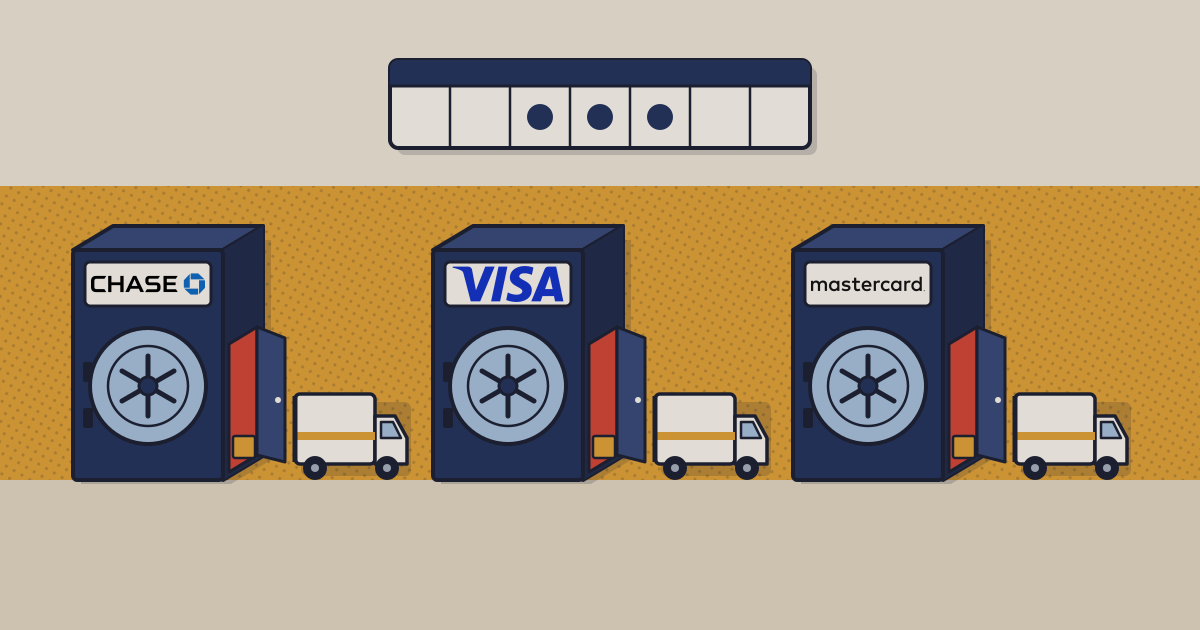
A bank’s customers trust the bank, but their names and email addresses also sit with the firms that send its marketing, run its card benefits and process its payments. This week three of the world’s largest payment names said one of those firms was breached. How often is the supplier the way in, what do the companies actually disclose, and what should a buyer ask before it happens?
01The week: three payment giants, two suppliers in the open
n0n posted Chase, Visa and Mastercard to its data-leak site on Monday 16 November; it emerged in September and posted 108 victims in its first month, The Register reports.2 On Thursday Chase wrote on X that “third parties who provide services to the firm were the target of a cyber attack”.1 Visa told The Register the claims are “associated with an incident involving a third-party service provider in Asia Pacific”, that its systems were not involved and that no card numbers were affected. Mastercard said a provider’s incident exposed “a limited amount of email addresses” from “a small subset of cardholders enrolled in a specific benefit program”, now contained. Chase said there was no connection to the service disruption some of its customers had earlier in the week. None named the provider, said when it was breached or gave a count.2
The same week, Nvidia said it was investigating an incident that “may have affected a third-party partner” after a ransomware group listed it, and that it had found no sign its own systems were affected.3 N-able, which filters email for IT providers and their clients, first blamed a worldwide outage on “platform configuration and service dependencies”, then confirmed “unauthorized access to one of the servers”.4 And Irish credit unions learned of a break-in at their IT supplier, Wellington IT, about six weeks after it happened, as our note on the credit unions sets out.56
Chase, Visa and Mastercard confirmed supplier incidents three days after a leak site listed them
Supplier-route incidents made public, 16 to 19 November 2026
Show tableHide table
| Date | Event | Detail |
|---|---|---|
| 16 Nov 2026 | n0n lists Chase, Visa, Mastercard | A criminal data-theft and extortion group posts the three on its leak site (The Register) |
| 16 Nov 2026 | Credit unions told by IT supplier | St Canice's says it was told on Monday 16 November; about 50 credit unions use the same supplier |
| 17 Nov 2026 | N-able email filtering goes down | Mail Assure and SpamExperts outage across the Americas, Asia-Pacific and Europe |
| 18 Nov 2026 | N-able: a server was accessed | UI and API access switched off; no evidence of customer data taken, it says |
| 18 Nov 2026 | Minister: delay not acceptable | Robert Troy says about 40 credit unions are affected (RTÉ) |
| 19 Nov 2026 | Nvidia: a partner may be hit | No sign its own systems were affected, it tells BleepingComputer |
| 19 Nov 2026 | ILCU: 43 of 170 credit unions | ILCU chief executive David Malone: Wellington found a potential breach on 15 November (RTÉ) |
| 19 Nov 2026 | Chase, Visa, Mastercard confirm | Each points to a third-party provider; none names it or gives a count |
Source: JPMorgan Chase; The Register; BleepingComputer; St Canice's Credit Union; RTÉ · as of 20 November 2026, 10:30pm IST
02Thirteen supplier routes in four weeks, and what each disclosed
The week is not unusual. Since 23 October a disclosure like these has come every two or three days: one supplier reaching many clients (Amadeus, ARARA, Maileva, Optimizely, Wellington IT), and access a client handed to a vendor that was then used against it (Fireworks AI, Barracuda’s unnamed AI vendor). Every row rests on what the clients or the suppliers themselves said.891011121314151617181926
Show tableHide table
| Disclosed | Client ← supplier | Route, as stated | Count, as stated |
|---|---|---|---|
| 23 Oct–3 Nov | Ten airlines ← Amadeus | A flaw in a booking display environment; logins assigned to an Amadeus system account | Four counts in three units, e.g. about 46,000 SIA booking records; not added |
| 29 Oct–6 Nov | Up to about 380 clients ← ARARA | Its email-delivery service, ARARA Message | 81,329,467 email addresses |
| 2 Nov | AU Small Finance Bank ← a SaaS vendor | A loan-onboarding platform hosted and managed by the vendor | “Some” of 28.5 lakh customers onboarded through it |
| 4 Nov | Crédit Mutuel Arkéa ← unnamed provider | “The platform of one of our service providers” | The bank’s own funds; it validates the order of magnitude of €118m |
| 9–13 Nov | Uber, Notion, Cursor ← Fireworks AI | The vendor’s credentials and keys clients had given it | Uber: 149,346 people; Notion: under 1% of workspaces; Cursor: up to 5,000 users |
| 11 Nov | Barracuda ← unnamed AI vendor | A cloud key given to the vendor and never retired | About 10 cloud accounts |
| 14 Nov | Senders’ letter recipients ← Maileva | La Poste’s mailing subsidiary, attacked in mid-September | 22 million names and postal addresses |
| 17 Nov | Customers’ websites ← Optimizely | A flaw in Experimentation let an intruder add code to customer projects | 188 of 1,611 snippets sampled by Report URI |
| 16–18 Nov | 43 Irish credit unions ← Wellington IT | An authorisation flaw in its online-banking platform; saved payees read | 43 of Ireland’s 170 credit unions; none given for members |
| 18 Nov | Email-filtering customers ← N-able | A server in its Mail Assure and SpamExperts hosted cloud | None given; no evidence of customer data taken |
| 19 Nov | JPMorgan Chase ← unnamed vendors | “Marketing data held by those vendors” | None given |
| 19 Nov | Visa ← a provider in Asia Pacific | A third-party service provider; Visa’s systems not involved | None given |
| 19 Nov | Mastercard ← a benefit-programme provider | A third-party provider | None given: “a limited amount of email addresses” |
The gap between the break-in and the public’s first word is the pattern buyers feel. Uber’s Oregon filing dates its breach to 1 October and its notices to 10 November.13 Maileva was attacked in mid-September; La Poste confirmed the theft on 14 November.17 The Irish League of Credit Unions dates the Wellington IT attack to 2 to 4 October; credit unions were told on 16 November.26 Wellington also told them it lacked the activity logs to say which members’ payees were read, the Irish Examiner reports.7 ARARA, by contrast, published its first report on 29 October, while the theft was still under way.10
03Third parties in 48% of breaches: what to ask and what to watch
Verizon first measured third-party involvement in its 2024 report, at 15%, counting data custodians, flaws in third-party software and other supply-chain issues; it doubled to 30% in 2025 and reached 48% in 2026.202122 Our reading of the 2026 report explains why a vendor whose product carried the exploited flaw counts too.
The contract is where a buyer sets the terms. Europe’s GDPR gives a controller 72 hours to tell the regulator once it is aware, but asks a processor only to notify the controller “without undue delay”.23 So write the hours in: how soon the supplier must tell you, in hours, from the moment it suspects an incident. Ask what data it keeps and for how long; Chase’s exposure was marketing data held by vendors, and a list deleted after a campaign cannot be taken. Ask whether its logs can show which records were read, the question Wellington IT says it could not answer. And retire every key and login handed to a vendor when the work ends.
What to watch. Whether Chase, Visa and Mastercard name the providers or file breach notices with US states, which would carry counts; Wellington IT’s findings; and Nvidia’s.
Sources
- JPMorgan Chase (@jpmorgan), post on X on a cyber attack on third parties — 19 November 2026
- The Register, Chase, Visa, Mastercard confirm third-party cyberattacks that may have exposed customers' info — 19 November 2026, 21:12 UTC
- BleepingComputer, NVIDIA investigating Gentlemen ransomware breach claims (with Nvidia's statement) — 19 November 2026, 04:23 ET
- BleepingComputer, N-able says recent security breach led to major service outage (with N-able's statements) — 20 November 2026, 08:18 ET
- St Canice's Credit Union, Important information for members: cybersecurity incident — 17 November 2026, updated 15:51
- RTÉ, Credit unions informed of October breach yesterday - Troy (with Wellington IT's statement) — 18 November 2026
- BleepingComputer, Data breach impacts 40 Irish credit unions in reported IT provider hack (citing the Irish Examiner) — 18 November 2026, updated 19 November
- Amadeus, Data and Vulnerability Statement — October 2026, last modified 2 November 2026
- CNA, About 46,000 SIA booking records accessed in data breach involving travel tech company Amadeus — 3 November 2026
- ARARA, unauthorised access to ARARA Message, third report (Japanese); first report via PayCloud Holdings on TDnet, 29 October — 6 November 2026
- AU Small Finance Bank, Reply to clarification sought by Stock Exchanges (AUSFB/SEC/2026-27/287) — 2 November 2026
- Crédit Mutuel Arkéa, Informations complémentaires suite à l'attaque (in French) — 4 November 2026
- Oregon Department of Justice, data breach notifications list (Uber Technologies: breach 1 October, notice 10 November, 149,346 affected) — entry reported 10 November 2026
- Notion, Fireworks AI incident (security advisory) — 9 November 2026
- Cursor, An update on our recent security incident — 13 November 2026
- Barracuda, Forty-four hours: Anatomy of a machine-speed intrusion — 11 November 2026
- AFP, Une filiale de La Poste victime d'un vol de données massif, 22 millions de personnes concernées (in French, as syndicated by Fortuneo) — 14 November 2026, 21:46 CET
- Report URI (Scott Helme), World's Largest Brands Infected With Malware Via Optimizely — 16 November 2026, updated 17 November
- Optimizely Service Status, Web Experimentation Security Incident — 17 November 2026, 01:02 UTC
- Verizon, 2024 Data Breach Investigations Report: Vulnerability exploitation boom threatens cybersecurity (news release; 15%) — 1 May 2024
- Verizon, 2025 Data Breach Investigations Report: Alarming surge in cyberattacks through third-parties (news release; 30%) — 23 April 2025
- Verizon, Breach entry point, 2026 DBIR finds (news release; third-party involvement 48%) — 19 May 2026
- Regulation (EU) 2016/679 (GDPR), Article 33(1) and (2) — 27 April 2016
- CERT-In, Directions under section 70B(6) of the IT Act, 2000 (six-hour reporting; 180-day logs) — 28 April 2022
- Digital Personal Data Protection Act, 2023, section 8(2) and 8(5) — 11 August 2023
- RTÉ, Initial probe by provider didn’t identify breach – ILCU (David Malone on News at One: 43 of 170; 2 to 4 October; told 16 November) — 19 November 2026
Disclosure. TechBag is a software reseller: it earns when companies buy through it, including from vendors named here. The analysis is TechBag’s own; no vendor paid for or saw this piece before publication. Facts are labelled reported, TechBag count or our view.
Keep reading