Irish credit unions: 43 hit through one IT supplier, told six weeks later
What Wellington IT, the ILCU and a credit union said from 16 to 19 November: payee records read on 2 to 4 October, logs that were missing, and when the GDPR’s clocks start.

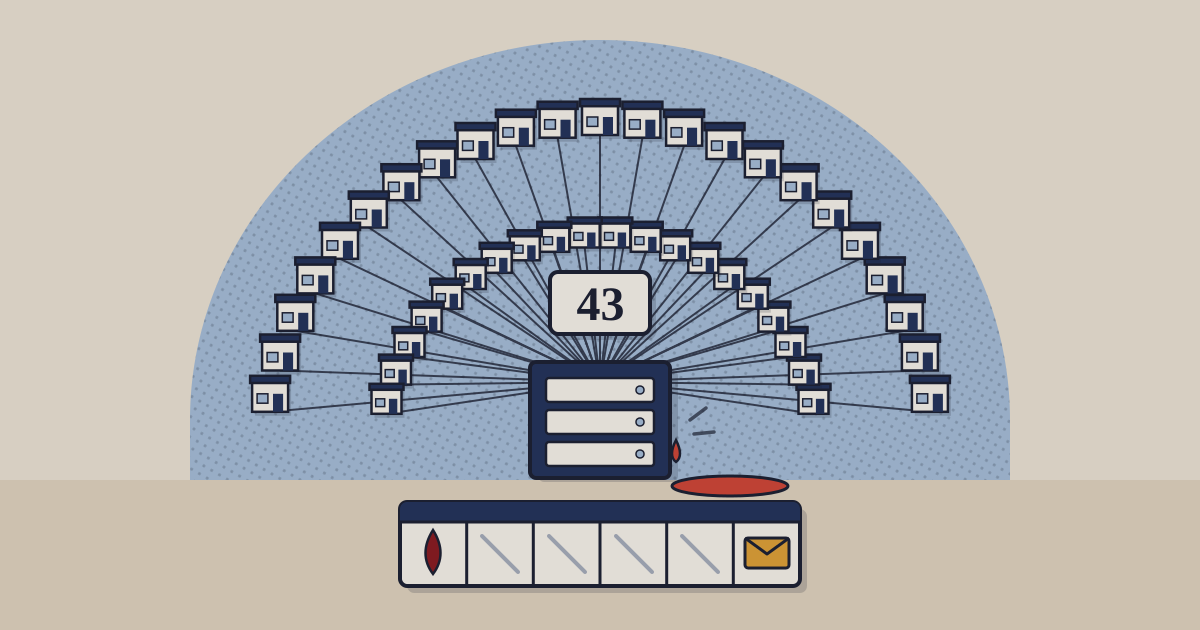
Forty-three of Ireland’s 170 credit unions lost members’ data through one supplier, and heard about it six weeks after it happened. Between 2 and 4 October an automated client, logged in with a valid member account, exploited an “authorisation flaw” in the online banking platform run by Wellington IT, a Belfast software company, and reached the payees members had saved: names, IBANs, BICs, account numbers, sort codes, addresses and payment references.12 Wellington told the credit unions on Monday 16 November.3 The count of 43 is the Irish League of Credit Unions’; Robert Troy, the minister of state responsible for credit unions, said about 40, and St Canice’s Credit Union, one of those hit, wrote about 50, which is how many credit unions Wellington serves in all, 43 of them in Ireland.3421
43
of Ireland’s 170 credit unions affected, by the ILCU’s count
ILCU, on RTÉ
5m
requests from an automated script, 2 to 4 October
Wellington IT, as quoted
6 weeks
from the last request to the credit unions being told
TechBag arithmetic
No logs
showing which members’ payee records were read
Wellington IT, as quoted
01Why it took six weeks
Wellington closed the vulnerability on 6 October as part of its standard vulnerability assessment, the ILCU’s chief executive, David Malone, said, and its first investigation found no data protection breach.3 What changed its mind came by email. On Friday 13 November a credit union told Wellington that extortion emails had been sent to it and to several credit unions; Wellington’s own copies “had been filtered to junk mail and had not been seen”. On the Sunday its engineers concluded that “saved payee data linked to a member may have been retrieved”.1
Wellington IT told 43 credit unions on 16 November about requests made on 2 to 4 October
The Wellington IT payee breach as Wellington, the ILCU, St Canice’s and the minister described it, 2 October to 19 November 2026
Show tableHide table
| Date | Event | Detail |
|---|---|---|
| 2 Oct 2026 | Automated requests begin | 5 million requests to 4 October, says Wellington; 1.4 million ‘activities’, says the ILCU |
| 6 Oct 2026 | Flaw closed | First investigation finds no exposure |
| 13 Nov 2026 | Extortion emails flagged | A credit union alerts Wellington; its copies sat in junk mail |
| 15 Nov 2026 | Wellington finds the breach | Payee data ‘may have been retrieved’ |
| 16 Nov 2026 | Credit unions told | All saved payees treated as affected |
| 17 Nov 2026 | DPC notifications begin | St Canice’s posts its notice; Finance issues a statement |
| 18 Nov 2026 | ‘Not acceptable’ | The minister on the delay; members start to be told |
| 19 Nov 2026 | ILCU: 43 of 170 | No evidence of money moving, it says |
Source: Wellington IT (as quoted by the Irish Examiner); ILCU and the minister (RTÉ); St Canice’s Credit Union · as of 20 November 2026, 10:30pm IST
The logs that would show which members’ records were requested “are not available”, Wellington wrote on 16 November, so it is treating every saved payee on the platform in that period as potentially affected.1 Its chief executive, Colin Mitchell, says it alerted customers as soon as it confirmed the risk, and has told the Data Protection Commission, the National Cyber Security Centre and the Garda National Cyber Crime Bureau.4 Troy called the delay “not acceptable” and has asked to meet the company.4
02When the GDPR clocks start
The credit unions are the controllers, and Article 33(1) of the GDPR gives a controller “not later than 72 hours after having become aware” of a breach to notify its regulator, where feasible. Wellington is the processor, and Article 33(2) says only that it “shall notify the controller without undue delay after becoming aware”.7 Both clocks run from awareness, not from the break-in. The European Data Protection Board says a controller should be considered aware “once the processor has informed it”, and that the contract between them can require earlier notice.8 Credit unions started notifying the DPC on Tuesday 17 November, a day after they were told.3
For members, St Canice’s says the payee data cannot be used to log in or reach their money, and asks them to watch for calls, texts and emails that quote a payee to sound genuine, and never to move money to a “safe account”.2 The ILCU says there is “no evidence of any money moving or fraud”.3
Sources
- Irish Examiner: Dozens of credit unions alerted to potential data breach following cyberattack (quotes Wellington IT’s correspondence of 16 November) — 18 November 2026, 06:00
- St Canice’s Credit Union: Important Information for Members: Cybersecurity Incident — 17 November 2026, 15:51
- RTÉ: Initial probe by provider didn’t identify breach – ILCU (David Malone on News at One) — 19 November 2026, updated 17:29
- RTÉ: Credit unions informed of October data breach yesterday – Troy (with Wellington IT’s statement) — 18 November 2026, updated 21:02
- RTÉ: Suspected data breach at credit unions (Central Bank, ILCU and DPC statements) — 17 November 2026, updated 18 November 09:07
- BleepingComputer: Data breach impacts 40 Irish credit unions in reported IT provider hack (Wellington IT statement, update of 19 November) — 18 November 2026, updated 19 November
- Regulation (EU) 2016/679 (GDPR), Article 33 — 27 April 2016
- European Data Protection Board: Guidelines 9/2022 on personal data breach notification under GDPR, version 2.0, paragraphs 44 to 46 — 28 March 2023
Disclosure. TechBag is a software reseller: it earns when companies buy through it, including from vendors named here. The analysis is TechBag’s own; no vendor paid for or saw this piece before publication. Facts are labelled reported, TechBag count or our view.
Keep reading