117 emails and 153 chats a day: remote-work burnout is set in the tools
What Microsoft 365 telemetry, the WHO and Deloitte India measured about the always-on workday, and the settings an Indian employer controls, as of September 2026.

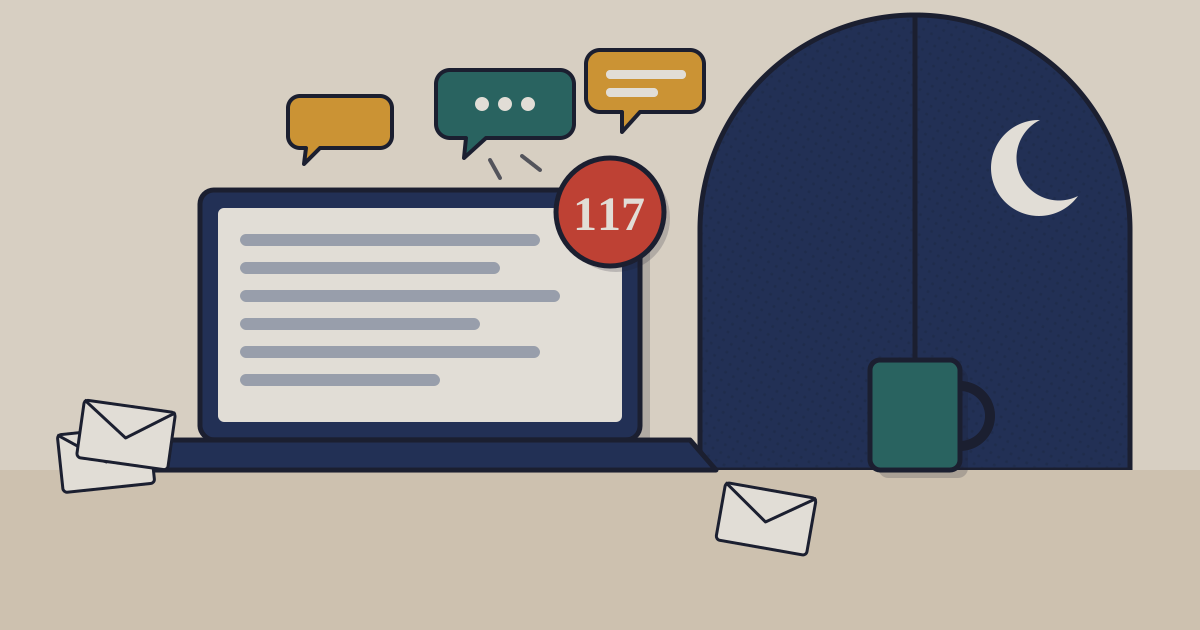
The average Microsoft 365 user receives 117 emails a day and 153 Teams messages a weekday, and meetings that start after 8 pm rose 16% year on year.1 The 2023 version of this post asked what an employer should do about the mental health of people who work away from the office, and answered with five general strategies. The question stands. The better answer starts with the numbers the tools themselves now report.
01What has actually been measured
Three sources are worth a buyer’s time. Microsoft’s June 2025 Work Trend Index report reads anonymised Microsoft 365 signals to February 2025, excluding education and EU tenants.1 The WHO estimates that 12 billion working days are lost every year to depression and anxiety, at a cost of US$1 trillion in productivity.2 Deloitte India’s 2022 survey put the cost of poor employee mental health to Indian employers at about US$14 billion a year, through absence, presenteeism and attrition.3
The always-on day is visible in the telemetry, and its cost is visible in the accounts
Microsoft 365 averages to February 2025; Deloitte India estimate of annual cost to employers, 2022
117
Emails received per worker per day
Microsoft 365 telemetry
153
Teams messages per worker per weekday
Microsoft 365 telemetry
+16%
Meetings starting after 8 pm, year on year
Microsoft 365 telemetry
US$14 bn
Yearly cost of poor mental health to Indian employers
Deloitte India, 2022
Source: Microsoft WorkLab, Work Trend Index; Deloitte India · as of 30 September 2026
02What an employer controls this quarter
- Write the response-time norm down. Chat is not urgent unless it says so; email can wait until the next working morning. Without a written rule, the fastest responder sets the standard for everyone.
- Make scheduled send the default after hours. Outlook, Teams and Slack all let a sender queue a message for the recipient’s morning, and Slack lets each user set a notification schedule and do-not-disturb hours.5
- Measure meetings after 8 pm in your own tenant and set a cut-off. Microsoft’s 16% is a global average; your number is the one to manage.
- Train managers and fund the help. The WHO recommends manager training for mental health, so that supervisors recognise distress and know how to respond. An employee assistance programme is only used when managers point people to it.2
In India. The settings cost nothing extra: Teams ships in Microsoft 365 Business Basic at ₹145 a user a month,4 and Slack Pro lists at US$7.25 a user a month on annual billing, invoiced in INR through a reseller,5 both plus 18% GST. The regulation that bites is the Digital Personal Data Protection Act, 2023: its Rules were notified on 13 November 2025 and the notice, security-safeguard and retention duties apply from 13 May 2027.6 Survey answers about stress and any analytics that profile an employee are personal data under that Act, so collect them for a stated purpose and keep them no longer than that purpose needs.
Sources
- Microsoft WorkLab, Breaking down the infinite workday (Work Trend Index special report) — 17 June 2025
- World Health Organization, Mental health at work (fact sheet) — 15 September 2026
- Deloitte India, Poor mental health amongst employees costs Indian employers around US$14 billion yearly (press release) — September 2022
- TechBag, Microsoft 365 intel page (Business Basic ₹145 per user per month) — as committed 30 September 2026
- TechBag, Slack intel page (notification schedules and focus controls; Pro US$7.25 per user per month, annual) — as committed 30 September 2026
- DPDP Rules 2025, commencement timeline — notified 13 November 2025
Related on TechBag: the Microsoft 365 page and the Slack page price the collaboration tools whose defaults this piece is about.
Disclosure. TechBag is a software reseller: it earns a margin when a reader buys through it, including from vendors named here. The analysis is TechBag’s own; no vendor paid for or saw this piece before publication. Facts are labelled reported, TechBag count or our view.
Keep reading