SecurityThreats & vulnerabilitiesAnalysis
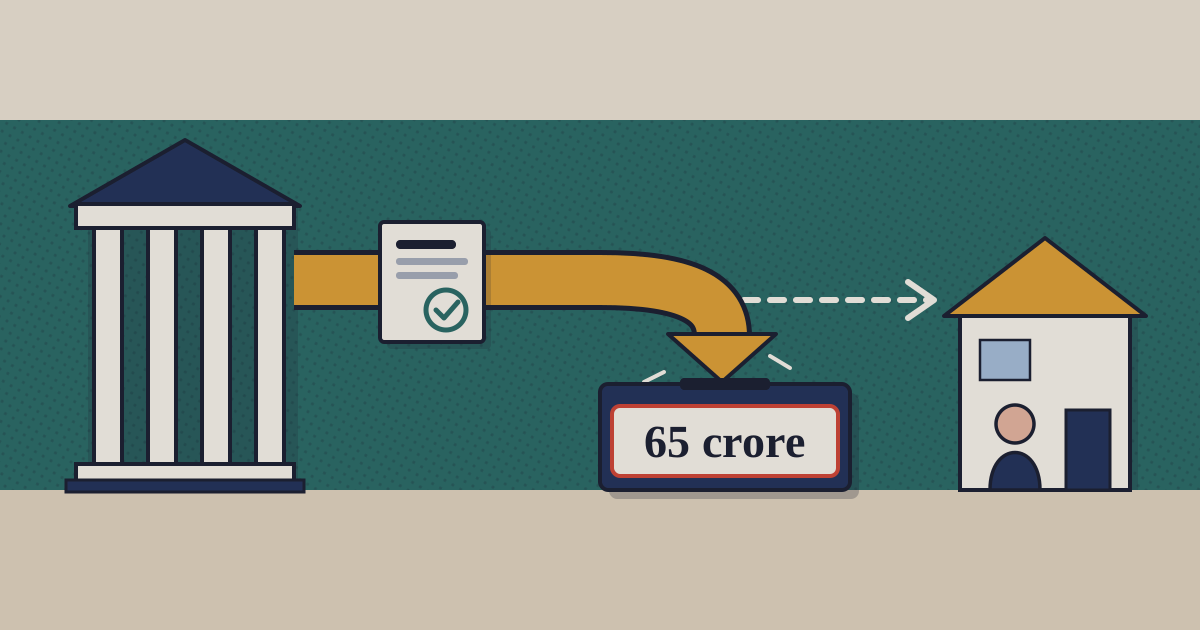
12 Delhi-NCR NBFCs lost ₹65 crore of approved loans to hackers in three months
Delhi Police’s 12 cases from 17 August to 3 November, the mule accounts behind them, and the controls CERT-In’s advisories of 9 October and 4 November ask lenders for.

Until this week the losses at India’s smaller lenders rested on unnamed sources and on advisories that name no victim. On 16 November Delhi Police put dates, amounts and transaction counts on twelve cases, and named two of the lenders. A lender’s risk and technology heads need to know how the money left, how long it took to notice, and which controls would have stopped it. We read the police account, CERT-In’s two public advisories and the RBI’s rules to find out.
01What Delhi Police counted
Twelve non-banking financial companies in Delhi-NCR lost more than ₹65 crore in three months after hackers used gaps in their software “to divert approved but undisbursed loans into mule accounts, according to Delhi Police”, Outlook reported on 16 November. Police have arrested 20 people in the 12 cases, and a senior officer said all of them were linked to opening or buying the mule accounts that received the money. Of the ₹65 crore, investigators seized ₹18 crore (US$1.9m) “before it could be withdrawn as cash or converted into cryptocurrency”.1 The420.in carried the same totals the same day.4
₹65 crore gone from 12 lenders in three months; ₹18 crore of it seized
Delhi Police figures for NBFC loan diversions in Delhi-NCR and across India, about August to November 2026
₹65 crore
approved loans diverted from 12 NBFCs in Delhi-NCR, about US$7.0m
20
people arrested, all linked to the mule accounts, police say
₹18 crore
seized before it became cash or crypto, about 28% of the loss
150+
complaints from NBFCs across India, over ₹300 crore (US$32.1m)
Source: Delhi Police, as reported by Outlook (16 November 2026) · as of 18 November 2026 · US$ at the RBI-published reference rate of ₹93.36, 18 November
The national figure is a police officer’s: “more than 150 complaints had been filed by NBFCs across India over the same three-month period, with losses exceeding ₹300 crore”.1 It is the same ₹300 crore The Economic Times put on small NBFCs’ losses in two months on 29 October, from unnamed sources,5 which our 1 November note set out. The police now give it a source and a count of complaints.
02Twelve cases, from ₹66 lakh to ₹12.49 crore
Police gave a date and an amount for each case, and a transaction count for nine. Hero FinCorp, among the first lenders to report a major breach in Delhi, lost ₹12 crore on 17 August through 317 transactions from at least 165 IP addresses; it declined to comment. Unifinz Pvt Ltd reported ₹12.49 crore (US$1.3m) lost through 550 transactions over two days on 21 October. The case with the most transactions, reported on 4 October, lost ₹10.59 crore through 1,131 of them over three days.1
Four of the 12 cases account for ₹45.6 crore, 70% of the loss
Amount lost per case, ₹ crore, by the date police gave, Delhi-NCR NBFCs, 17 August to 3 November 2026
Source: Delhi Police, as reported by Outlook (16 November 2026) · as of 18 November 2026 · Only Hero FinCorp and Unifinz are named; dates are as police gave them, a loss or complaint date
Police said the pattern across the cases was the same: weaknesses in the lenders’ systems used to divert loans approved but not yet paid, with the money in mule accounts “before the companies could detect the breach”. The two lenders they named:1
Show tableHide table
| Lender | When | Amount | Transactions | Also on the record |
|---|---|---|---|---|
| Hero FinCorp | 17 Aug | ₹12 crore | 317 | At least 165 IP addresses; among the first major breaches reported in Delhi; the company declined to comment |
| Unifinz Pvt Ltd | Complaint, 21 Oct | ₹12.49 crore | 550 over two days | Named in one of the complaints |
03How a loan is diverted, as police describe it
“Many of these companies are small in scale, and the software codes running their systems have gaps, which provide the inlet for these malwares,” a senior officer said. The officer’s account runs in four steps, and the trick at their centre is an address the lender already trusts.1
In through the app's front end, out through an address the firewall trusts
The diversion of approved loans as Delhi Police describe it, cases of August to November 2026
- 01
Malware in the front end
It sits in the front end of the lending app for seven to eight days, reading approved loans not yet paid and the commands that pay them.
- 02
A trusted cloud address
Lenders’ firewalls allow-list IP addresses of the clouds their sites run on. Anyone can rent an account there and send from those addresses.
- 03
The borrower swapped out
The borrower’s bank details are replaced with a mule account’s, and the API’s request reaches the bank and is approved at once.
- 04
Many transfers, many addresses
The money moves in many transactions from several allow-listed addresses, through layers of mule accounts, to cash or crypto.
Source: Delhi Police, as reported by Outlook (16 November 2026) · as of 18 November 2026 · The police's account; CERT-In's advisories describe the method in their own terms
“The code asks the NBFC’s API to send a request for disbursement of the loan, which bypasses the NBFC firewall because of the ‘whitelisted’ IP address and reaches the bank, getting instant approval,” the officer said.1 CERT-In’s advisory of 9 October describes the same core: attackers call disbursal APIs “directly from within the entities’ own whitelisted infrastructure, completely bypassing application-level controls such as loan creation, KYC, sanction, beneficiary verification, balance sufficiency and per-transaction limits”, and send the money to mule accounts across banks “with immediate withdrawal”. It adds that attacker IPs are “predominantly associated with hosting infrastructure”.3
The 4 November update names two more ways past an allow-list: traffic sent through shared “third-party fetcher IP pools (such as content-acceleration and app-store review fetchers)”, which any internet user can make fetch an address, and altered copies of the lender’s app calling its APIs. It also describes “micro-value test transactions (such as Rs. 1)” before the large transfers.2 Trust handed to a third party was also the way in at Fireworks AI, whose breach reached 149,346 Uber drivers.
Detection is slow, police say: several smaller NBFCs reconcile their accounts weekly or fortnightly, so a diversion often surfaces only after the money has gone. On AI, DCP Tyagi said: “We have detected traces of AI being used in these frauds.”1 CERT-In’s update lists four publicly available AI-driven offensive tools, as our 5 November note set out.2
04Five cases came after CERT-In's first public advisory
CERT-In rated its 9 October advisory on payment and disbursement APIs Critical.3 Its 4 November update says the campaign is “active and ongoing”, with successful attacks still reported “including from NBFCs and fintech entities that had already received the earlier restricted (TLP:AMBER) advisories and had undertaken remediation”. The same entities were re-targeted, “including after incomplete remediation”, with attacks timed for “holidays, weekends and other low-monitoring windows”.2
Five of the 12 cases, ₹21.1 crore, are dated after CERT-In's first public advisory
Selected Delhi-NCR cases and the public warnings, by date, 17 August to 16 November 2026
Show tableHide table
| Date | Event | Detail |
|---|---|---|
| 17 Aug 2026 | Hero FinCorp loses ₹12 crore | 317 transactions, at least 165 IP addresses |
| 18 Sept 2026 | ₹2.75 crore over four days | 462 transactions, 18 to 21 September |
| 4 Oct 2026 | ₹10.59 crore case | 1,131 transactions over three days |
| 9 Oct 2026 | CERT-In advisory, Critical | Disbursal APIs called from whitelisted infrastructure |
| 21 Oct 2026 | Unifinz: ₹12.49 crore | 550 transactions over two days |
| 3 Nov 2026 | Latest case: ₹5.10 crore | |
| 4 Nov 2026 | CERT-In update | Remediated lenders attacked again; ₹1 test transfers |
| 16 Nov 2026 | Police: ₹65 crore, 12 NBFCs | 20 arrests, ₹18 crore seized |
Source: Delhi Police via Outlook (16 November 2026); CERT-In CIAD-2026-0046 and CIAD-2026-0058 · as of 18 November 2026 · Case dates are as police gave them, a loss or complaint date
05What CERT-In asks a lender to change
Each step police describe meets a control in CERT-In’s two advisories. The advisories say indicators change while techniques stay the same, so blocking the shared IP addresses is not enough: entities “should therefore not limit their response to blocking indicators”.2
Each step of the diversion has a named control in CERT-In's advisories
What the Delhi cases relied on, as police describe it, against CERT-In's recommended actions, October and November 2026
What the diversions relied on
- Firewalls that trust any request from a cloud’s IP addresses
- A disbursement request the bank pays without matching it to a sanctioned loan
- A borrower’s account quietly replaced with a mule’s
- Hundreds of transfers in two or three days, before anyone looks
- Books reconciled weekly or fortnightly
What CERT-In asks for
- Mutual TLS, signed requests or scoped API keys in place of allow-listed shared IP pools
- “Validate every payout against sanctioned/approved records”; maker-checker for all fund movement
- Penny-drop and name-to-account checks; cooling periods for new beneficiaries
- Velocity and amount-band rules; hold a micro-value transfer to a new payee followed by a large one
- “Near-real-time reconciliation of system records with bank/aggregator statements”
Source: Delhi Police via Outlook (16 November 2026); CERT-In CIAD-2026-0046 (9 October) and CIAD-2026-0058 (4 November) · as of 18 November 2026 · Right column quotes or closely paraphrases CERT-In; the pairing is ours
The advisories add the measures that would have shortened the seven or eight days police describe: real-time alerts on cloud audit logs, file-integrity monitoring of application directories for web shells, logs kept for at least 180 days, and test systems cut off from production.23
Sources
- Outlook India, Hackers Exploit NBFC Software Gaps, Divert Over ₹65 Cr In Delhi-NCR (Delhi Police figures and quotes; credits The Indian Express) — 16 November 2026
- CERT-In, CIAD-2026-0058: Escalation of AI-Driven Attacks on BFSI Entities by Threat Actor "CRAFTY FALCON" (Critical) — 4 November 2026
- CERT-In, CIAD-2026-0046: Threat Actors Exploiting Payment and Disbursement APIs for Unauthorized Fund Transfers in BFSI Entities (Critical) — 9 October 2026
- The420.in, Cybercriminals Defraud 12 NBFCs of Over Rs 65 Crore in Delhi-NCR, 20 Arrested — 16 November 2026
- The Economic Times, AI-powered cyberattacks siphon ₹300 crore from small NBFCs in two months (unnamed sources) — 29 October 2026
- CERT-In, Directions under section 70B(6) of the IT Act (six-hour reporting, 180-day logs) — 28 April 2022
- Reserve Bank of India, (Non-Banking Financial Companies – Cybersecurity, Technology: Risk, Resilience and Assurance Framework) Directions, 2026, paras 3, 8, 28 and 141 — 31 July 2026
- Reserve Bank of India, (Non-Banking Financial Companies – Fraud Risk Management) Directions, 2026, paras 3, 40 and 43 — 31 July 2026
- Reserve Bank of India, Draft (Know Your Customer) Amendment Directions, 2026: SOP on suspected money mule accounts — 11 September 2026
- Supreme Court of India, record of proceedings, SMW(Crl) No. 3/2025 (copy hosted by MediaNama) — 29 October 2026, signed 7 November 2026
- Reserve Bank of India, home page: FBIL reference rate, INR per US dollar — 1pm, 18 November 2026
Disclosure. TechBag is a software reseller: it earns when companies buy through it, including from vendors named here. The analysis is TechBag’s own; no vendor paid for or saw this piece before publication. Facts are labelled reported, TechBag count or our view.
Keep reading