SecurityThreats & vulnerabilitiesNote
Java4Shell: a Java flaw AI found in an hour runs code on Jira, Confluence, Jenkins
Calif’s write-up and the fixes of 17 November: how 65 characters of Base64 corrupt Java’s memory, which servers and chips are affected, and what to patch first.

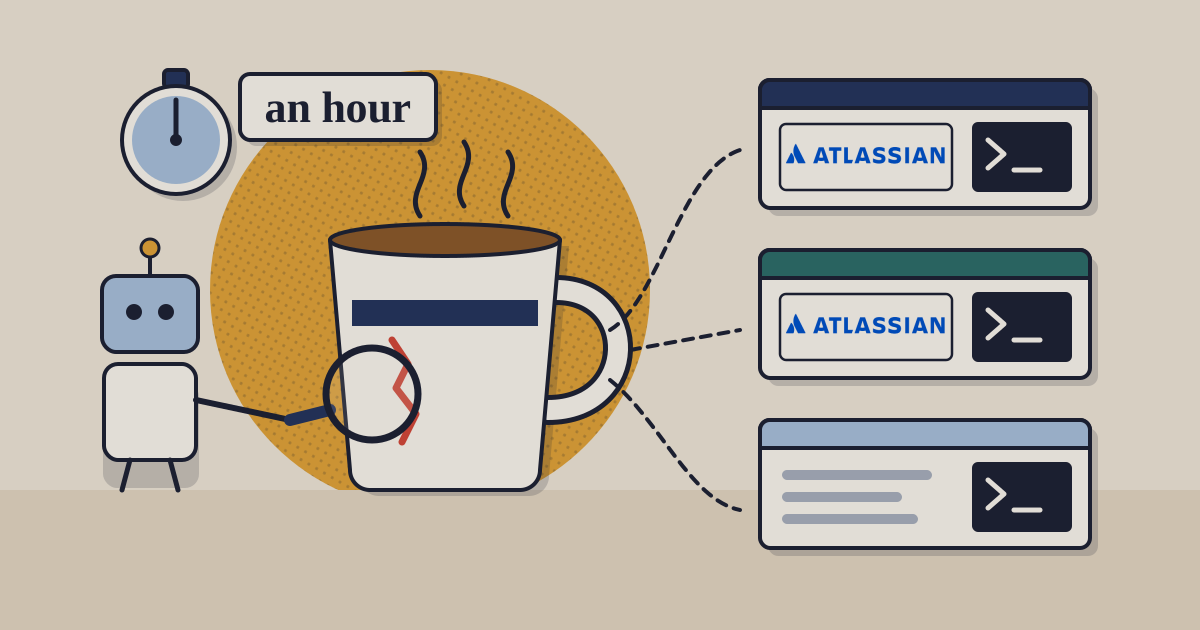
A flaw in the Base64 decoder built into Java lets an attacker with no password run code on Jira, Confluence, Jenkins, Keycloak, JFrog Artifactory and PingFederate in their default set-ups, the security firm Calif says. It calls the flaw Java4Shell (CVE-2026-114938). One of its researchers found it with an AI coding agent in an hour, had a working exploit two hours later, and spent less than US$200 on tokens.1 Oracle and the OpenJDK project shipped fixes on 17 November, at 1pm Pacific time by Calif’s account (2:30am IST on 18 November), and CISA told organisations the same day to patch immediately.12
1 hour
to find the flaw with an AI agent; 2 more for a working exploit
Calif
<US$200
in AI tokens for the find and the first exploit
Calif
6
products where Calif ran code with no login: Jira, Confluence, Jenkins and three more
Calif
8.1 vs 9.2
Oracle’s CVSS 3.1 score against Calif’s CVSS 4.0 score
Oracle, Calif
01How 65 characters break a memory-safe language
Java checks memory accesses for the programs written in it, but parts of Java itself are written in lower-level code. Base64 writes binary data as text and turns up in sign-in protocols, file uploads and network messages. To decode it faster, OpenJDK runs hand-written routines that use AVX-512 VBMI instructions on x86-64 processors. The bug sits in the part that handles the last few characters.1
One malformed string of 65 characters writes 62 bytes past the end of an array
The Java4Shell chain as Calif describes it, from a warmed-up decoder to code execution, November 2026
- 01
Warm up
Many valid decodes make Java’s JIT compiler switch to the fast AVX-512 routine. Nothing is corrupted yet. - 02
Trigger
64 ‘A’ characters and one ‘=’: Java allocates 50 bytes, the routine computes a negative length and writes a full 64. - 03
Leak
The stray bytes enlarge a neighbouring buffer, which then reads out heap memory: keys, tokens, personal data. - 04
Run code
A chain of further writes reaches the JVM’s compiled-code area. Each product needs its own chain.
Source: Calif, Java4Shell technical write-up · as of 17 November 2026
Java later rejects the bad input, but by then the neighbouring memory has been overwritten.1 Calif also ran code after login on Kafka, Solr, Elasticsearch, Gerrit and Spinnaker, and in sample apps built on Spring Boot and Apache Struts; a Java program that merely opens a TLS connection to a malicious server can be hit too. Calif says there is no universal exploit and is keeping its product chains private until users have upgraded.1 The researcher, Quang Luong, says he asked OpenAI’s Codex to audit the JIT compiler, intrinsics and cryptography, spent about 20 minutes prompting and discarding unusable findings, and then got this one.1
02Who is exposed, and what to do
Three conditions must all hold: OpenJDK 17.0.6 or later, in any build made from it (Oracle Java SE and GraalVM, Amazon Corretto, Eclipse Temurin, Microsoft, Azul Zulu, Red Hat and others); an x86-64 processor with AVX-512 VBMI, which includes Intel Xeon from Ice Lake onwards and AMD from Zen 4; and input reaching the decoder. ARM64 servers are not affected.1 Oracle’s fix is one of 655 patches in its monthly Critical Security Patch Update, 11 of them for Java SE; it credits Calif’s Quang Luong and a second reporter, Albert Yang.3 The OpenJDK advisory lists the flaw in hotspot/compiler and names 27.0.1.0.3, 25.0.5.0.3, 21.0.13.0.3 and 17.0.21.0.3 and earlier as affected.4
The two scores differ because Oracle, using CVSS 3.1, rates the attack’s complexity High, while Calif scores it under CVSS 4.0.13 Cisco Talos said on 17 November it had not seen the flaw exploited, and the flaw was not in CISA’s catalogue of known exploited vulnerabilities as of its 17 November update.57 CERT-In issued advisory CIAD-2026-0061 on 18 November, rated High.6
What to watch is the gap between fix and attack. Calif’s previous find, PHP2Shell, reached CISA’s exploited list five days after its fix, as our analysis of that week counted.18 Google’s Project Zero cites language models that speed up finding and exploiting flaws as its reason to cut its disclosure deadline in steps to 30 days, and published CVEs have passed 100,000 this year.
Sources
- Calif: Java4Shell, Write once, RCE everywhere (story and technical write-up by Quang Luong) — disclosed 17 November 2026
- CISA: Critical Java Vulnerability Requires Immediate Patching — 17 November 2026
- Oracle: Critical Security Patch Update Advisory, November 2026 (Java SE risk matrix, credits) — 17 November 2026, Rev 1
- OpenJDK: Vulnerability Advisory 2026/11/17 — 17 November 2026
- Cisco Talos: CVE-2026-114938, critical vulnerability in OpenJDK Java — 17 November 2026
- CERT-In: Advisory CIAD-2026-0061, Remote Code Execution Vulnerability in Oracle Java SE and Oracle GraalVM Products — 18 November 2026
- CISA: Known Exploited Vulnerabilities catalogue (JSON feed) — catalogue version 2026.11.17, read 18 November 2026
- The TechBag Journal: Six days from patch to exploited: PHP, Node.js, Oracle and the order to fix them — 30 October 2026
Disclosure. TechBag is a software reseller: it earns when companies buy through it, including from vendors named here. The analysis is TechBag’s own; no vendor paid for or saw this piece before publication. Facts are labelled reported, TechBag count or our view.
Keep reading