SecurityThreats & vulnerabilitiesNote
Norway ties the Equinor and Skagerak attacks to one Azure API Management flaw
NSM’s notice of 20 November, updated 23 November: what an unknown actor went after in Azure API Management, which versions are patched, and the secrets every user must rotate.

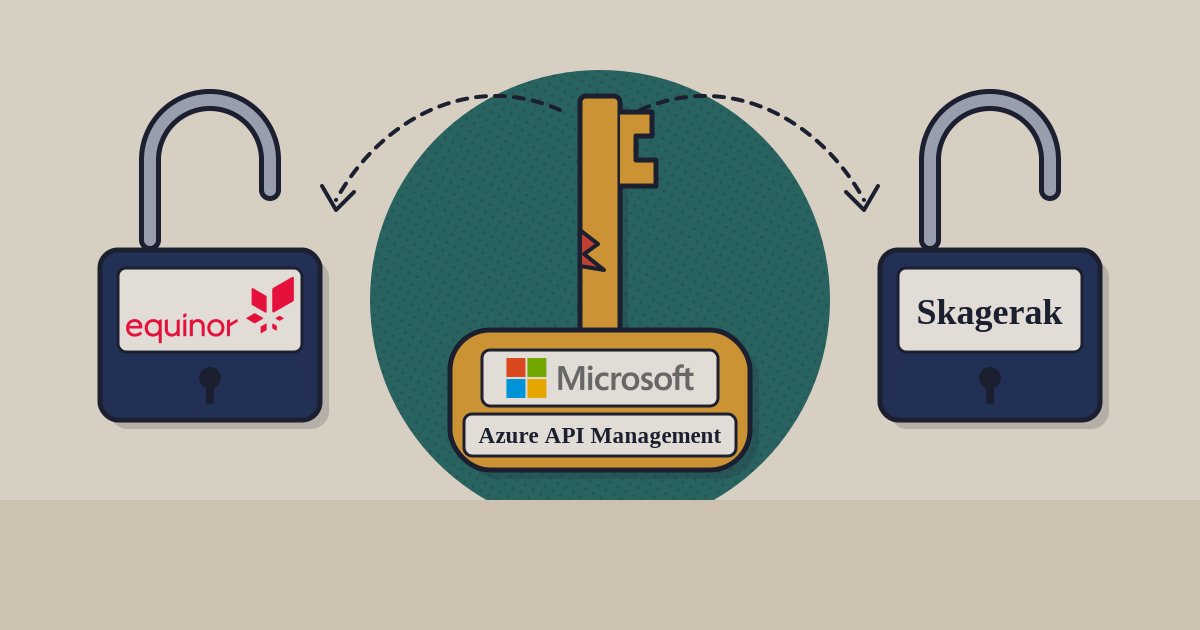
Norway’s National Security Authority (NSM) says Equinor and Skagerak Energi are among the companies hit through a vulnerability in Microsoft’s Azure API Management (APIM), and it tells every organisation that runs the service to assume its secrets are exposed. “An unknown actor has actively gone after access tokens, secrets and named values in APIM,” its notice says; everyone with the service “must assume that their secrets and named values have gone astray”, which means rotating all tokens and secrets. NSM says the vulnerability should now be closed.1
The flaw “affects several sectors in Norway and also beyond Norway’s borders”, NSM says, and was first discovered by the Norwegian energy sector; a correction on 23 November changed “power sector” to “energy sector”. NSM praised Equinor for early detection and quick sharing. Martin Albert-Hoff, its director of operational cyber security, said it is still uncertain how widely the flaw is being, and has been, exploited, and that NSM has so far seen no sign that compromise or attempts at it have affected deliveries at Norwegian companies.1
01What API Management holds, and why its secrets matter
APIM is a gateway that sits in front of a company’s APIs: every request from a client application reaches the gateway first, and the gateway forwards it to the service behind it.4 To do that it holds credentials. Its “named values” are name-and-value pairs used across APIs and policies, stored as plain text, as secrets APIM encrypts itself, or as references to Azure Key Vault, which Microsoft recommends.5 Microsoft’s own guide to rotating them lists subscription keys, backend credentials, OAuth 2.0 and OpenID Connect client secrets, connection strings and credentials written into policies, and warns: “Updating the value in API Management doesn’t revoke the old credential at its issuer.”6 A stolen secret works against the service it unlocks, around the gateway, until it is changed where it was issued.
Microsoft’s advisory to customers is not public. The Register, which has seen it, reports that it covers only the Classic tiers of APIM, not v2, and quotes it: “an unauthorized party could have used the issue to access secrets stored in Azure API Management Classic instances before Microsoft identified the security issue.” Microsoft links exposure to Classic configurations that did not follow its network security guidance or kept secrets in APIM rather than in Key Vault; it identified the issue on 18 November and applied a mitigation automatically the next day, but customers must still check whether they were compromised before then.7 The Classic tiers are Developer, Basic, Standard and Premium.4
02Two energy companies in one week
Equinor disclosed its attack on 17 November and said on 20 November that it had been stopped, with no indication that data was stolen or altered; its own statements do not name APIM.2 Skagerak Energi, a Porsgrunn power company 66.62% owned by Statkraft Industrial Holding, said on 18 November it had found activity that “may be an attempted cyber-attack” on some IT systems, with no effect on operations or production; a day later it said there was still no sign information had gone astray.39 What Equinor said, update by update, is in our Note of 18 November.
NSM tied both energy companies to the APIM flaw three days after Equinor disclosed its attack
Disclosures by Equinor, Skagerak Energi, Microsoft and NSM, 17 to 23 November 2026 (CET times in each detail)
Show tableHide table
| Date | Event | Detail |
|---|---|---|
| 17 Nov 2026 | Equinor discloses attack | 18:55 CET: ongoing attack on certain IT systems |
| 18 Nov 2026 | Microsoft finds the issue | Per its advisory, as reported by The Register |
| 18 Nov 2026 | Skagerak Energi notice | 19:42 CET: activity that may be an attempted attack |
| 19 Nov 2026 | Microsoft mitigates | Applied automatically, per The Register |
| 20 Nov 2026 | Equinor: attack stopped | 08:55 CET: no sign data stolen or altered |
| 20 Nov 2026 | NSM names the flaw | 16:25 CET: Equinor and Skagerak Energi among those hit |
| 21 Nov 2026 | Rotation guide | Microsoft Community Hub: how to rotate APIM credentials |
| 23 Nov 2026 | NSM correction | 09:30 CET: first found by the energy sector, not the power sector |
Source: Equinor; Skagerak Energi; NSM; Microsoft Community Hub; Microsoft’s advisory dates as reported by The Register · as of 23 November 2026, 11pm IST
03What an APIM customer should do, in NSM’s steps
Check the version: open https://<your-gateway-hostname>/internal-status-0123456789abcdef and read RuntimeVersion. A 0.52.x instance is patched if x is 31936 or higher, a 0.53.x instance if x is 31938 or higher; other patterns, such as 0.53.4608.0, mean a V2 or Consumption tier, which is not vulnerable; anything lower is still vulnerable, and NSM says to contact the provider. Then rotate all tokens and secrets, map what information sits behind each instance to judge the scope, and report signs of compromise to NSM.1 Microsoft’s order for each credential: create the replacement at the issuer, update APIM, test, then revoke the old one.6
Sources
- NSM, NSM deler tiltak mot sårbarhet i Azure API Management (in Norwegian) — 20 November 2026, 16:25 CET; updated 23 November 2026, 09:30 CET
- Equinor, Cyber-attack stopped (statement page) — 17 November 2026, 18:55 CET; last update 20 November 2026, 08:55 CET
- Skagerak Energi, Skagerak Energi utsatt for forsøk på cyberangrep, and Oppdatering på forsøk på cyberangrep (in Norwegian) — 18 November 2026, 19:42 CET; update 19 November 2026, 14:52 CET
- Microsoft Learn, About API Management (gateway; Classic, V2 and Consumption tiers) — page dated 13 October 2025
- Microsoft Learn, Use named values in Azure API Management policies — page dated 11 May 2026
- Microsoft Community Hub, Rotating credentials in Azure API Management — 21 November 2026, updated 22 November 2026
- The Register, Norway links energy firm cyberattacks to critical Azure API Management flaw — 23 November 2026, 12:29 UTC
- Microsoft Security Response Center, Security Update Guide (vulnerability API) — queried 23 November 2026; newest release 21 November 2026
- Skagerak Energi, Eiere (owners, in Norwegian) — as published 23 November 2026
- NSM, NSM hever det nasjonale cyberrisikonivået til HØYT (in Norwegian) — 27 October 2026
- CERT-In, Directions under section 70B(6) of the IT Act (six-hour reporting) — 28 April 2022
Disclosure. TechBag is a software reseller: it earns when companies buy through it, including from vendors named here. The analysis is TechBag’s own; no vendor paid for or saw this piece before publication. Facts are labelled reported, TechBag count or our view.
Keep reading