SecurityThreats & vulnerabilitiesNote
KEPCO says data of 1.52m people was stolen from its billing and procurement systems
KEPCO’s notices of 22 November: what was taken from its KEPCO ON billing platform and SRM procurement system, who was in each group, and what it told them to do.

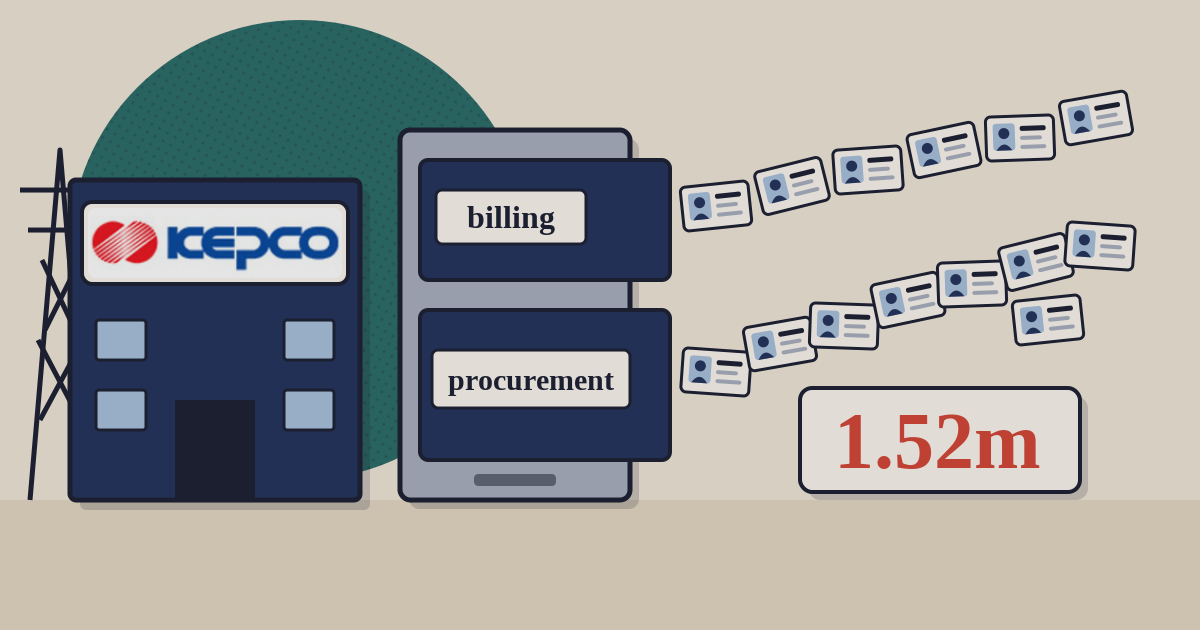
Korea Electric Power Corporation (KEPCO), South Korea’s power utility, said on Sunday 22 November that personal data on 1.52 million people had been taken from two of its systems: 650,487 electricity customers from KEPCO ON, the platform customers use to check and pay their bills, and 869,761 people from SRM, the electronic procurement system that handles its purchasing, construction and service contracts.1 The customer records held up to 12 items, among them resident registration numbers, bank account numbers and card numbers. KEPCO confirmed the leak on Friday 20 November, cut off access from outside IP addresses and suspended the services involved.1 It is the utility’s second leak in two months: in October it disclosed one affecting 35,528 people, current and former employees and workers at partner companies.5
01What was in each set
KEPCO lists the items system by system.1 From KEPCO ON: customer number, name, resident or foreigner registration number, phone number, address, bank, account number, account holder, card issuer, card number, cardholder, and charges and billing records. Its notice to customers adds that not every item leaked for every person, and that each customer can look up their own case on KEPCO ON.2 From SRM, two groups: 426,827 company representatives, whose name, registration number, email and company address were taken; and 442,934 KEPCO employees and suppliers’ staff, whose name, department, staff number, mobile number, email and office number were taken.1
Electricity customers were the largest group: 650,487 of the 1.52 million people
People whose personal data KEPCO says was taken, by system and group, thousands, as disclosed on 22 November 2026
Source: KEPCO, press release and breach notices, 22 November 2026 · as of 22 November 2026 · The three groups sum to 1,520,248; KEPCO does not say whether anyone is in more than one
02Why the registration number is the item that matters
A resident registration number is the number a city, county or district office allocates to each resident under the Resident Registration Act; KEPCO’s notices class it as “unique identifying information”. Unlike a password or a card number, it cannot simply be reissued. The Act lets a person apply to change it only if its disclosure has harmed, or is likely to harm, their safety, health or property, or if they belong to specific groups of crime victims; a national commission decides each application.6 Customer records that pair it with a name, address, phone number and bank details are the raw material for the frauds KEPCO now warns of.
03What KEPCO has said about how it happened
KEPCO says it is presumed that an external attacker broke into both systems and took the data. Its apology says that some functions it offered to make its services more convenient and accessible “recently became the target of an external cyber attack”; it does not say which.14 It has reported the leak under the Personal Information Protection Act, asked the police to investigate, and is examining the access route and method of attack with the National Intelligence Service, the Ministry of Climate, Energy and Environment’s cyber safety centre and outside experts. It says no further harm had been identified so far, and it will share the account and card data with the government and financial authorities and ask them to step up fraud monitoring.14
The leak lands in a season of them in Korea: Yonhap’s report places it beside about 473,000 records leaked at 37 financial companies between 30 September and 3 November,5 which the Journal covered in 40 hacks at 37 Korean financial firms. Earlier this month, Korea’s privacy regulator fined Samyang companies ₩552m for a file server left online after a migration. What to watch: what the investigators find about the access route, and whether the privacy regulator opens a case.
Sources
- KEPCO, press release: 한전, 사이버 침해로 개인정보 유출... “국민께 깊은 사과”... 피해 예방에 총력 (Korean) — 22 November 2026
- KEPCO, notice: (한전ON) 개인정보 유출사실 안내, KEPCO ON breach notice to customers (Korean) — 22 November 2026
- KEPCO, notice: (전자조달시스템) 개인정보 유출사실 안내, SRM breach notice (Korean) — 22 November 2026
- KEPCO, 사이버 침해로 인한 개인정보 유출 관련 대국민 사과문, public apology (Korean) — 22 November 2026
- Yonhap, KEPCO reports another massive data breach, exposing info of 1.52 mln people — 22 November 2026
- Korea Legislation Research Institute, Resident Registration Act, Articles 7-2 and 7-4 (English translation, Act No. 20677) — 21 January 2025
Disclosure. TechBag is a software reseller: it earns when companies buy through it, including from vendors named here. The analysis is TechBag’s own; no vendor paid for or saw this piece before publication. Facts are labelled reported, TechBag count or our view.
Keep reading