Cloud & DevOpsNote
Rackspace closes Spot on 8 December after a breach; running workloads will be terminated
Rackspace’s wind-down notice of 24 November and Platform9’s account of the 17 November breach: what Spot was, when it ends in UTC and IST, and what customers must move and rotate.

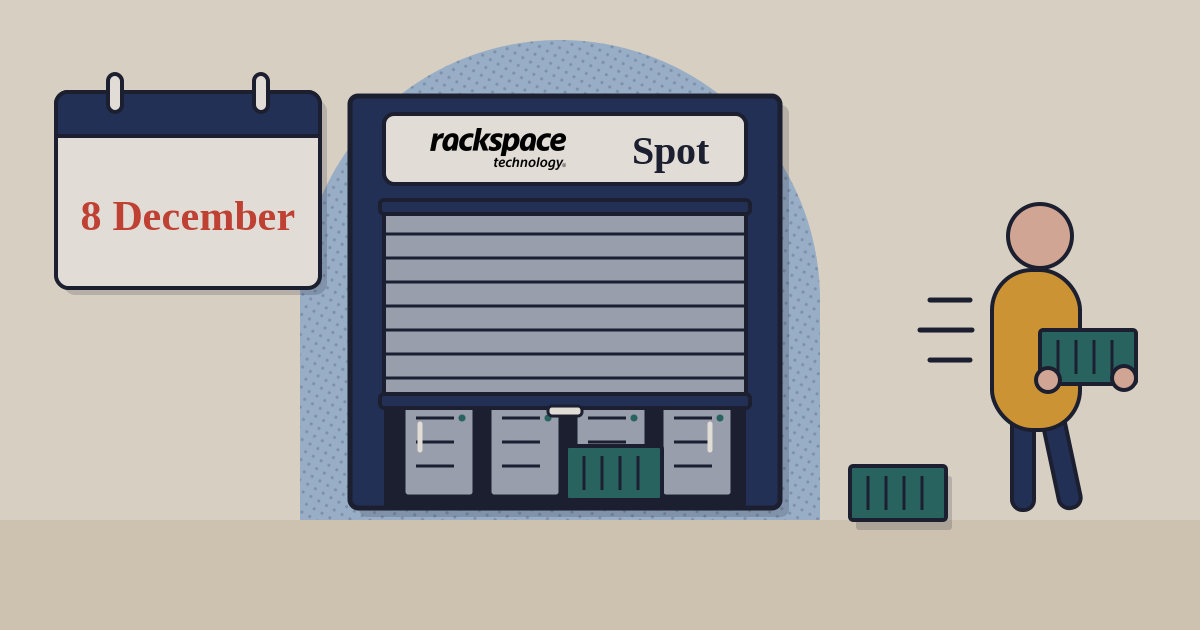
Rackspace will shut down Spot, its auction-priced Kubernetes cloud, on Tuesday 8 December at 5pm Central Time, 4:30am on 9 December in India. “Following the recent security incident affecting Rackspace Spot, Rackspace has made the decision to wind down the service,” says the notice it posted on Spot’s status page on 24 November. “On the wind-down date, any workloads still running will be terminated. After that date, data will no longer be accessible to customers.” Each customer has been sent its own notice with instructions, and the data-retrieval deadline is the one “stated in those notices”.1
Three weeks from a 22-hour intrusion to a shutdown, with two weeks' notice to leave
Rackspace Spot's breach and wind-down, 17 November to 8 December 2026, dates in UTC
Show tableHide table
| Date | Event | Detail |
|---|---|---|
| 17 Nov 2026 | Intruders inside | Leaked credentials used to reach parts of Spot for almost 22 hours (customer notice, via The Register) |
| 18 Nov 2026 | Rackspace learns | After a customer raised the alarm (customer notice, via The Register) |
| 20 Nov 2026 | Cause given | Platform9: an observability system breached with a compromised credential; service down for intrusive maintenance |
| 24 Nov 2026 | Wind-down notice | Posted on the Spot status page |
| 8 Dec 2026 | Spot shuts | 5pm CT (23:00 UTC; 4:30am IST, 9 December): running workloads terminated |
Source: Rackspace, Spot status page; Platform9's Sirish Raghuram on GitHub; Rackspace's customer notice as reported by The Register · as of 27 November 2026, 7:15pm IST · 17 and 18 November events are from Rackspace's customer notice as The Register reports it
01What happened inside Spot
Spot was built with Platform9, and the first account of the cause came from Sirish Raghuram, its co-founder, on 20 November, while the service was down: “an observability system was breached using a compromised credential. This was obviously a critical error on our part.” Restoring it meant “several intrusive changes to the underlying infrastructure clusters”.2 3
According to Rackspace’s customer notification, as The Register reports it, the intruders impersonated legitimate users, created pods in customer clusters, reached Kubernetes Secrets and listed nodes and storage volumes. “With that access, they could have read any Secret in an affected user’s clusters, and any Spot API token or refresh token that user held,” Rackspace told customers. It has revoked the affected tokens and sessions, removed the planted pods and changed the affected platform and storage keys. Rackspace has not said how many customers were affected.3
Creating a pod is enough. A Secret is the Kubernetes object that holds “a password, a token, or a key”, stored unencrypted by default, and the Kubernetes documentation warns that “anyone who is authorized to create a Pod in a namespace can use that access to read any Secret in that namespace”.4
02What a Spot customer does before 8 December
- Read your own notice. Its data-retrieval deadline may come before the shutdown.1
- Export data and move workloads. Copy persistent volumes and databases out, and redeploy elsewhere; nothing running survives 8 December.1
- Rotate every credential the clusters held: database passwords, third-party API keys, anything in a Secret. Reissue Spot API tokens and download new kubeconfig files while the service lasts.3
Rotation matters even after Spot is gone. Our reading: a password or key read on 17 November still opens the database or the third-party account it belongs to, wherever that sits, until it is changed; shutting Spot down revokes nothing outside Spot, and a workload moved with its old Secrets carries the exposure with it.
Spot sold capacity by auction: users bid per node hour, pay the clearing price, and are pre-empted if it rises above their bid; it ran a free managed Kubernetes control plane.5 Other breaches that began with one credential: stolen Qubole credentials that opened AWS accounts and hijacked GitHub accounts that ran a secret stealer.
Sources
- Rackspace, Rackspace Spot – Service Wind-Down Notice (Spot status page, incident 52) — 24 November 2026
- Sirish Raghuram, comments in rackerlabs/spot GitHub discussion 510, “Update On Spot Outage” — 20 November 2026
- The Register: Rackspace pulls plug on Spot cloud service after security breach — 26 November 2026
- Kubernetes documentation: Secrets — last modified 23 July 2026
- Rackspace Spot home page (how the pricing works) — read 27 November 2026
Disclosure. TechBag is a software reseller: it earns when companies buy through it, including from vendors named here. The analysis is TechBag’s own; no vendor paid for or saw this piece before publication. Facts are labelled reported, TechBag count or our view. How the Journal works.
Keep reading