TAIEX up 2.16% on short ban’s first day; borrowed-share shorts fell 31%
TWSE data for Monday 23 November: the index, short sales with borrowed shares down to 75.4m, what the FSC’s ban covers, and easier margin calls from Tuesday.

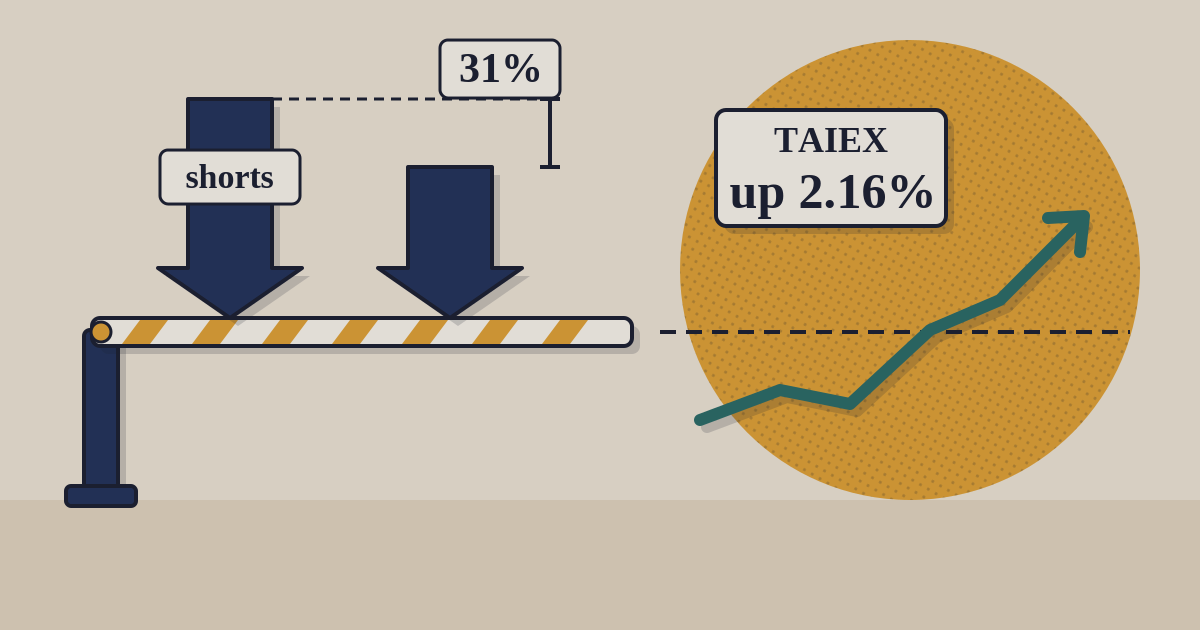
Taiwan’s TAIEX rose 778.60 points, or 2.16%, to 36,811.89 on Monday 23 November, the first session in which no short sale of a Taiwanese share could be priced below the previous day’s close. It opened at 35,899.48 and fell to 35,442.41, 1.64% below Friday’s close, before turning up to a high of 37,108.20.1 Shares worth NT$1.11tn changed hands, against NT$935.3bn on Friday.2 652 listed stocks rose, 43 of them by the 10% limit, and 362 fell. The electronic parts and components index rose 6.61% and semiconductors 2.58%, while finance and insurance fell 2.65%.3 TSMC opened at NT$1,990, below Friday’s NT$2,000, and closed 1.5% up at NT$2,030.4 The rise followed a 17.5% fall in the week to Friday, Taiwan’s worst week since 1991.
01Short selling fell to November's lowest
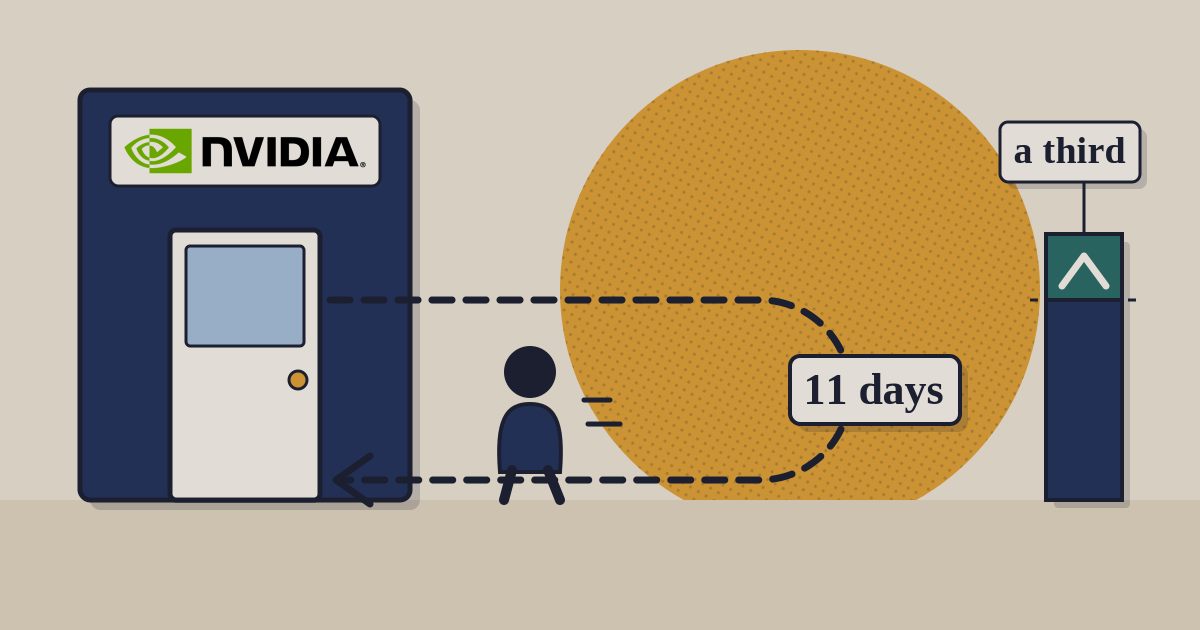
Investors sold 75.4m shares short with borrowed stock on Monday, 31% fewer than the 109.4m on Friday and a third of Thursday’s 229.9m: the fewest of any session in November. More borrowed shares were returned, 126.6m, than were sold, so the balance of borrowed-share short sales fell 0.28% to 18.44bn shares.5 Short sales on margin, a smaller market, fell to 29.1m shares from 36.0m on Friday, while short sellers bought back 47.9m shares to close positions; the margin short balance fell 13.4% to 173.0m shares in one day.56
The rule stops short sales below the line, not at it or above. In TSMC, which closed above Friday’s price, 401,000 shares were sold short with borrowed stock on Monday, against 39,000 on Friday.5
02What the ban covers, and what the exchange added
The Financial Supervisory Commission’s text of 21 November, in our translation: when investors sell short on margin or sell borrowed shares of stocks listed on the Taiwan Stock Exchange or the Taipei Exchange, or of Taiwan depositary receipts, “the selling price may not be lower than the previous business day’s closing price”. Securities firms and futures firms selling short to hedge their business are exempt.8 It applies to every such share, whatever it did the day before; the narrower rule of 19 November covered only stocks that had closed 3.5% or more lower.
After Monday’s close the stock exchange eased the other side of the market. From Tuesday a broker issues a margin call only when a margin account’s collateral falls below 120% of what the investor owes, not 130%; the investor then has two business days to pay. Calls already issued under the 130% line are cancelled and the collateral will not be sold; those investors may close their positions themselves. Any asset with market liquidity and an objective value can serve as collateral if the broker agrees.9 The exchange’s chairman, Lin Hsiu-ming, also wrote to every listed company encouraging buybacks and investor briefings.10 The NT$500bn National Financial Stabilization Fund has been authorised to buy shares since 6 November, CNA reported.11
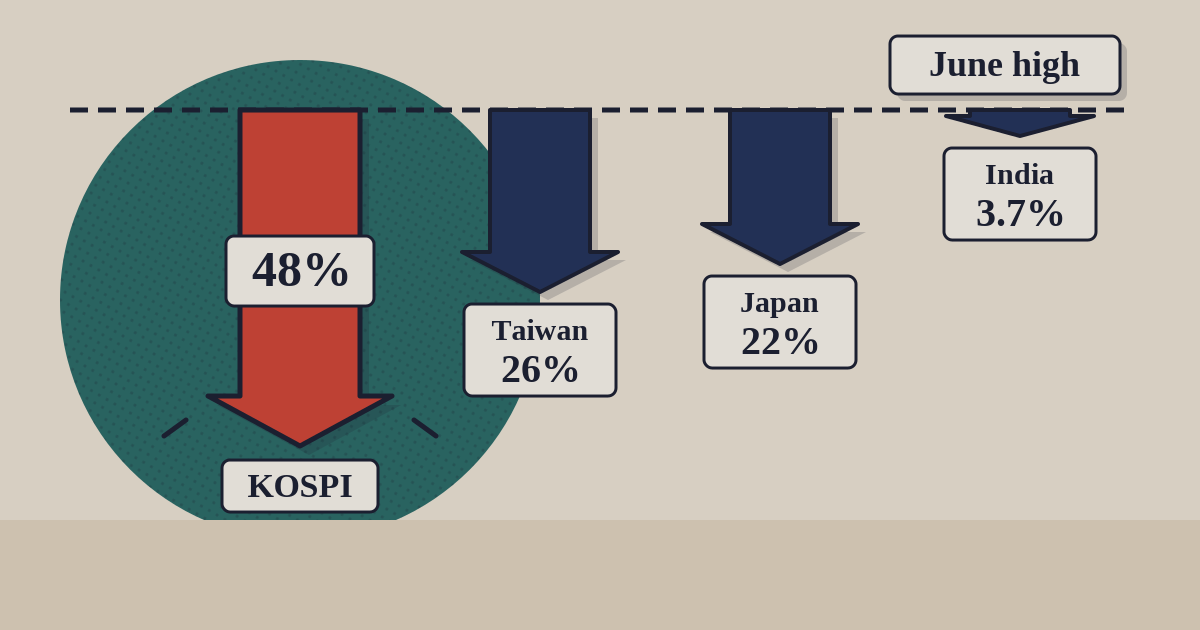
Foreign investors still sold a net NT$28.95bn of shares on Monday, and the three groups of institutional investors together a net NT$52.10bn.7 How Seoul, Tokyo and Mumbai compare is in our Trend on the AI rout by country.
Sources
- Taiwan Stock Exchange, TAIEX historical data (MI_5MINS_HIST), November 2026 — 23 November 2026
- Taiwan Stock Exchange, Highlights of Daily Trading (FMTQIK), November 2026 — 23 November 2026
- Taiwan Stock Exchange, daily market report (MI_INDEX): indices, advancers and decliners — 23 November 2026
- Taiwan Stock Exchange, daily trading of 2330 (TSMC), November 2026 — 23 November 2026
- Taiwan Stock Exchange, daily short sale balances, margin and borrowed shares (TWT93U), every session 2–23 November — 23 November 2026
- Taiwan Stock Exchange, margin transaction summary (MI_MARGN) — 23 November 2026
- Taiwan Stock Exchange, trading value of foreign and other investors (BFI82U), 23 November — 23 November 2026
- Financial Supervisory Commission, 為維護市場交易秩序,金管會宣布「全面禁止平盤以下放空」等5項措施 (five measures including a full ban on short selling below the previous close; Chinese) — 21 November 2026
- Taiwan Stock Exchange, 自115年11月24日起,信用交易擔保維持率最低標準由130%調降至120% (minimum margin maintenance ratio cut from 130% to 120% from 24 November; Chinese) — 23 November 2026, 2:50pm Taipei
- Taiwan Stock Exchange, 證交所致函並積極洽請上市公司啟動庫藏股與辦理法說會 (letter asking listed companies to start buybacks and hold investor conferences; Chinese) — 23 November 2026
- Focus Taiwan (CNA), TWSE cuts minimum margin maintenance ratio to ease market volatility — 23 November 2026, 6:59pm Taipei
Disclosure. TechBag is a software reseller: it earns when companies buy through it, including from vendors named here. The analysis is TechBag’s own; no vendor paid for or saw this piece before publication. Facts are labelled reported, TechBag count or our view.
Keep reading