Anthropic expects up to 20% of its IPO shares to go to retail buyers in 15 countries
Anthropic’s filings of 10 to 12 November: up to 20% of its 825m IPO shares for retail buyers, US$3.0–3.5bn in Japan, up to 80.1m shares in Europe, and a price expected on 18 November.

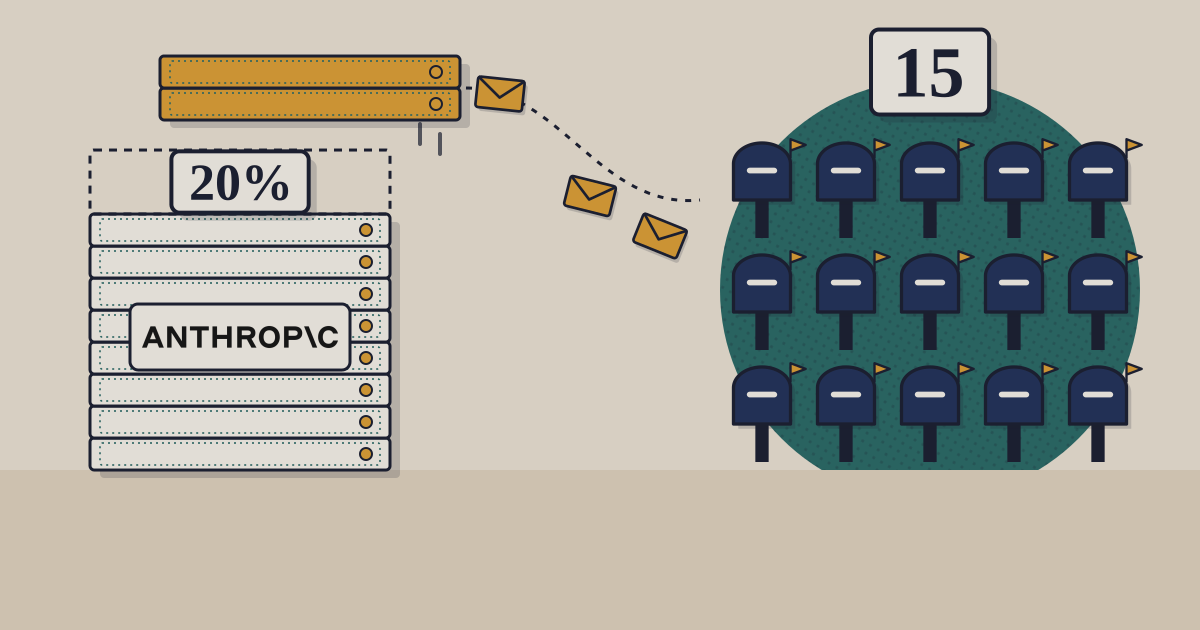
Anthropic expects allocations to retail investors, in the United States and abroad, to make up as much as 20% of the shares in its initial public offering, though final amounts will depend on demand, its amended prospectus says.1 Filings that EDGAR dates 12 November set out the offers outside the US: a book-built offer of US$3.0bn to US$3.5bn (¥474bn to ¥553bn) in Japan; up to 80,135,135 new shares, a tenth of the 801,351,354 the company is selling, for retail buyers in nine European countries and Switzerland; and public offers in the United Kingdom, Australia and Canada.2345 The price is expected on 18 November and trading on Nasdaq, as ANT, on 19 November, US Eastern time.6 The range is US$70–78 for 825m shares, as our reading of the amended S-1 set out.
Anthropic expects up to a fifth of its IPO to go to retail buyers in 15 countries
Retail terms in Anthropic's prospectus and offer documents, as filed 10 to 12 November 2026
≤20%
of the shares expected to go to retail investors, US and abroad
S-1/A No. 2
≤80.1m
new shares for retail buyers in nine EEA countries and Switzerland
EEA prospectus
US$3.0–3.5bn
book-built offer in Japan, ¥474bn to ¥553bn
Japan amendment
18 Nov
price expected; trading on Nasdaq from 19 November (US Eastern)
IPO website
Source: Anthropic S-1/A No. 2; free writing prospectuses for Japan, the EEA and the IPO website · as of 12 November 2026 · Japan's yen figures use the filing's rate of ¥157.97 to the dollar
01Who can buy, and through whom
In the US, part of the offering is offered at Anthropic’s request through Charles Schwab, Fidelity, Robinhood, SoFi, E*TRADE from Morgan Stanley and Trade-PMR, as selling-group members.1 In Japan, six firms handle it, Mizuho, Rakuten and SBI among them, in units of one share, against a deposit equal to the offer price that earns no interest; nothing is underwritten in Japan. Mizuho’s online lottery takes applications until 10am on 18 November, Japan time. Payments and dividends are in dollars, so their yen value moves with the exchange rate.2
Europe’s prospectus was approved by Germany’s BaFin on 11 November and passported to Denmark, Finland, France, Ireland, the Netherlands, Norway, Spain and Sweden; UBS handles Switzerland. Named brokers include Trade Republic, Scalable Capital, Revolut, eToro, Nordnet and Interactive Brokers. Orders are placed in shares, with no minimum or maximum, until 4pm CET on 18 November; orders through other intermediaries “may receive smaller allocations on a relative basis or none at all”.3 In the UK the offer runs through RetailBook, an FCA-authorised public offer platform, in ISAs and SIPPs among other accounts, until 18 November; there is “no minimum allocation”, and the company “may decide not to allocate any Shares” to it.4 Australians apply through brokers led by CommSec until 5pm on 17 November, Sydney time, for a tranche sized after pricing, in shares that will trade on Nasdaq, not the ASX. Canada’s prospectus is filed in every province and territory but is not yet final.5
02One price for everyone, and a ceiling for Europe
A retail tranche is a block of the same shares, set aside for individuals rather than institutions and sold under a prospectus each country’s regulator accepts. Everyone pays the single price set in the US book-build. Europe’s prospectus adds a maximum of US$120 a share, because US rules let the price rise, within limits, without a new filing; orders without a limit are valid up to US$120, and orders below US$70 “should not expect to receive an allocation”. European shares left unsold return to the global offering.3
The filings give no separate reason for the retail offers. The offering’s stated purposes are to increase its capitalisation and financial flexibility, create a public market, give the selling founders an orderly sale and open access to public equity markets.3 The US prospectus lists retail allocation of a minority of shares, and retail interest after listing, among factors that may move the share price, and says Class A holders “generally will not be able to affect the outcome” of shareholder votes.1 The September quarter ended in a US$23.3bn net loss, US$21.9bn of it a non-cash charge.6 India is not among the 15 countries: the prospectus says it is not an offer to the public in India and was not reviewed by SEBI.1
Sources
- Anthropic, PBC: Form S-1/A, Amendment No. 2 (Underwriting: Sales to Retail Investors; Risk Factors; Selling Restrictions: India) — filed 10 November 2026
- Anthropic, PBC: Free writing prospectus (Japan amendment prospectus, Kanto Regional Finance Bureau) — dated 11 November 2026; EDGAR 12 November 2026
- Anthropic, PBC: Free writing prospectus (EEA prospectus approved by BaFin; sections 3.1 and 8.1) — dated 11 November 2026; EDGAR 12 November 2026
- Anthropic, PBC: Free writing prospectus (UK materials: RetailBook launch announcement and disclosure summary) — dated 10 November 2026; EDGAR 12 November 2026
- Anthropic, PBC: Free writing prospectus (Australian prospectus wrap; Canadian preliminary base PREP prospectus) — dated 10 November 2026; EDGAR 12 November 2026
- Anthropic, PBC: Free writing prospectus (IPO website, FAQs and factsheet) — dated 10 November 2026; EDGAR 12 November 2026
Disclosure. TechBag is a software reseller: it earns when companies buy through it, including from vendors named here. The analysis is TechBag’s own; no vendor paid for or saw this piece before publication. Facts are labelled reported, TechBag count or our view.
Keep reading