SaaS & business softwareAnalysis
Drip emails were 2% of sends and 30% of email revenue across 150,000 brands
Omnisend's 2025 data on 27 billion emails, which sequences to build first, the exits every drip needs and two tools' automation tiers, for an Indian business, September 2026.

In May 2023 this blog explained drip campaigns, the pre-written sequences that go out on a trigger or a schedule, with a list of benefits, four examples and a set of best practices. The question behind it is the one a small Indian marketing team still asks: is it worth building automated sequences, which ones, and what can go wrong? Three years on there is better evidence than the two statistics the original quoted, and a new rulebook from the largest mailbox provider.
01Two per cent of the sends, nearly a third of the money
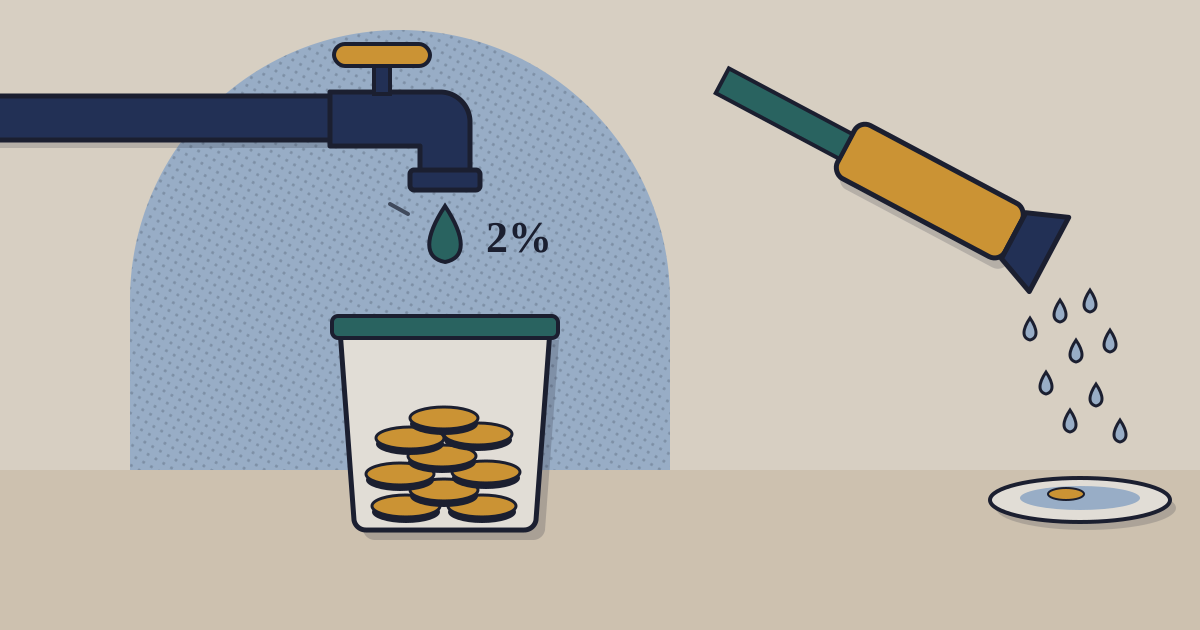
Omnisend, an email and SMS platform for online stores, publishes a yearly report on what its customers send. Its report on 2025 covers 150,000 brands and 27 billion emails. Automations, which is what the 2023 post called drips, “made up just 2% of all email sends, yet generated 30% of total email-driven revenue”.1 The US cut, released on 14 January 2026, is close: 1.7% of sends and 25% of email revenue.2
Two in every 100 emails sent, thirty in every 100 of email revenue: automation earns about fifteen times its share
Automated emails' share of email sends and of email-attributed revenue, all Omnisend brands, calendar 2025, % (out of 100)
2%
Share of email sends
United States: 1.7%
30%
Share of email revenue
United States: 25%
Source: Omnisend, 2026 eCommerce Marketing Report and US release · as of 14 January 2026
The reason is not clever copy. A drip goes to someone at the moment they did something: signed up, left a cart, viewed a product. A campaign goes to everyone on the list on a Tuesday. The comparison flatters automation because the audiences differ, and Omnisend sells automation, so treat the multiple as an upper bound. The direction is not in doubt.
The same pattern holds outside email. Omnisend’s customers sent 40% more SMS in 2025 than in 2024, and automated text messages earned US$0.74 a send against US$0.15 for SMS campaigns.1 For an Indian business, where a customer is often easier to reach on a phone than in an inbox, that is the argument for designing the trigger once and choosing the channel per step, rather than building an email drip and a messaging drip as separate projects.
02Build the welcome and the cart sequence first
The 2023 post listed four kinds of drip: welcome, abandoned cart, educational and re-engagement. The 2025 data ranks them for you. “Abandoned cart and Welcome messages drove 76% of all automation-generated orders.” Back-in-stock alerts had the highest conversion rate of any automation type, 6.46%, and birthday messages produced average orders more than four times the norm.1
Four sequences, in the order to build them, with what each did in 2025
Automation types and their reported results across Omnisend brands, calendar 2025
- 01
Welcome series
Triggered by a sign-up. With abandoned cart, 76% of automation-generated orders.
- 02
Abandoned cart
Triggered by a cart left unpaid; counted with welcome in that 76%.
- 03
Back in stock
Triggered by a restock the subscriber asked about; highest conversion of any type, 6.46%.
- 04
Birthday or win-back
Date or inactivity triggers; birthday orders averaged over four times the norm.
Source: Omnisend, 2026 eCommerce Marketing Report · as of 14 January 2026
A business without a shopping cart has the same shape with different triggers: a welcome series after a demo request, a follow-up after a quote is sent and not answered, a renewal reminder before a contract ends. The rule from the data carries over. The first two sequences, the one that greets and the one that rescues an abandoned decision, do most of the work; the educational series the 2023 post put third is worth building only after those run.
03Measure orders per send, not opens
The 2023 post’s headline evidence was an open-rate comparison: automated emails opened at 29.9% against 18.3%. We could not find the primary study behind it, and the measure has since broken. In June 2021 Apple announced Mail Privacy Protection, which “stops senders from using invisible pixels to collect information about the user”, including whether a message was opened.3 Opens recorded from Apple Mail no longer tell you that a person read anything.
An automated email earned about sixteen times a scheduled one per send
Email revenue per send, automated versus scheduled, Omnisend brands, calendar 2025, US$
Source: Omnisend, 2026 eCommerce Marketing Report and US release · as of 14 January 2026
Revenue or orders per send is the number to run a drip programme on, because it cannot be faked by a privacy proxy and it penalises sending more of what nobody wants. For a B2B team without an online checkout, the equivalent is meetings or replies per send. Clicks are a reasonable second measure; opens are a deliverability signal at best.1
The better test is a holdout. Leave a random tenth of new sign-ups out of the welcome series for a month and compare what they buy, book or reply with the rest. That number, the difference the sequence makes, is what the drip is worth, and it is the only figure that answers the question a finance team will ask at renewal. Subject-line tests are cheap and worth running, but they optimise the part of the email that matters least once the trigger and the timing are right.
04Every sequence needs a way out
The 2023 post explained how a drip starts and said little about how it stops, which is where most of them go wrong. A sequence that keeps writing to people who have stopped caring produces the spam reports that mailbox providers count against a domain, and then the welcome email stops arriving too. The complaint ceiling Gmail and Yahoo enforce, and what it means for how often you send, is the subject of our note on email cadence; we do not repeat it here. The 2023 post’s advice to “create a sense of urgency” in subject lines is the wrong instinct either way.
A drip needs four ways out for every way in
The exit conditions a drip sequence should carry, from trigger to suppression, for any email tool, as of September 2026
Step 1 of 5
Trigger
A sign-up, an abandoned cart, a quote sent and not answered. The person enters one sequence.
Source: TechBag; Google Workspace Admin Help, Email sender guidelines; Zoho Campaigns pricing · as of 30 September 2026 · A mechanism, not a measurement; the one-click unsubscribe is a Google requirement for bulk senders
Authentication sits underneath all of this, and it is an IT task, not a marketing one: TechBag’s email security guide covers the DMARC tools that report on it. Where an address goes once it has gone quiet, and how long Indian law lets you keep it, is in our graymail note.
Frequency is the other lever. A welcome series and a cart reminder can both fire for the same new customer in the same afternoon, on top of the weekly newsletter. Set a cap on how many messages any one address receives in a week across every sequence, and let the triggered message win over the scheduled one. Zoho Campaigns lists frequency capping on its Professional plan; check where your own tool hides the setting, and switch it on.
Sources
- Omnisend, 2026 eCommerce Marketing Report (calendar 2025; 150,000 brands; 27 billion emails) — covers calendar 2025; undated page Omnisend sells email and SMS automation.
- Omnisend, Study: ecommerce orders jumped 147% in the US in 2025 (automated emails 25% of revenue from 1.7% of sends) — 14 January 2026
- Apple Newsroom, Apple advances its privacy leadership with iOS 15 (Mail Privacy Protection) — 7 June 2021
- Google Workspace Admin Help, Email sender guidelines (requirements from 1 February 2024) — in force 1 February 2024; undated page
- Mailchimp, Marketing pricing (Customer Journey Builder: not on Free; up to 4 flow steps on Essentials; up to 200 flows on Standard) — undated page
- Zoho Campaigns, Pricing (workflows by plan); TechBag, Pipedrive Campaigns intel page (Zoho Campaigns as the INR and GST option) — undated page; TechBag page as of 30 September 2026
- MeitY, Digital Personal Data Protection Act, 2023 (section 6, consent and its withdrawal) and the DPDP Rules, 2025 — 13 November 2025
- India Briefing, OIDAR services: GST and reverse charge — 29 September 2023
Disclosure. TechBag is a software reseller: it earns a margin when a reader buys through it, including from vendors named here. The analysis is TechBag’s own; no vendor paid for or saw this piece before publication. Facts are labelled reported, TechBag count or our view.
Keep reading