SecurityThreats & vulnerabilitiesNote
Flight Centre: customer records may have been accessed via a supplier’s booking system
Flight Centre’s ASX statement of 26 November: which brands used the supplier’s accommodation system, what the records hold, what was not reached, and what a customer does.

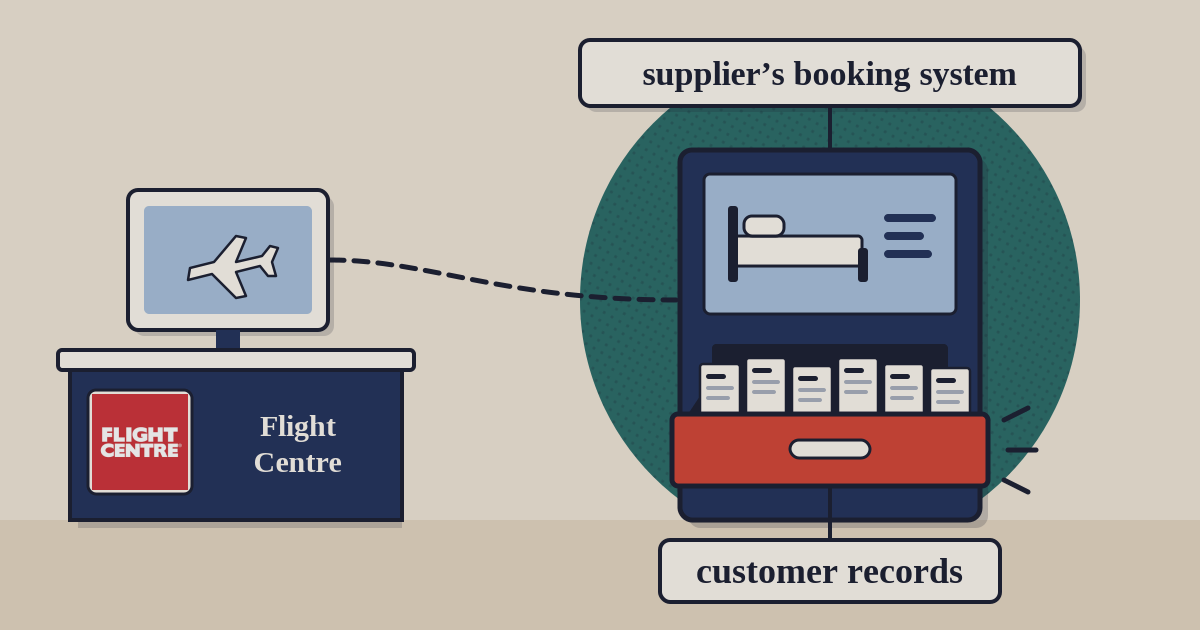
Flight Centre Travel Group told the Australian Securities Exchange on 26 November that “a significant number of customer records” in a third-party accommodation booking system “may have been accessed by unknown persons”. The system is used by its Flight Centre, Travel Associates and Cruiseabout brands and by some independent agents for hotel and other accommodation bookings. Flight bookings are not affected, and corporate travel bookings run on other systems. The company says it is not yet clear how many of the accessed records were actually taken out of the supplier’s system, and it gives no count.1
01What the records hold, in Flight Centre’s words
The initial review, Flight Centre says, shows that most of the accessed records contain only customer names, some with basic travel information. “A very small percentage” are believed to include limited passport details, email addresses, phone numbers or birth dates, and “in rare cases” health or mobility information. No access to card, payment or bank account details has been identified so far.1
Most of the accessed records hold names only; passport details and health notes are in a small share
What the accessed records contain, as Flight Centre describes them, initial review, 26 November 2026
Show tableHide table
| Data | How many records, in Flight Centre’s words |
|---|---|
| Customer names | Most of the accessed records |
| Basic travel information | Some of those |
| Limited passport details, email addresses, phone numbers, birth dates | A very small percentage |
| Health or mobility information | Rare cases |
| Card, payment or bank account details | No access identified to date |
| Flight and corporate travel bookings | Not affected (other systems) |
Source: Flight Centre Travel Group, statement to the ASX (26 Nov 2026) · as of 26 November 2026, 7:30pm IST
Flight Centre does not name the supplier. It says it is working with that vendor and with Mandiant, its incident response partner, to understand what happened, and that together they have tightened security and detection, changed authentication keys and credentials and increased monitoring. It is notifying the relevant authorities, will contact affected customers, and will post updates on its website. Its leisure brands are trading normally, and existing hotel bookings stand.1
02What a customer does now
Flight Centre’s own advice is to be alert to unexpected emails, calls or messages about a booking, and not to click links, open attachments or give personal information, passwords or payment details in reply.1 A name with a real hotel booking attached is what makes such a message believable.
For Australian passport holders, the Passport Office’s guidance answers the passport question directly. Nobody can travel under a traveller’s identity with leaked details, because that needs the physical passport, and a passport number cannot be used to obtain a new passport. It gives three options after a breach: keep using the passport, which stays valid; replace it, if it has more than two years’ validity left (a reduced fee may apply), or renew it if it has less; or ask for it to be cancelled at once. It warns that leaked details can still be used for other identity fraud, and points to IDCARE, a free identity-theft support service, on 1800 595 160.2 Travellers holding other countries’ passports should look to their own passport office; Flight Centre’s statement does not say which countries’ customers are in the system.1
Sources
- Flight Centre Travel Group, statement to the ASX, “FLT Investigating Cyber Security Incident” (document 2924-03166947-2A1713085) — 26 November 2026 (lodged 25 November, 22:31 UTC)
- Australian Passport Office, “Data breaches and scams” — undated page, as read 26 November 2026
- Australian Passport Office, “Quest Apartments and Hotels data breach” — 26 November 2026
Disclosure. TechBag is a software reseller: it earns when companies buy through it, including from vendors named here. The analysis is TechBag’s own; no vendor paid for or saw this piece before publication. Facts are labelled reported, TechBag count or our view. How the Journal works.
Keep reading