Gemini 2.5 calls re-route on 1 December; Pro users' input price is 20% higher by January
Google's Gemini API release notes of 2 November and its price page: where 2.5 Pro and 2.5 Flash calls land, and the per-million-token rates before and after, as of 9 November.

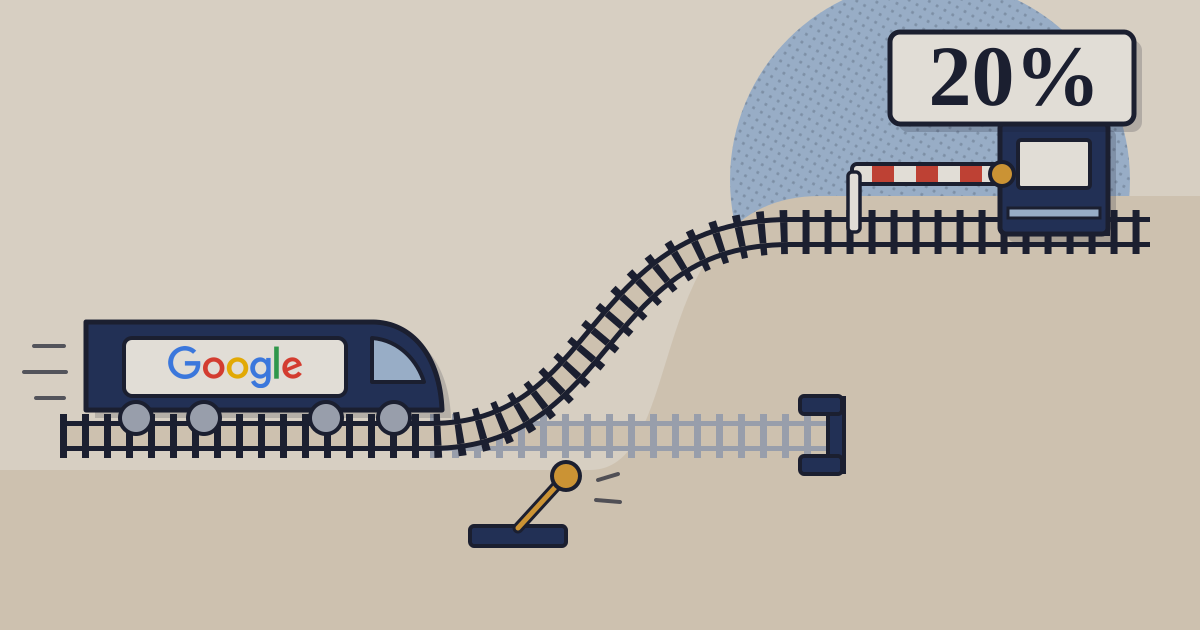
From 1 December, every Gemini API request naming gemini-2.5-pro will be answered by a different model, Gemini 3.8 Flash, and billed at its rates; requests naming gemini-2.5-flash will go to Gemini 3.5 Flash-Lite.1 For 2.5 Pro users the bill falls first and then partly rises: 3.8 Flash is at an introductory US$0.75 per million input tokens through 31 December and US$1.50 from 1 January, against 2.5 Pro’s US$1.25 for prompts up to 200,000 tokens. Output goes from US$10 to US$3.75, then US$7.50.2
01A re-route, not a shutdown
Google’s deprecations table lists 1 December under “Shutdown date”, but the same row says requests “will automatically route” to the replacement.3 So code that names the old model keeps getting answers, from another model, unless it uses something the new one rejects. Google did the same on 8 October, when calls to 3.7 Flash moved to 3.8 Flash and calls to 3.5 Flash to 3.6 Flash.1 Access to the 2.5 models has been limited since 18 September to users who had “actively used them in the past”; gemini-2.5-flash-lite is not deprecated and stays available “until further notice”.13
This covers the Gemini Developer API, the one behind Google AI Studio. Google Cloud’s Agent Platform, formerly Vertex AI, runs a separate timetable: its documentation, updated on 7 November, gives 2.5 Pro, 2.5 Flash and 2.5 Flash-Lite a retirement date of 20 October 2026, and the pages we read describe no automatic re-route. It notes that listed dates “refer to retirement of support” on that platform.4 If your calls go through Google Cloud, check there rather than assume the December date.
02What each call will cost
A separate change arrives the same day. Gemini 4 Argon, released on 13 October, doubles on 1 December from US$2 to US$4 per million input tokens and from US$10 to US$20 for output, the end of a price Google had published with its expiry date. The same rise appears on Agent Platform’s price list.125 For 2.5 Flash users, the headline rates do not change: US$0.30 input and US$2.50 output on both models, though audio input falls from US$1.00 to US$0.30.2
2.5 Pro users pay less in December; by January input is 20% above today's price, while output stays lower
List price, US$ per million tokens, paid tier, standard (not batch): today's rate against the rate after each change
- Today
- After the change
Show tableHide table
| Today | After the change | Change | |
|---|---|---|---|
| 2.5 Pro input, 1 Dec | 1.25 | 0.75 | -40% |
| 2.5 Pro input, 1 Jan | 1.25 | 1.5 | 20% |
| 2.5 Pro output, 1 Dec | 10 | 3.75 | -62% |
| 2.5 Pro output, 1 Jan | 10 | 7.5 | -25% |
| 2.5 Flash input, 1 Dec | 0.3 | 0.3 | 0% |
| 2.5 Flash output, 1 Dec | 2.5 | 2.5 | 0% |
| 4 Argon input, 1 Dec | 2 | 4 | 100% |
| 4 Argon output, 1 Dec | 10 | 20 | 100% |
Source: Google, Gemini Developer API pricing · as of 9 November 2026 · 2.5 Pro shown for prompts up to 200,000 tokens; above that it costs US$2.50 input and US$15 output
03What to test before 1 December
Token counts may not stay equal: thinking tokens are billed as output on both models, and 3.8 Flash’s default thinking level is medium.26 Google tells developers to update the model string before 1 December and calls these changes breaking:1
- Thinking settings.
thinking_levelreplacesthinking_budget.6 - Sampling parameters.
temperature,top_pandtop_kare “deprecated and ignored”, so an application that relies on them loses that control without an error; Google says future generations will return one.7 - Prefilled model turns. A request ending in a
modelturn returns an HTTP 400 error.7 - Function calling. Google lists thought signature validation and, on
generateContent,call_idandnameon every response.16 - Grounding allowance. 2.5 Pro and 2.5 Flash have 1,500 free grounded prompts a day, then US$35 per 1,000. Gemini 3 and later share 5,000 free search requests a month, then US$14 per 1,000, and Google says one request may run more than one search.2
- Output quality. 2.5 Pro users move from a Pro model to a Flash one, and 2.5 Flash users to a Flash-Lite one. Run your own evaluation set; prices do not measure this.
Google does not say, in what we read, which of these will fail on a re-routed request and which will be tolerated, so test each one against the new model by name.
Sources
- Google: Gemini API release notes — entries of 18 September, 8 and 13 October and 2 November 2026
- Google: Gemini Developer API pricing — rates dated to 30 November and 31 December 2026, 1 December 2026 and 1 January 2027
- Google: Gemini deprecations — 2 November 2026 entries
- Google Cloud: Gemini Enterprise Agent Platform model versions and Gemini 2.5 Pro — last updated 7 November 2026
- Google Cloud: Agent Platform pricing — rates through 30 November 2026 and from 1 December 2026
- Google: What's new in Gemini 3.8 Flash (migration checklist) — introductory rate through 31 December 2026
- Google: What's new in Gemini 3.6 (API changes and parameter updates) — 2026
Disclosure. TechBag is a software reseller: it earns a margin when a reader buys through it, including from vendors named here. The analysis is TechBag’s own; no vendor paid for or saw this piece before publication. Facts are labelled reported, TechBag count or our view.
Keep reading