SecurityThreats & vulnerabilitiesNote
Hong Kong’s LCSD: 2 hacks in 3 days hit 1.3m URBTIX users, 90,000 Leisure Link accounts
LCSD’s releases of 25 and 27 November: what hackers reached at URBTIX and SmartPLAY, both reported by their contractors, the old-system shortcut behind one, and what users do.

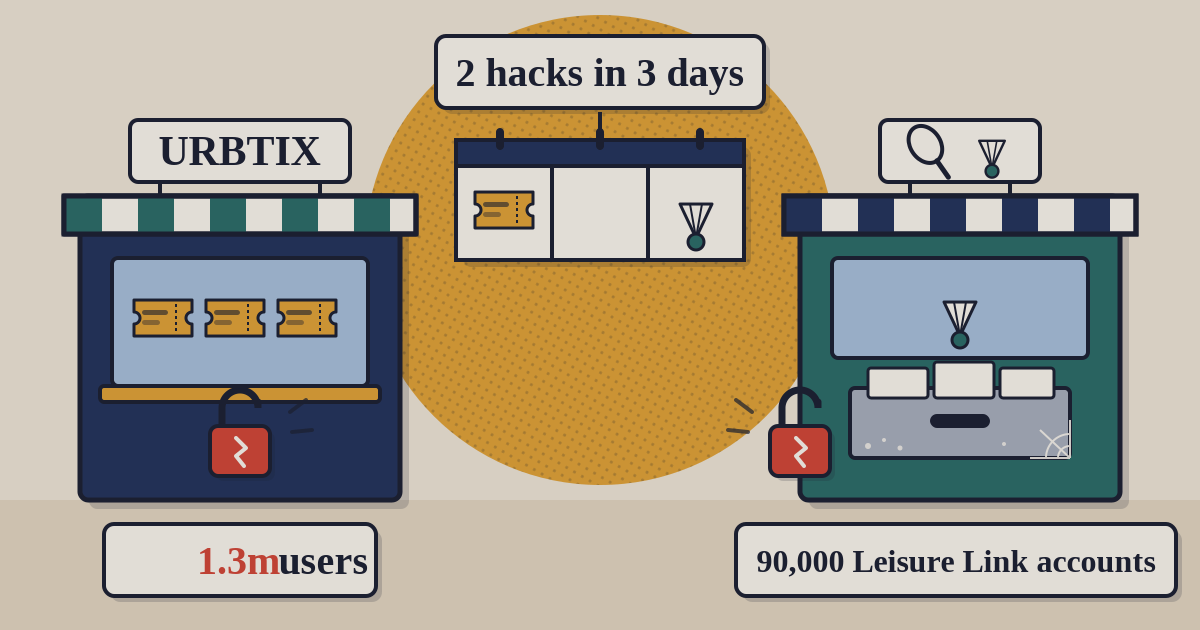
Hackers reached two of the systems Hong Kong’s Leisure and Cultural Services Department (LCSD) uses to sell tickets and book sports facilities, and in both cases it was the system’s contractor that reported it, two days apart. At URBTIX, the ticketing system for LCSD’s performance venues, the incident involves the personal data of around 1.3 million users: usernames or names, telephone numbers and email addresses. At SmartPLAY, the booking platform, the hack reached about 90,000 Leisure Link accounts, records carried over from the system SmartPLAY replaced in 2023.12
01Two systems, two contractors, three days
URBTIX’s contractor reported the illegal access on 24 November and LCSD made it public the next evening. URBTIX was “developed and is owned by the LCSD’s contractor at its own cost”; it does not collect identity-document details and masks credit-card information.1 SmartPLAY’s contractor reported its incident on 26 November, and LCSD published it on 27 November. SmartPLAY stores no card or other payment details, and no identity-document data was involved.2 Both contractors stopped the intrusion and checked that their systems were working normally, LCSD says.12
Both hacks were reported to LCSD by the systems’ contractors, two days apart
LCSD’s two information security incidents, as LCSD described them, 24 to 27 November 2026
Show tableHide table
| URBTIX | SmartPLAY | |
|---|---|---|
| What it does | Ticketing for LCSD’s performance venues | Booking LCSD leisure facilities and activities; replaced Leisure Link in 2023 |
| The contractor | Developed and owns the system, at its own cost | Named only as “the contractor of SmartPLAY” |
| What was reached | The URBTIX system | The “Reactivate Leisure Link Account” function; the password-reset function was also misused |
| Personal data | Usernames or names, phone numbers, email addresses | Dates of birth, phone numbers, addresses, gender, email addresses; names for about 1,500 |
| How many | Around 1,300,000 users | Around 90,000 Leisure Link accounts |
| Not involved | Identity documents (not collected); card details masked | Identity documents; no card or payment data stored |
| Contractor reported | 24 November | 26 November |
| LCSD made it public | 25 November, 7:35pm HKT | 27 November, 7:30pm HKT |
| Reported to | Police, Security Bureau, Digital Policy Office, Privacy Commissioner | Police, Security Bureau, Digital Policy Office, Privacy Commissioner |
Source: LCSD press releases of 25 and 27 November 2026, info.gov.hk (English and Chinese) · as of 29 November 2026, 12:30pm IST
02A shortcut to the old system, left open
When SmartPLAY launched, Leisure Link’s account data was moved onto it. SmartPLAY also kept a “Reactivate Leisure Link Account” function: a Leisure Link user applying for a SmartPLAY account could let the system fetch their personal data from the old one automatically, “to speed up the application process”. That function is what the hackers got into. It exposed dates of birth, phone numbers, addresses, gender and email addresses of around 90,000 Leisure Link accounts, and the names of about 1,500 of those users.2 4
LCSD’s reason for closing it is that most Leisure Link users have already created SmartPLAY accounts. The function has been cancelled, and the Leisure Link data “will be permanently removed from the SmartPLAY system”.2 So the records reached were kept for a step most of their owners had already taken. Data held after its use had ended also leaked in Japan this month, at the marketing platform behind the KARTE breach. The checks are the same for any team that has migrated a system: which functions still read the old data, who still uses them, and whether the old records need to exist at all.
The hackers also misused SmartPLAY’s “forget patron number or password” function, so the system sent emails with verification codes to the accounts they touched; LCSD says no personal data was involved. Users who did not ask for such an email should ignore it. The function is switched off while it is checked; until it returns, a forgotten password is reset in person, with a Hong Kong identity card, at a leisure venue or District Leisure Services Office that has a Smart Self-Service Station.2
03What happens next
For both systems, LCSD has asked the contractor for a detailed investigation and report, is arranging with it to notify the people affected, and is reviewing the incident with the Privacy Commissioner’s office and the Digital Policy Office consulted. “With the URBTIX and SmartPLAY systems having been illegally accessed by hackers in the past few days,” it said on 27 November, “the LCSD will invite the Police to see if serious illegal activities are involved.”12 LCSD has not said how URBTIX was entered or given URBTIX users a step to take, and it names no attacker; neither do we.
Sources
- LCSD, “LCSD reports information security incident” (URBTIX) — 25 November 2026, issued 7:35pm HKT
- LCSD, “LCSD reports information security incident” (SmartPLAY) — 27 November 2026, issued 7:30pm HKT
- 康文署, 康文署公布資訊保安事故 (URBTIX, in Chinese) — 25 November 2026
- 康文署, 康文署公布資訊保安事故 (SmartPLAY, in Chinese) — 27 November 2026
Disclosure. TechBag is a software reseller: it earns when companies buy through it, including from vendors named here. The analysis is TechBag’s own; no vendor paid for or saw this piece before publication. Facts are labelled reported, TechBag count or our view. How the Journal works.
Keep reading