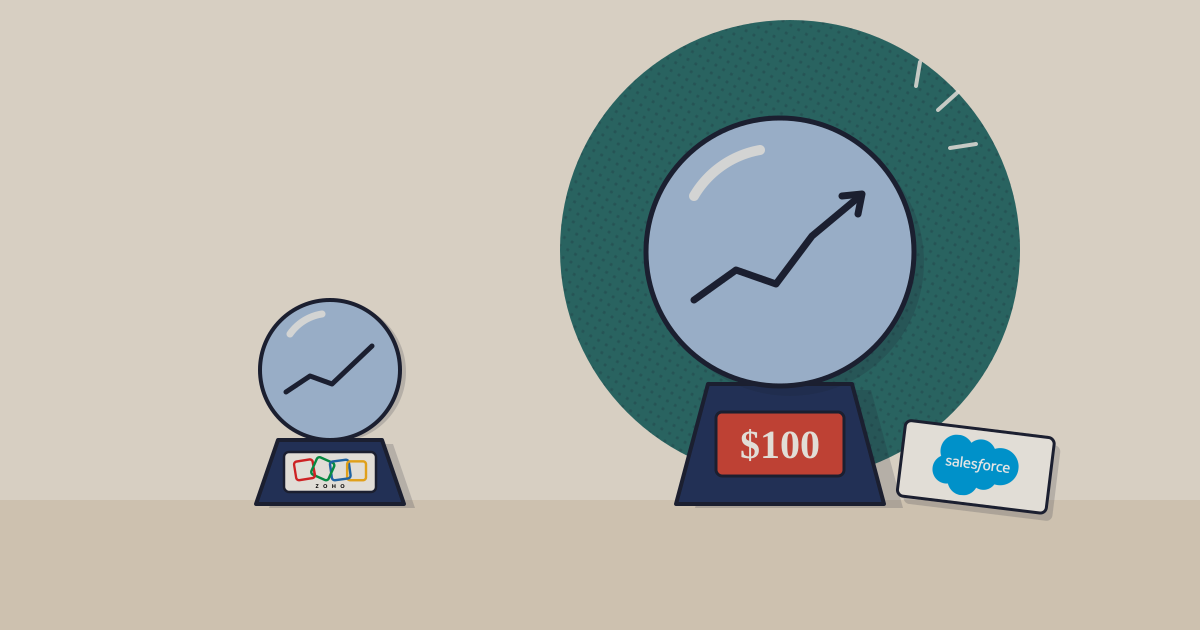
A sales forecast costs US$14 a CRM seat on Zoho and US$100 on Salesforce
Six sales metrics folded into one velocity equation, and five CRM pricing pages read for the cheapest seat that produces a forecast, in US$ and INR. As of September 2026.

The 2023 piece listed six metrics, revenue, growth, sales cycle, lead conversion, deal size and customer lifetime value, and advised a CRM, goals, dashboards and meetings. All sound. What it did not answer is the question a founder asks next: which of these does my CRM calculate, and on which plan? We read five vendors’ pricing pages for the tier where a forecast first appears.
01Three metrics, one equation
Sales velocity is revenue per day of pipeline: the number of open opportunities, times the win rate, times the average deal size, divided by the sales-cycle length in days. A team with 40 opportunities, a 25% win rate, a ₹2,00,000 average deal and a 50-day cycle closes about ₹40,000 of revenue a day. Shorten the cycle to 40 days and the same pipeline yields ₹50,000.
02The forecast costs US$14 to US$100 a seat
The cheapest seat with a sales forecast ranges sevenfold, from Zoho at US$14 to Salesforce at US$100
US$ list price per user a month, cheapest plan whose pricing page lists forecasting, annual billing, 2026
Source: Vendor pricing pages: Zoho CRM, Pipedrive, Freshsales, HubSpot Sales Hub, Salesforce Sales Cloud · as of 30 September 2026 · HubSpot also requires US$1,500 one-time onboarding for Professional
Zoho lists sales forecasting from Standard, five forecasts, at US$14 a user billed annually.1 Pipedrive adds forecast reports at Growth, US$39.2 Freshsales lists forecasting insights only in Enterprise, US$59.3 HubSpot’s comparison table shows forecasting from Sales Hub Professional, US$90 a seat on annual commitment.4 Salesforce puts “Sales Quoting and Forecasting” in Pro Suite at US$100.5 For five reps that is US$840 a year on Zoho and US$6,000 on Salesforce. This blog’s earlier piece on CRM seat prices, linked at the foot of this page, covers the entry seats.
03Buying it in India
Zoho is the one vendor here with a printed rupee price: Standard is ₹800 a user a month billed annually,6 so five reps cost ₹48,000 a year, or ₹56,640 with 18% GST. The other four bill in dollars; a reseller invoice adds the same 18% GST. A CRM holds customers’ names, numbers and call notes, which is personal data under the DPDP Act; the Rules notified on 13 November 2025 bring the substantive duties into force on 13 May 2027.7 See the Zoho CRM intel page for the INR editions.
Sources
- Zoho CRM edition comparison (Standard US$14, Professional US$23 a user a month billed annually; Sales Forecasting from Standard, 5 forecasts) — undated page
- Pipedrive pricing (Lite US$14; Growth US$39 with subscriptions and forecast reports; per seat a month, billed annually) — undated page
- Freshworks, Freshsales pricing (Growth US$9, Pro US$39, Enterprise US$59 with forecasting insights; billed annually) — undated page
- HubSpot, Sales Hub pricing (Professional US$90 a seat annual, US$100 monthly; forecasting from Professional; US$1,500 onboarding) — undated page
- Salesforce, Sales Cloud pricing (Starter Suite US$25; Pro Suite US$100 with Sales Quoting and Forecasting) — undated page
- Business Today, Zoho explained: products, features and pricing for Indian businesses (CRM Standard ₹800 a user a month, billed annually) — 23 September 2025
- Digital Personal Data Protection Rules, 2025: notification and phased commencement — notified 13 November 2025
Disclosure. TechBag is a software reseller: it earns a margin when a reader buys through it, including from vendors named here. The analysis is TechBag’s own; no vendor paid for or saw this piece before publication. Facts are labelled reported, TechBag count or our view.
Keep reading