Data & privacyNote
New York City votes 44–5 to ban surveillance pricing, at up to US$1,000 per shopper
New York City Council’s vote of 12 November: what Intro 891-A bans, the discounts it still allows, the US$1,000 fines per shopper, and how it compares with Seattle’s grocery ban.

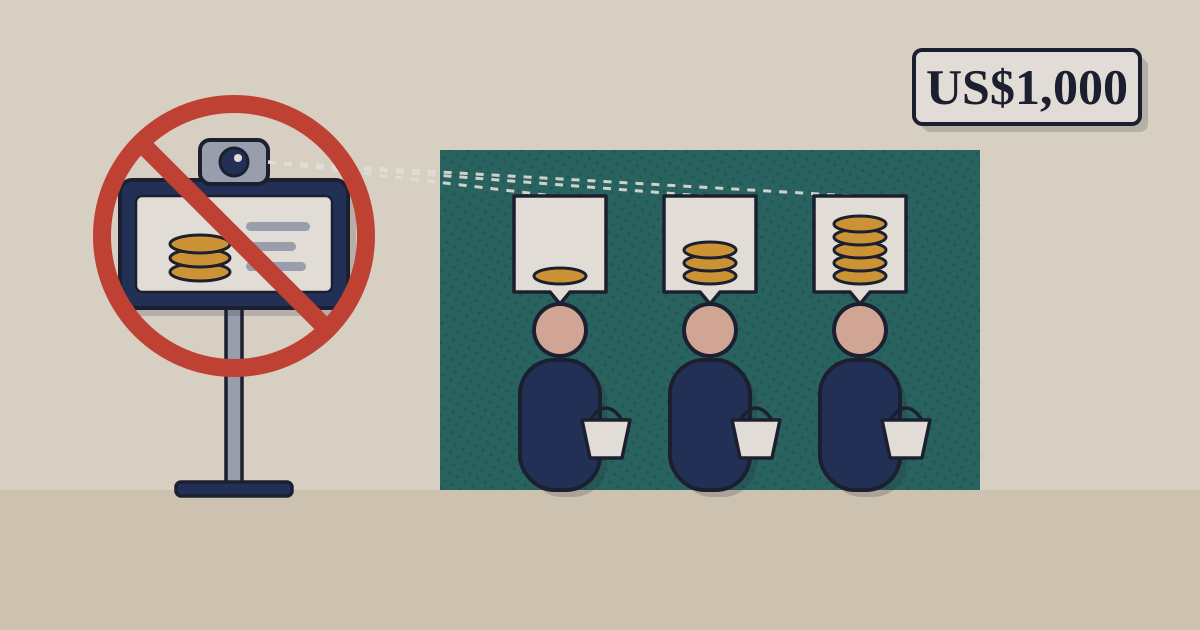
New York City’s Council voted 44 to 5 on 12 November to ban “surveillance pricing”: prices set wholly or partly by an algorithm that uses personal data to offer different customers different prices for the same goods or services. Each breach can cost up to US$1,000, and every consumer or transaction affected counts as a separate violation.123 The bill, Introduction 891-A from Speaker Julie Menin, now sits on the mayor’s desk for signature, and takes effect one year after it becomes law.24
44–5
Council vote on 12 November; two members absent
NYC Council
US$1,000
maximum fine per violation, counted per consumer or transaction
Int. 891-A
1 year
from becoming law to taking effect
Int. 891-A
4
new enforcement staff at the city's consumer department, US$356,258 a year
Council Finance Division
01What is banned, and what still counts as a discount
A business may not use surveillance pricing to set or adjust a price, to advertise one, or to collect, use, sell or share personal data for it. Ordinary discounts stay legal if anyone can get them without personal data: sales, bulk and subscription prices, flash sales, price matching. So do “custom” discounts on disclosed terms: loyalty tiers built only on purchase history, discounts for groups a customer declares (veterans, seniors, students, teachers, a birthday), and a seller’s own purchase history, provided none of it is combined with other personal data. A business offering such discounts must tell customers, on request, what personal data was considered in a price.2
Insurance, credit priced on a credit report, prices required by law and fees of brokers and investment advisers based on assets are exempt. Location data a customer shares to price a trip or a delivery, or to measure local demand, is not personal data under the bill. A business with fewer than 15 locations, mostly in the city, gets 30 days to correct a first violation and repay customers before any case is brought.2 The committee report says discounts on items left in an online cart may no longer be allowed.5
The Council’s own investigators ran about 370 price checks with 10 Lyft accounts on three routes. On a Manhattan to JFK trip the fare ran from about US$114 to US$149; two accounts got a discount on nearly every check, typically US$5 to US$9, and two got none.5
02Seattle went first, for groceries
Speaker Menin called New York “the first local jurisdiction in the nation” to ban the practice.6 Seattle’s council passed a narrower ban on 22 September, which its mayor signed on 5 October: it covers grocers with 20 or more stores, food and essentials at large mixed stores, and delivery services, from 1 September 2027, with fines of up to US$3,000 for a first violation and US$10,000 for each later one, per customer.7 Among states, the committee report lists Maryland’s ban for food retailers and delivery services, in force since 1 October, and a state-wide New York ban passed in June that still needs the governor’s signature.5
New York voted its ban seven weeks after Seattle's, for all goods and services
Surveillance-pricing bans in US cities, from New York's bill to Seattle's start date, May 2026 to September 2027
Show tableHide table
| Date | Event | Detail |
|---|---|---|
| 14 May 2026 | New York bill introduced | Int. 891, Speaker Julie Menin |
| 17 Jun 2026 | New York hearing | Committee on Consumer and Worker Protection |
| 22 Sept 2026 | Seattle council passes ban | Grocers and delivery services |
| 5 Oct 2026 | Seattle mayor signs | Ordinance 127515 |
| 12 Nov 2026 | New York passes 44–5 | Fines up to US$1,000 per consumer or transaction |
| 1 Sept 2027 | Seattle ban in force | New York's starts one year after its bill becomes law |
Source: NYC Council, Legistar record of Int. 891-A; City of Seattle, Ordinance 127515 · as of 14 November 2026
The European Commission’s Digital Fairness Act proposal of 11 November goes less far: it bars personalised prices only where they are likely to harm a known minor or vulnerable consumer. India has no ban on personalised prices; our Analysis of the EU proposal sets out what Indian sellers should watch.8
Sources
- New York City Council, New York City Council Approves Landmark Legislation Banning Surveillance Pricing — 12 November 2026
- New York City Council, Proposed Int. No. 891-A, A Local Law ... in relation to prohibiting surveillance pricing — 9 November 2026
- New York City Council, Legistar: Int 0891-2026, roll call of the Stated Meeting — 12 November 2026 Status: Enacted (Mayor's Desk for Signature).
- New York City Council Finance Division, Fiscal Impact Statement, Int. No. 891-A — 9 November 2026
- New York City Council, Committee on Consumer and Worker Protection, Committee Report on Proposed Int. No. 891-A — 12 November 2026
- New York City Council, Remarks as Prepared: Speaker Julie Menin’s Pre-Stated Press Conference — 12 November 2026
- City of Seattle, Ordinance 127515 (Council Bill 121267), algorithmic-based price discrimination, signed — 5 October 2026 Passed by the City Council on 22 September 2026.
- The TechBag Journal, EU proposes Digital Fairness Act: 10 dark patterns banned, fines up to 6% of turnover — 12 November 2026
Disclosure. TechBag is a software reseller: it earns when companies buy through it, including from vendors named here. The analysis is TechBag’s own; no vendor paid for or saw this piece before publication. Facts are labelled reported, TechBag count or our view.
Keep reading