Cloud & DevOpsNote
Norway pauses data-centre grid reservations; 31,300 MW in line exceeds its peak demand
Statnett’s release of 9 November, read in Norwegian: a pause to 1 August 2027 at the latest, 31,300 MW reserved, queued or requested, and a national peak of 25,000 MW.

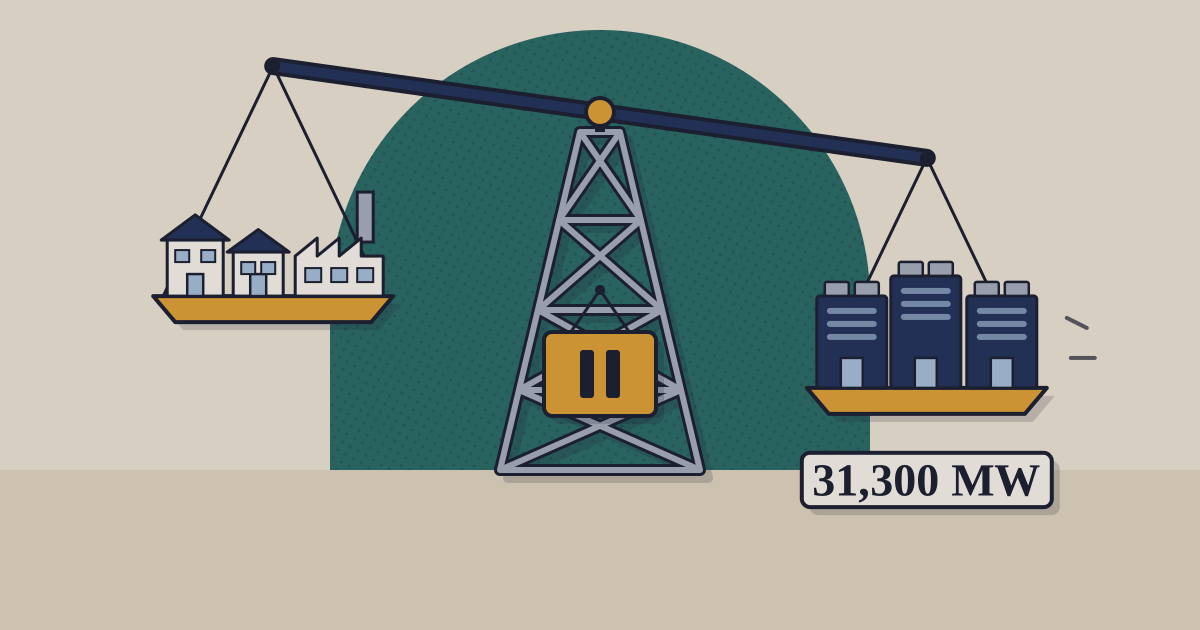
Norway’s grid operator, Statnett, stopped reserving grid capacity for new data centres on 9 November, until 1 August 2027 at the latest. Its numbers show why. 800 MW of data centres are connected today, 4,200 MW have capacity reserved, 9,100 MW wait in the queue, and requests for another 18,000 MW have come in. Norway’s maximum power consumption is “a little over 25,000 MW”.1 What is reserved, queued or requested comes to 31,300 MW, more than the whole country draws at its peak.
The terms are Statnett’s own. A reservation holds grid capacity for a project; the capacity queue lists customers whose projects are mature enough to qualify, waiting for capacity to come free; the 18,000 MW of requests are enquiries for connection on top of both.2 The capacity already reserved for data centres is more than five times what is connected, and the queue is more than eleven times.
01Big, fast and software-driven: why data centres
Data centres waiting or asking for Norway's grid add up to more than the country's peak demand
Data-centre capacity by status, and Norway's maximum power consumption, in megawatts, as of 9 November 2026
Source: Statnett; the 31,300 MW total is a TechBag sum · as of 9 November 2026 · Statnett gives peak demand as a little over 25,000 MW
Statnett says it is data centres’ system characteristics, not only their size, that trigger the pause. The measures cover large consumers with an unusual load profile, “typically data centres”. They can make “large and rapid” changes in power draw, run software-controlled load, and can be more vulnerable to disturbances on the grid. The rules it wants to set include when a data centre must stay connected during a grid fault rather than drop off, how fast its consumption may ramp up or down, and technical limits that cut the risk of a data centre setting off oscillations in the network.1
“The temporary pause is necessary to put in place the tools and framework that ensure connection happens with manageable consequences for the power system,” said Peer Olav Østli, Statnett’s executive vice-president for system operation and markets.1
03What stops, and what carries on
Three things stop: new connection reservations; new applications to approve a facility’s functionality under section 14 of Norway’s system-responsibility regulation; and applications already received for facilities that would connect directly to the 420 kV transmission grid.1 Section 14 is the step where the system operator must approve a new installation before it can be switched on.3
Existing connections are not touched, and a facility whose functional requirements are already approved can still connect. Applications under review for facilities due to start soon on the regional grid continue, and Statnett may take on some applications for smaller facilities before 1 August 2027. Capacity freed by the pause will not go to other customers ahead of data centres already in the queue.1
For anyone planning a data centre in Norway, a project not yet approved under section 14 now waits for rules that are still being written. India’s own build-out faces the same question of how much grid load AI adds, told in our power analysis.
Sources
- Statnett: Midlertidige tiltak for fortsatt forsvarlig systemdrift (temporary measures for continued secure system operation), in Norwegian — 9 November 2026
- Statnett: Statistikk om tilknytningssaker (connection statistics: reservations, capacity queue, connected capacity), in Norwegian — undated page
- Lovdata: Forskrift om systemansvaret i kraftsystemet (FOR-2002-05-07-448), section 14 — as amended from 1 January 2026
Disclosure. TechBag is a software reseller: it earns when companies buy through it, including from vendors named here. The analysis is TechBag’s own; no vendor paid for or saw this piece before publication. Facts are labelled reported, TechBag count or our view.
Keep reading