SecurityRisk & complianceAnalysis
RBI draft turns payments off by default, adds a Stop Switch and names 10 bank failures
The RBI’s draft directions of 23 November: what switching every payment channel off by default changes, how a Trusted Person approves transfers, and who pays when a bank fails.

Most payment fraud in India no longer needs a stolen password: the victim is talked into sending the money. The RBI said so in April, and its answer is now in draft. A bank customer wants to know what will change in the app, what a Trusted Person can and cannot do, and who carries the loss when a fraud gets through. We read the draft directions, the June rules on liability they amend, the 2017 and 2020 circulars before them and the discussion paper that started it.
01Every channel starts switched off, with a 24-hour ceiling
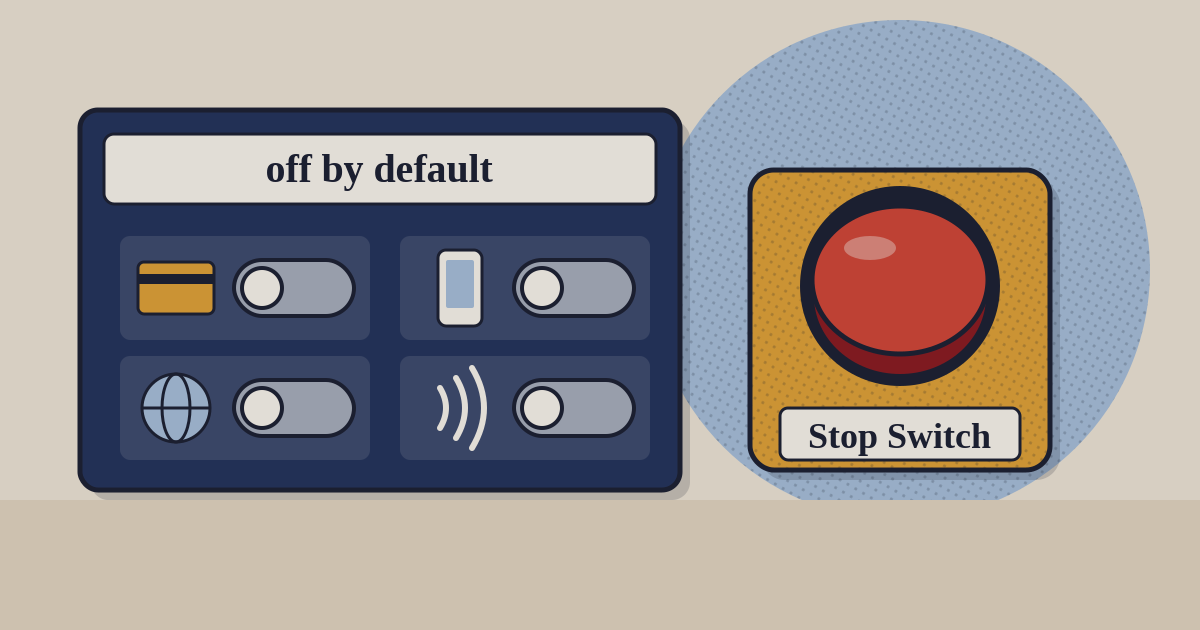
The core instruction is one sentence: “A bank shall keep all digital payment channels disabled by default at the time of customer onboarding.” A channel is “any electronic interface, device, network or set of procedures” through which a customer pays, so the rule reaches internet banking, the mobile app and every other route a bank offers. Each is enabled “only upon an explicit consent from the customer” and after the usual authentication.2 The default applies at onboarding; the draft does not tell banks to switch off channels that existing customers already use.
Once a channel is on, the bank must set a ceiling on the total a customer can transfer through it “over the initial period of 24 hours”, and can raise it gradually after that. The customer can change the ceiling only once the 24 hours have passed. The ceiling applies whenever a channel is enabled, “at the time of customer onboarding or subsequently”. The amount is the bank’s to choose, “based on the bank’s risk assessment”.2
New accounts start with every channel off; the RBI sets the rules but no rupee limits
The draft's four new controls for bank customers, as written on 23 November 2026
Off
every digital payment channel when a customer joins, until the customer opts in
24 hrs
of a bank-set ceiling on transfers after any channel is switched on
1 switch
the Stop Switch, which halts all customer-initiated debits at once
1 hour
for a Trusted Person to approve a transfer above the customer's threshold
Source: RBI, draft Commercial Banks Fifth Amendment Directions, 23 November 2026 · as of 23 November 2026 · Limits are set by each bank or customer; the draft's rupee figures are illustrations
Every customer also gets controls of their own: switching any channel off and on again, a limit per transaction, per beneficiary or per day on each channel, a daily limit across all channels together, and a time window during which channels stay off. The draft’s example is a ₹20,000-a-day limit on payments to one beneficiary, even where the channel allows more.2 Switching back on needs authentication “at least as stringent” as switching on in the first place, and the bank may impose “a reasonable cooling period” first.2
The Stop Switch is the blunt version. Once pressed, no customer-initiated debit goes through, no new mandate or standing instruction can be set up, and UPI cannot be registered on a new third-party app. Money keeps coming in. Debits already arranged keep running: recurring mandates and standing instructions, liens, and the bank’s own recovery of charges and loan instalments.2 Every control must work at branches, ATMs, online and by phone, and each change triggers an SMS and email.2
02A Trusted Person approves large transfers, or they fail
The Trusted Person Mechanism is optional. A customer names someone aged 18 or over, who must agree; the bank checks that person’s identity document, mobile number and email, and the mobile number must differ from the customer’s own. The mechanism starts after a 24-hour cooling period. The customer sets the threshold, and every transfer above it goes to the Trusted Person with the amount, the beneficiary’s name, account and mobile number, and any note the customer typed.2
Above the customer's threshold, a transfer waits up to an hour and fails without a yes
How a transfer is approved under the draft Trusted Person Mechanism, as written on 23 November 2026
- 01
The customer sends a transfer
Above the threshold the customer chose, from a physical or digital channel of an individual account. - 02
The Trusted Person is told
Amount, beneficiary’s name, account and mobile number, and the customer’s note. Nothing about the balance. - 03
One hour to answer
Consent in the mode the bank prescribes: a physical or digital signature or another approved factor. - 04
Yes, or rejected
A yes sends it, subject to the bank’s fraud checks. A no, or silence for an hour, rejects it.
Source: RBI, draft Commercial Banks Fifth Amendment Directions, paragraphs 76FQ to 76FZB · as of 23 November 2026 · Excludes UPI, merchant payments and recurring mandates
The Trusted Person gets no rights over the account. The bank must tell both sides that the role is not that of a joint holder, nominee or signatory, carries no claim on the money, allows no transaction of its own and brings “no financial liability” for approving or rejecting a transfer. The bank must keep the account’s balance, deposits and investments from the Trusted Person “at any stage”.2 Changing the person, the threshold or the channels, or leaving the scheme, also waits 24 hours, and a customer the bank judges “more vulnerable” to fraud may be asked to visit a branch or take a verification call first. Only individual accounts, sole or joint with a survivorship clause, qualify.2
Three kinds of payment are left out: “payments made through the UPI channel”, merchant payments “irrespective of the payment channel or instrument used”, and recurring payments through standing instructions, e-mandates or NACH.2 The April paper had proposed to leave out merchant UPI payments only, so person-to-person UPI transfers were in its scope; the draft leaves out UPI altogether. (How UPI’s merchant side is paid for is in our analysis of its coming merchant fee.)7 For UPI, the customer’s own channel limits and the Stop Switch are the controls the draft offers.
03Ten named failures that leave a fraud loss with the bank
The liability rules were rewritten in June. For transactions from 1 January 2027, a customer is “entitled to zero liability and reversal of the transaction” when a fraud happens through “negligence / deficiency on the part of the bank, irrespective of whether the transaction is reported by the customer or not”. The bank carries the burden of proving the customer liable.4 The June text defined that negligence by five broad examples, the first being “not putting in place the mandated systems and procedures”.4
The draft replaces that definition. Negligence becomes “any act of omission or commission on part of the bank which results in or contributes to the occurrence of a fraudulent electronic banking transaction”, including ten named failures, most tied to a specific paragraph a bank must already follow. The RBI calls it a review “to bring uniformity in practices adopted by banks”.12
Eight of the ten named failures count from 1 January; the two tied to the new controls from 1 July
Failures that make up 'negligence by a bank' in the draft for commercial banks, by start date, as written on 23 November 2026
From 1 January 2027
- Not applying the authentication rules of the 2025 Directions
- No multi-factor authentication to add or change a beneficiary, account details or transfer limits
- Not sending a mandatory transaction alert
- No 24x7 channel to report a fraud or a lost card
- Not acting promptly on a customer’s report
- Not blocking a channel or warning the customer after too many failed logins, where that contributed
- A system malfunction or security breach at the bank’s end
- Collusion by a bank employee or a third party the bank engaged
From 1 July 2027
- Not providing the customer controls, or not applying the limits a customer set
- Not providing the Trusted Person Mechanism, or not following its rules
Show tableHide table
| No. | Failure, as drafted (shortened) | Rule it points to | Counts from | In the June list? |
|---|---|---|---|---|
| i | Not implementing the factors of authentication | Authentication mechanisms Directions, 2025 | 1 Jan 2027 | Inside June's item (i) |
| ii | No MFA for new beneficiaries, changed details or revised limits | Digital Payment Security Controls Directions, 2026, para 46 | 1 Jan 2027 | Inside June's item (i) |
| iii | Not sending a mandatory alert | Para 76D (SMS for every transaction above ₹500) | 1 Jan 2027 | Yes |
| iv | No 24x7 reporting channels | Para 76G | 1 Jan 2027 | Yes |
| v | Not acting promptly on a customer's notice | Para 76J | 1 Jan 2027 | Yes ('diligently') |
| vi | Not blocking or notifying after maximum failed attempts | Digital Payment Security Controls Directions, 2026, paras 50 and 51 | 1 Jan 2027 | Inside June's item (i) |
| vii | Not providing or not implementing customer-induced controls | These Directions | 1 Jul 2027 | No: new |
| viii | Not providing or not following the Trusted Person Mechanism | These Directions | 1 Jul 2027 | No: new |
| ix | System malfunction or security breach at the bank's end | None named | 1 Jan 2027 | Yes |
| x | Collusion of an employee or a third party engaged by the bank | None named | 1 Jan 2027 | Partly ('internal frauds') |
Source: RBI, draft Commercial Banks Fifth Amendment Directions, paragraphs 3(2) and 4; Third Amendment Directions, 24 June 2026 · as of 23 November 2026 · Regional rural, local area and rural co-operative banks have eight; their list omits the two items tied to the Digital Payment Security Controls Directions
The rest of the June rules decide who pays in every other case. Where a fraud happens through a breach elsewhere in the system, at a payment app, gateway or telecom company, the customer pays nothing if they report it within five calendar days. Where the customer was negligent, they bear the loss until they report it; June’s list of customer negligence includes giving credentials to another person “whether intentionally or otherwise”, ignoring “specific, directed and clear warnings” from the bank, and downloading malicious apps. A bank must settle a complaint within 45 calendar days, or 60 for a cross-border fraud.4 (Three US banks put such losses from AI agents on the customer, as we reported.)
Small losses get a one-time cushion even when the customer was at fault. An individual who loses up to ₹50,000, and reports it to the bank and to the National Cyber Crime Reporting Portal or helpline 1930 within five calendar days, is paid 85% of the net loss or ₹25,000, whichever is less, once in a lifetime. For a domestic fraud the RBI funds 65 of those 85 percentage points and the two banks ten each, for frauds in the first year of the new rules.4
05The dates: comments by 14 December, controls by 1 July
The draft has two start dates. The named failures i to vi, ix and x take effect on 1 January 2027, the day the June liability rules begin to apply. Everything else, including default-off channels, the 24-hour ceiling, the Stop Switch, the Trusted Person and failures vii and viii, applies from 1 July 2027, “or on such earlier date as a bank may decide to implement”.24
The controls the RBI floated in April are due in July 2027
RBI papers, directions and start dates on digital-payment fraud, April 2026 to July 2027
Show tableHide table
| Date | Event | Detail |
|---|---|---|
| 9 Apr 2026 | Discussion paper | Four options; comments by 8 May |
| 24 Jun 2026 | Liability rules rewritten | For transactions from 1 January 2027 |
| 23 Nov 2026 | Draft directions | Controls, Stop Switch, Trusted Person, 10 failures |
| 14 Dec 2026 | Comments close | |
| 1 Jan 2027 | New liability rules apply | With 8 of the 10 named failures |
| 1 Jul 2027 | Controls and Trusted Person | Default-off channels, Stop Switch, failures vii and viii |
Source: RBI press releases of 9 April and 23 November 2026; Third Amendment Directions, 24 June 2026; draft Fifth Amendment Directions · as of 23 November 2026 · The last three dates are scheduled; the draft may change after comments
The same changes come in seven drafts, one each for commercial banks, small finance banks, payments banks, local area banks, regional rural banks, urban co-operative banks and rural co-operative banks.1 The last three types’ lists have eight failures, not ten: they leave out the two items tied to the Digital Payment Security Controls Directions, and their January start covers six.3 Comments go through the “Connect 2 Regulate” section of the RBI’s website or by email, by 14 December.1
Sources
- Reserve Bank of India, press release 2026-2027/1548: RBI issues Draft Amendment Directions for 'Preventive Safeguards for Electronic Banking Transactions (EBTs)' — 23 November 2026
- Reserve Bank of India, Draft Reserve Bank of India (Commercial Banks - Responsible Business Conduct) Fifth Amendment Directions, 2026 — 23 November 2026
- Reserve Bank of India, Draft Reserve Bank of India (Regional Rural Banks - Responsible Business Conduct) Fifth Amendment Directions, 2026 — 23 November 2026
- Reserve Bank of India, Reserve Bank of India (Commercial Banks - Responsible Business Conduct) Third Amendment Directions, 2026 (RBI/2026-27/167) — 24 June 2026
- Reserve Bank of India, Customer Protection: Limiting Liability of Customers in Unauthorised Electronic Banking Transactions (RBI/2017-18/15) — 6 July 2017
- Reserve Bank of India, Enhancing Security of Card Transactions (RBI/2019-20/142) — 15 January 2020
- Reserve Bank of India, Discussion Paper: Exploring safeguards in digital payments to curb frauds — 9 April 2026
- Supreme Court of India, record of proceedings, SMW(Crl) No. 3/2025, In Re: Victims of Digital Arrest Related to Forged Documents (copy hosted by MediaNama) — 29 October 2026, signed 7 November 2026
Disclosure. TechBag is a software reseller: it earns when companies buy through it, including from vendors named here. The analysis is TechBag’s own; no vendor paid for or saw this piece before publication. Facts are labelled reported, TechBag count or our view.
Keep reading