Buying software in IndiaAnalysis
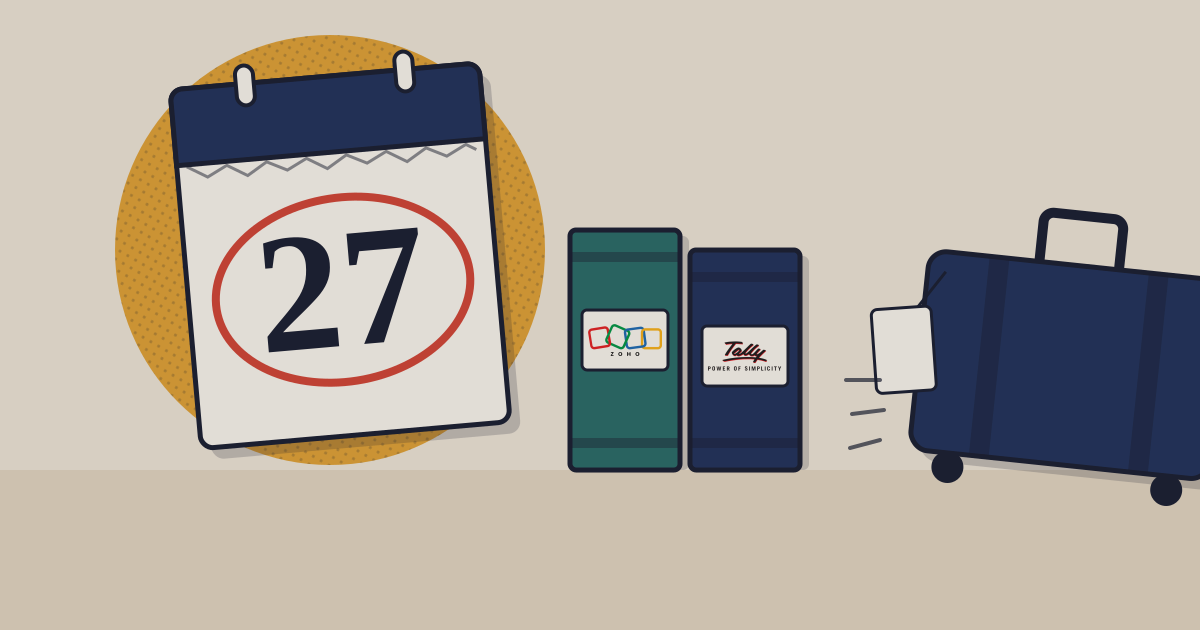
We recommended QuickBooks 27 days before it left India; Zoho Books is ₹749 a month
What the three tools our 2023 post recommended cost an Indian SMB now, from archived Trello, Zapier, Zoho Books and TallyPrime price pages, August–September 2026.

The question behind the 2023 post was a fair one: which three pieces of software take the most manual work out of running a small Indian business, and what do they cost? We answered with a project board, an automation service and an accounting package. Three and a half years on, one of the three is not sold in India, the other two have repriced around free tiers and usage, and the accounting choice now has to satisfy a rule about audit trails that did not apply to most companies when we wrote. This piece re-answers the question with the prices the vendors printed in August and September 2026.
01The accounting tool we recommended was already leaving
Intuit announced on 1 July 2022 that it would pull QuickBooks from India, with the decision first reported to take effect on 31 January 2023.2 Its final notice set the date at 30 April 2023, after which QuickBooks product and service offerings for accountancy and small business customers would no longer be available in India, and the India app marketplace closed with them.1 Our post recommending QuickBooks went up on 3 April 2023.
QuickBooks' exit was public for nine months before our post recommended it
QuickBooks India withdrawal timeline, July 2022 to April 2023
Table view
| Date | Event | Detail |
|---|---|---|
| 1 Jul 2022 | Exit announced | Intuit says it will withdraw QuickBooks from India; the first reported end date is 31 January 2023. |
| 22 Mar 2023 | End date moved | Intuit's notice to developers sets the end of service at 30 April 2023, the close of the financial year. |
| 3 Apr 2023 | Our post recommends it | Our earlier version of this piece names QuickBooks as the accounting platform for Indian SMBs. |
| 30 Apr 2023 | Access ends | QuickBooks offerings end in India and the India app marketplace closes to new connections. |
Source: The Register (1 July 2022); Intuit developer notice, 'Discontinuation of QuickBooks in India' · as of 30 April 2023
02Books: one desk costs the same either way; three desks do not
The two products most Indian SMBs choose between now are TallyPrime and Zoho Books. They price on different logic. Tally sells a perpetual licence, Silver for a single PC at ₹22,500 and Gold for multi-user access at ₹67,500, each with one year of Tally Software Services included, or rents the same software by the month or year: Silver at ₹750 a month or ₹8,100 a year, Gold at ₹2,250 a month or ₹24,300 a year, all plus 18% GST.3 Zoho Books sells a subscription per organisation: Standard at ₹749 a month billed annually with three users, Professional at ₹1,499 with five, and higher tiers up to Ultimate at ₹7,999, exclusive of tax.4
For one desk, Tally and Zoho Books cost about the same over three years; multi-user Tally costs 2.5 to 2.7 times Zoho Books Standard
Three-year list cost in ₹ before 18% GST, archived vendor pricing pages, August 2026
Source: Tally Solutions, Buy TallyPrime (archived 18 August 2026); Zoho Books India pricing (archived 7 August 2026); TechBag arithmetic · as of 30 September 2026 · Perpetual licences exclude Tally Software Services renewals after year one
The chart hides the real decision, which is who keeps the books. Most Indian SMBs share their accounts with an outside chartered accountant. If the accountant works in Tally, a Silver licence on the accounts desk and data shared with the CA is the cheapest route. If three or four people in the business need to raise invoices and see receivables at once, Zoho Books Standard covers them for about 37% of the price of Tally Gold rented over the same three years, before any Zoho user add-ons at ₹150 a user a month billed annually.4
Two smaller differences matter more than the headline price. Tally’s page lists e-invoicing, e-way bills and its connected services on every plan, rented or perpetual, but on a perpetual licence those connected features depend on keeping Tally Software Services current after the first year, so the “buy once” figure is the floor, not the total.3 Zoho Books, for its part, lists managing e-invoices from Standard upward and scales by plan rather than by headcount, so the jump from three users to five is a tier change, ₹749 to ₹1,499 a month, not a per-seat creep.4 Either way, ask your accountant which one they already use before you compare anything else; the cost of an accountant working in a system they dislike does not appear on either price list.
03Projects: Trello is free until the eleventh person
Trello’s free plan is for up to 10 collaborators per Workspace, with 10 boards and 250 automation command runs a month. Standard is US$5 a user a month billed annually, or US$6 monthly, and lifts the board limit and raises automation to 1,000 runs. Premium is US$10 annually or US$12.50 monthly and adds views and admin controls.5 For a ten-person team that is a clean step: nothing, then US$600 a year, then US$1,200.
A ten-person team pays nothing for Trello; the first paid year is US$600 billed annually
Annual list cost for ten users, US$, by plan and billing term, September 2026
- Billed annually
- Billed monthly
US$ a year for ten users
Table view
| Billed annually | Billed monthly | |
|---|---|---|
| Free | 0 | 0 |
| Standard | 600 | 720 |
| Premium | 1,200 | 1,500 |
Source: Trello, Pricing (archived 26 September 2026); TechBag arithmetic · as of 30 September 2026 · Enterprise (US$17.50 a user a month, annual) excluded; it is sized for larger estates
What pushes a small team off the free plan is rarely the headcount. It is the tenth board, or the 251st automation run in a month once someone discovers that cards can move themselves. Count both in a normal month before upgrading. The original post’s case of a marketing agency finishing projects “faster and with fewer errors” on Trello had no baseline, and we have dropped it; a free plan is cheap enough to test against your own.
04Automation: Zapier bills the work, not the seat
Zapier’s free plan includes 100 tasks a month and two-step Zaps. Professional is listed as “starting from $19.99 /month” with multi-step Zaps, premium apps and webhooks; Team starts at US$69 a month with 25 users and SAML single sign-on. The page says paying yearly saves 33%, and that every step in a Zap, including AI steps and code, draws from one shared pool of tasks.6 The task selector runs from 100 to 2 million tasks a month, so the starting price is the price of the smallest paid tier, not of your workload.
Zapier is free to 100 tasks; past that, the bill is set by how much work runs, not by how many people log in
Zapier plan entry points as listed on its pricing page, US$ per month, September 2026
US$0
Free: 100 tasks a month, two-step Zaps
Zapier pricing
US$19.99
Professional, starting price: multi-step Zaps, premium apps
Zapier pricing
US$69
Team, starting price: 25 users, SAML single sign-on
Zapier pricing
33%
Saving the page states for paying yearly
Zapier pricing
Source: Zapier, Plans and Pricing (archived 25 September 2026) · as of 30 September 2026 · The archived copy does not show which billing term the 'starting from' prices assume
That is not an argument against Zapier. It is an argument for checking whether the two systems already talk to each other. Zoho Books, Zoho CRM and the rest of the Zoho suite share data natively, and Tally has its own connected services; a native integration costs nothing per order. Pay for task-based automation for the joins your main systems cannot make themselves.
Sources
- Intuit, 'Discontinuation of QuickBooks in India' (developer notice: offerings end 30 April 2023; India app marketplace closed) — 22 March 2023
- The Register, 'Intuit pulls QuickBooks from India, uncomfortably quickly' (first reported end date 31 January 2023) — 1 July 2022
- Tally Solutions, Buy TallyPrime: Silver ₹22,500 and Gold ₹67,500 perpetual; rental from ₹750 and ₹2,250 a month; all +18% GST (Internet Archive copy) — archived 18 August 2026
- Zoho Books India, Pricing: Standard ₹749, Professional ₹1,499, Premium ₹2,999, Elite ₹4,999, Ultimate ₹7,999 per organisation a month, billed annually, exclusive of taxes (Internet Archive copy) — archived 7 August 2026
- Trello, Pricing: Free to 10 collaborators; Standard US$5 / US$6; Premium US$10 / US$12.50; Enterprise US$17.50 a user a month (Internet Archive copy) — archived 26 September 2026
- Zapier, Plans and Pricing: Free 100 tasks; Professional from US$19.99; Team from US$69; shared task pool (Internet Archive copy) — archived 25 September 2026
- India Briefing, Digital services in India: OIDAR, GST applicability and reverse charge — updated 29 September 2023
- TaxGuru, 'Audit trail compliance: rule 3(1) and rule 11, a practitioner's guide' (G.S.R. 205(E) of 24 March 2021, deferred to financial years from 1 April 2023) — 11 September 2026
- Legismith Partners, DPDP Rules 2025 commencement timeline — Rules notified 13 November 2025
Disclosure. TechBag is a software reseller: it earns a margin when a reader buys through it, including from vendors named here. The analysis is TechBag’s own; no vendor paid for or saw this piece before publication. Facts are labelled reported, TechBag count or our view.
Keep reading