SecurityThreats & vulnerabilitiesNote
CERT-In: tampered payment records hit government service providers, not only banks
What CERT-In’s critical advisory of 20 November asks of government bodies, their technology providers and payout platforms: seven measures and a six-hour reporting clock.

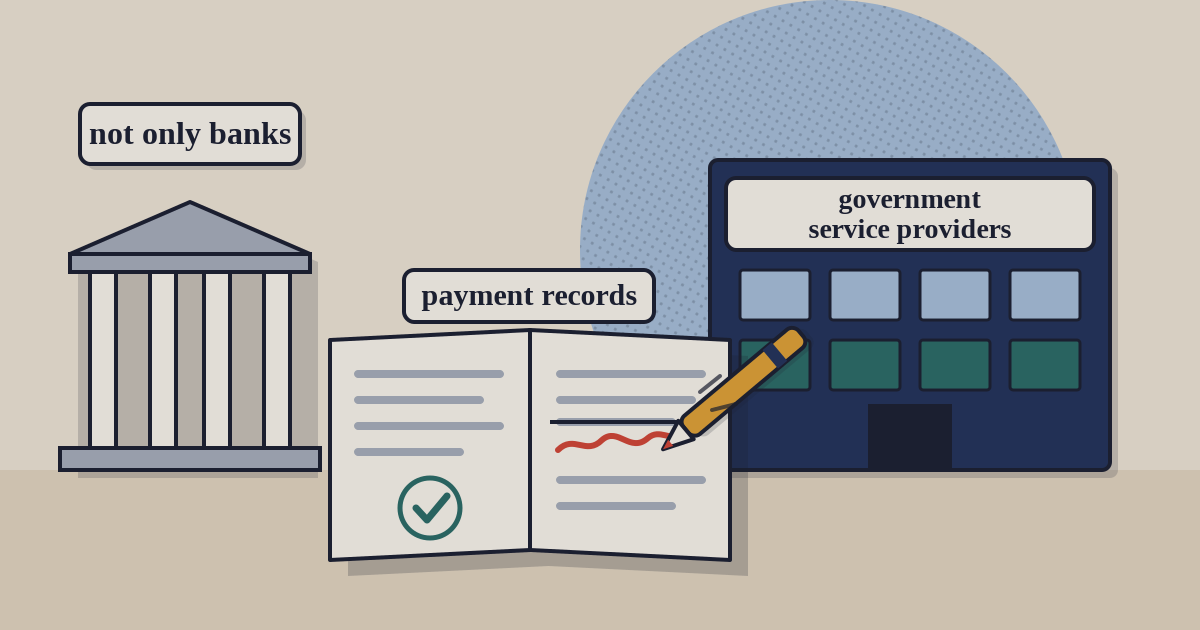
Unauthorised payments through business systems “are not limited to BFSI entities but also affect technology service providers supporting government-linked payment processes and platforms handling vendor or partner payouts”, CERT-In wrote in advisory CIAD-2026-0062 of 20 November, rated critical.1 It has received reports of such transactions at organisations outside the financial sector, and it addresses a section of its advice to “Government organisations and owners of services operated through technology service providers”. Its sharpest line is for them: “Multiple approvals within the same provider-controlled system may not provide sufficient protection if that environment is compromised.”1 The advisory names no victim.
01How a tampered payment passes its checks
CERT-In’s earlier warning, of 9 October, was about lenders’ payment APIs: attackers stole API credentials and called disbursal APIs “directly from within the entities’ own whitelisted infrastructure”, skipping the application’s own checks.2 The incidents of 20 November work the other way round. Attackers altered “business records or approval relationships that determine payments”, then used “legitimate payment processes” and “established approval procedures” to move money “without immediately raising suspicion”.1
The point, in CERT-In’s words: “A transaction may pass the usual application and approval checks even when the records used to initiate it have been changed without authorisation.” If the bank account against a supplier’s name has been swapped, every approver who checks the payment against that record sees a correct payment. That is why the advisory asks for a check from outside the system: organisations must verify “the underlying business records and the authority for a payment, in addition to validating the payment request itself”.1 In the theft from PayU Payments that Gurugram Police disclosed on 18 November, police said the attackers registered new beneficiary bank accounts in the firm’s database before requesting payouts.34 CERT-In does not mention that case.
02Who must do what
The advisory splits its measures by who holds the risk. It also tells organisations to apply the measures of its three earlier advisories, CIAD-2026-0046, 0049 and 0058, and the exposure blueprint CISG-2026-02.1 A second part reports “AI-driven agentic offensive frameworks” found in CERT-In’s own threat hunting: automated reconnaissance, exploits prepared quickly for known flaws, and several agents working in parallel, against enterprises, service providers, government and research institutions.1
Government bodies must check payments against records their provider cannot change
Measures in CERT-In advisory CIAD-2026-0062, by who must act, as issued on 20 November 2026
Show tableHide table
| Who | What CERT-In asks |
|---|---|
| Government bodies and service owners | List provider systems, accounts and integrations that can change payment records or approve payments; cut privileges not needed |
| Government bodies and service owners | Reconcile payment instructions against independent, authoritative records the provider’s environment cannot alter |
| Government bodies and service owners | Independent verification for changes to payment instructions, beneficiaries and approval arrangements |
| Government bodies and service owners | Agree with providers on detection, log access, investigation, suspending payments, and notice of a shared compromise |
| Technology providers, ITES firms, non-financial payout platforms | Separate client environments; access for one client must not reach another |
| Technology providers, ITES firms, non-financial payout platforms | Watch changes to payment records alongside privileged activity, approvals and the payments that follow |
| Technology providers, ITES firms, non-financial payout platforms | On suspicion, verify affected records and check what else the account or system could reach |
| Any organisation exposed to automated intrusion | Review internet-facing apps, identities, privileged accounts and service credentials; search logs |
| Every organisation with an incident | Report to CERT-In within six hours; unauthorised transactions also to cybercrime.gov.in or helpline 1930 |
Source: CERT-In, advisory CIAD-2026-0062 (20 Nov 2026) · as of 27 November 2026, 7:15pm IST
The reporting rule is not new: CERT-In’s directions of 28 April 2022 require applicable incidents to be reported within six hours of noticing them or being told of them, to incident@cert-in.org.in. The advisory adds that organisations should also tell law-enforcement agencies, regulators and payment-system authorities, so that accounts receiving the money can be acted on.1 What to watch: whether CERT-In or a ministry names the government payment workflows involved.
The lenders’ side of these warnings is in the Journal’s notes on PayU’s ₹25.67 crore loss and on CERT-In’s advisory of 4 November.
Sources
- CERT-In, advisory CIAD-2026-0062: Abuse of Business Payment Workflows and Use of AI-Driven Agentic Offensive Frameworks across Sectors — 20 November 2026
- CERT-In, advisory CIAD-2026-0046: Threat Actors Exploiting Payment and Disbursement APIs for Unauthorized Fund Transfers in BFSI Entities — 9 October 2026
- PTI, as carried by The Pioneer: Two held in Punjab’s Ludhiana for breaching PayU’s cloud servers, siphoning over Rs 25 crore: Gurugram Police — 18 November 2026
- Hindustan Times: Hackers siphon off ₹25.67 crore from Gurugram payments firm, two held — 19 November 2026
- Internet Archive, copy of CIAD-2026-0062 saved at 14:37 UTC (the text compared) — 20 November 2026
Disclosure. TechBag is a software reseller: it earns when companies buy through it, including from vendors named here. The analysis is TechBag’s own; no vendor paid for or saw this piece before publication. Facts are labelled reported, TechBag count or our view. How the Journal works.
Keep reading