SecurityThreats & vulnerabilitiesNote
Meetsmore: logins to 201 accounts in 48 minutes, then up to 366,850 records leaked
Meetsmore’s 16 November notice: how passwords obtained elsewhere opened 201 accounts on 11 November, how a feature’s flaw then gave out customers’ addresses and phone numbers, and what to do.

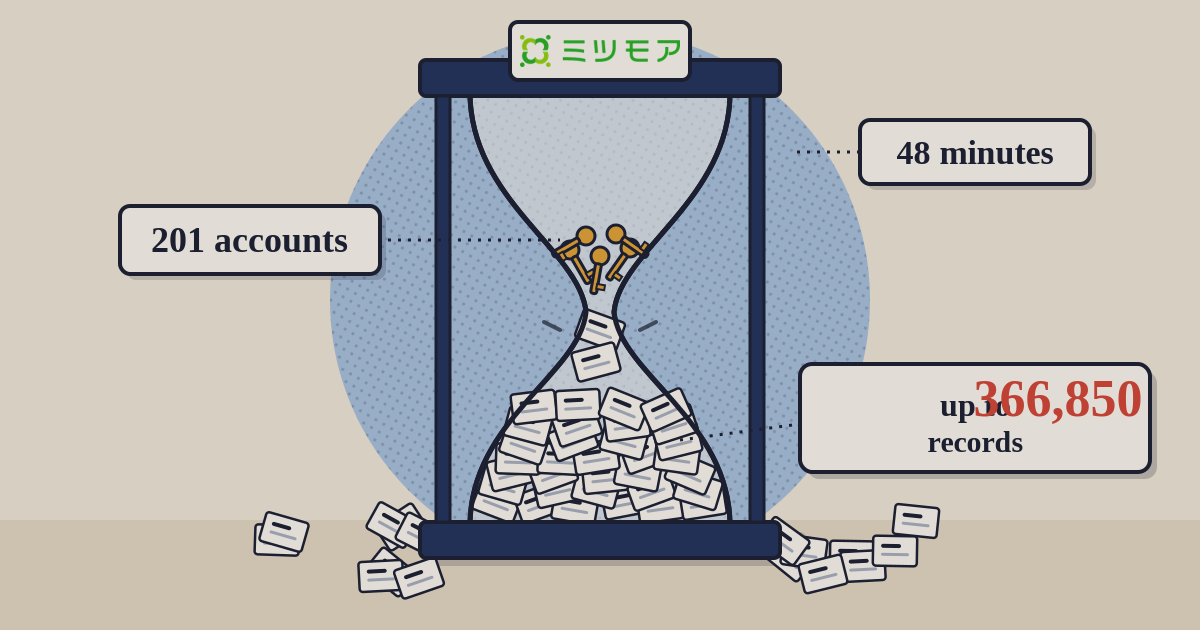
Someone tried to log in to Meetsmore 812 times and got into 201 accounts, logging in between 3:39pm and 4:27pm on 11 November, Japan time. Using those accounts, they then exploited a flaw in one of its features until 12:22am the next day and took information that may number up to 366,850 records: customers’ addresses and phone numbers, meeting links and calendar titles. Meetsmore disclosed it on 16 November.1
812
login attempts by the intruder on 11 November
Meetsmore
201
accounts the attempts got into
Meetsmore
48 min
the window of unauthorised logins, 3:39pm to 4:27pm JST
TechBag, from Meetsmore’s times
366,850
records at most taken through the flawed feature
Meetsmore
01How 201 accounts became 366,850 records
Meetsmore Inc., founded in Tokyo in 2017, runs Mitsumore, a marketplace that matches people who need a job done with professionals, and ProOne, cloud software for businesses doing short jobs such as air-conditioning and electrical work. ProOne runs on a separate system and is not affected.12
The logins used IDs and passwords “believed to have been obtained illegitimately outside our company”, and Meetsmore has found no sign that any leaked from its own systems.1 That is credential stuffing: pairs of usernames and passwords stolen from one service are tried on another, and they work wherever a person reused the password. Here about one attempt in four succeeded.1
Passwords from elsewhere opened 201 accounts; one feature’s flaw turned them into up to 366,850 records
Meetsmore’s account of the intrusion, 11 and 12 November 2026, Japan time
- 01
812 login attempts
Unauthorised logins, 3:39pm to 4:27pm, 11 November: IDs and passwords believed obtained outside Meetsmore open 201 accounts. - 02
The availability feature
From those accounts, a flaw in the feature that shows providers’ free slots is used to read what providers had put in their schedules. - 03
Up to 366,850 records
4:27pm to 12:22am: customers’ addresses and phone numbers, ID numbers, meeting URLs and linked calendar titles leave. - 04
Found and fixed
8:25am, 12 November: monitoring alert investigated, traffic blocked, flaw fixed the same day; regulators told 13 November.
Source: Meetsmore, notice of 16 November 2026 (Japanese), with its 19 November addendum · as of 27 November 2026, 7:30pm IST
Meetsmore says the flaw was in the feature that displays providers’ availability, and that it is withholding technical details to prevent misuse. Its fix is to review the checks on access permissions in every feature that handles customer information, followed by penetration testing.1
02What left, and what to do
Through the flaw: customers’ addresses and phone numbers entered in providers’ schedules, the identification numbers Meetsmore gives each member and request, online-meeting URLs created in Mitsumore, and, where a provider had linked an outside calendar, the titles of those events. Names, email addresses, passwords and card details were not included, though on 19 November Meetsmore added that some surnames providers had typed into the address field were. Inside the 201 accounts, a customer’s name, email, phone, past requests and messages could have been seen; for a provider, its profile, messages, schedule and its customers’ details. No changes, messages or payments were found.1
Meetsmore reported to the Personal Information Protection Commission and the communications ministry on 13 November and consulted the police. Its advice: watch for calls, visits, texts or emails claiming to be Meetsmore or a provider; it never asks for passwords or card numbers; change any other service that shares the Meetsmore password; and providers should reissue meeting URLs created in Mitsumore.1 Its news page also lists a separate notice, of 18 November, about a leak through KARTE, the marketing platform behind a breach at 570 client companies.2 Japan’s run continues: Keio Railway says data of 10.63m people may have leaked.
Sources
- Meetsmore, 不正アクセスによる個人情報漏えいに関するお詫びとお知らせ (notice of unauthorised access and personal-data leak, in Japanese; addendum of 19 November) — 16 November 2026
- Meetsmore, corporate site: company outline, services and news list (in Japanese) — as published on 27 November 2026
Disclosure. TechBag is a software reseller: it earns when companies buy through it, including from vendors named here. The analysis is TechBag’s own; no vendor paid for or saw this piece before publication. Facts are labelled reported, TechBag count or our view. How the Journal works.
Keep reading