SecurityThreats & vulnerabilitiesNote
Cleverbridge, checkout for Red Hat, SUSE and Veeam: card data copied, some with CVV codes
What Cleverbridge has said about the unauthorised activity it detected on 4 November: what was copied, why a software buyer’s card was with it, and what card rules say about CVV codes.

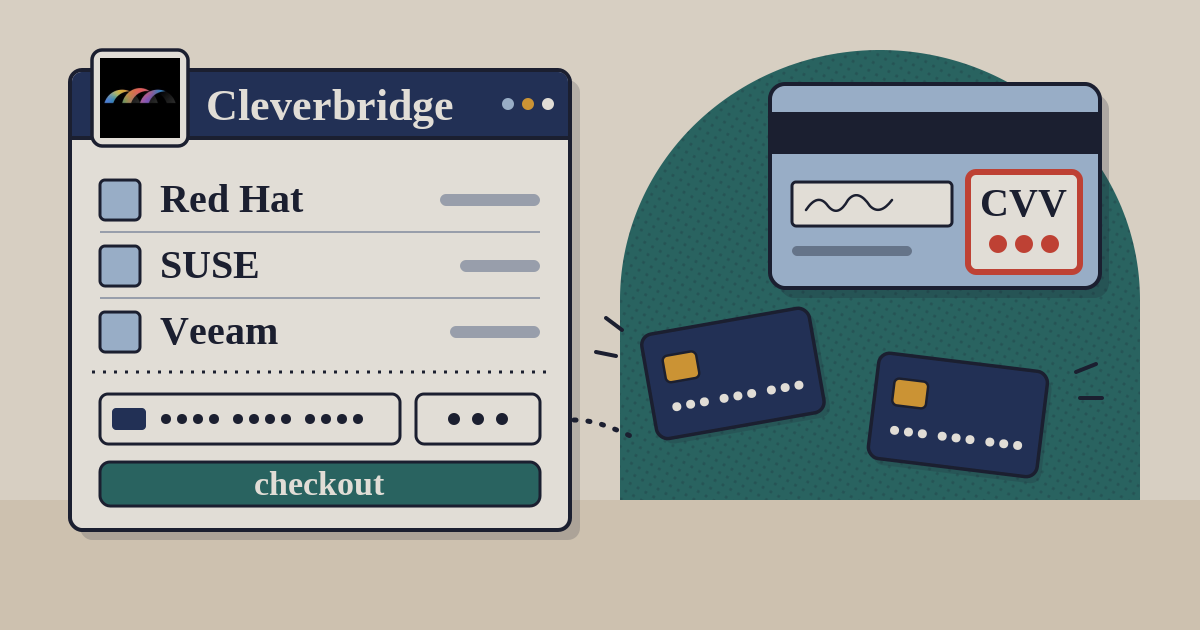
Cleverbridge, the e-commerce company founded in Cologne that runs the online checkout for software vendors including Red Hat, SUSE and Veeam, says “a third party copied a limited amount of personal data stored on our platform, including a small amount of payment card data”.123 It detected “unauthorised activity” on 4 November, took the affected systems offline, brought them back the same day, and began notifying people on 20 November, 16 days later. “In a minority of cases, this information included CVV data,” it says. It has given no count and has not said which vendors’ customers are involved.1
01Why your card was with Cleverbridge at all
Someone who bought a software licence or a subscription on a vendor’s website may never have noticed Cleverbridge. It is a merchant of record: in its own words, “the legal entity that sells goods or services to a customer”.4 The vendor makes the product; Cleverbridge “acts as a digital reseller”, taking the payment, the sales tax and the fraud checks, for buyers in the 240+ countries and territories it says it serves.24 Its client pages carry stories from Red Hat and SUSE and the logos of Veeam, Tenable and Jamf, among others.3 That is a list of clients, not of those affected.
The vendor makes the software; the merchant of record sells it and takes the card
How a purchase runs when a software vendor uses a merchant of record, as Cleverbridge describes the model
- 01
You click buy
On the vendor’s site; the checkout it opens can be Cleverbridge’s, not the vendor’s.
- 02
Cleverbridge is the seller
As merchant of record it is the legal seller and “acts as a digital reseller”.
- 03
It takes the payment
It is “responsible for all payment processing and relevant liabilities”, tax and fraud checks included.
- 04
It keeps the record
It has your information “because it was used in connection with a purchase or transaction you made”.
Source: Cleverbridge: What is a Merchant of Record (MoR)?; About; Incident Update & FAQs · as of 24 November 2026, 7:45pm IST
02What the card rules say about the CVV
The notice Cleverbridge sent to customers is more specific than its public page. As The Register, which saw the email, reports it, the information “includes payment card details you used to make a purchase through Cleverbridge, notably your card number, expiry date, card security code (CVV/CVC), and contact details”; email and billing addresses and phone numbers may also be involved, and Cleverbridge believes account passwords are not.5
The CVV is the three- or four-digit code printed on a card, asked for when the card is not present. The PCI Security Standards Council, which publishes the card industry’s data security standard, PCI DSS, is direct about it: “It is not permitted to retain card verification codes once the specific purchase or transaction for which it was collected has been authorized.” The ban “applies even if that data is encrypted”, and the codes “are not needed for card-on-file or recurring transactions”. Collecting the code before authorisation is allowed.6 Cleverbridge’s site says it “adheres to strict global standards including PCI-DSS”.7 It has not said how the codes came to be copied, whether from storage or as payments passed through, and The Register says it did not answer questions.5 It says the incident was not ransomware: “None of our systems were encrypted.”1
Sources
- Cleverbridge, Incident Update & FAQs — undated; read 24 November 2026
- Cleverbridge, About Cleverbridge — undated; read 24 November 2026
- Cleverbridge, Client Stories (Red Hat, SUSE; client logos) — undated; read 24 November 2026
- Cleverbridge, What is a Merchant of Record (MoR)? — 12 September 2024
- The Register, Cleverbridge admits attackers stole customers' credit card and CVV numbers (with the customer email) — 23 November 2026, 11:48 UTC
- PCI Security Standards Council, FAQ 1280: Can card verification codes be stored for card-on-file or recurring transactions? — October 2023
- Cleverbridge, Security (platform page) — undated; read 24 November 2026
Disclosure. TechBag is a software reseller: it earns when companies buy through it, including from vendors named here. The analysis is TechBag’s own; no vendor paid for or saw this piece before publication. Facts are labelled reported, TechBag count or our view. How the Journal works.
Keep reading