SecurityThreats & vulnerabilitiesNote
N-able’s Mail Assure portal was offline five days after a break-in; CISA lists the flaw
N-able’s status page, its CVE record and CISA’s catalogue, 17 to 23 November: what was switched off, the flaw it found, and what a Mail Assure partner does now.

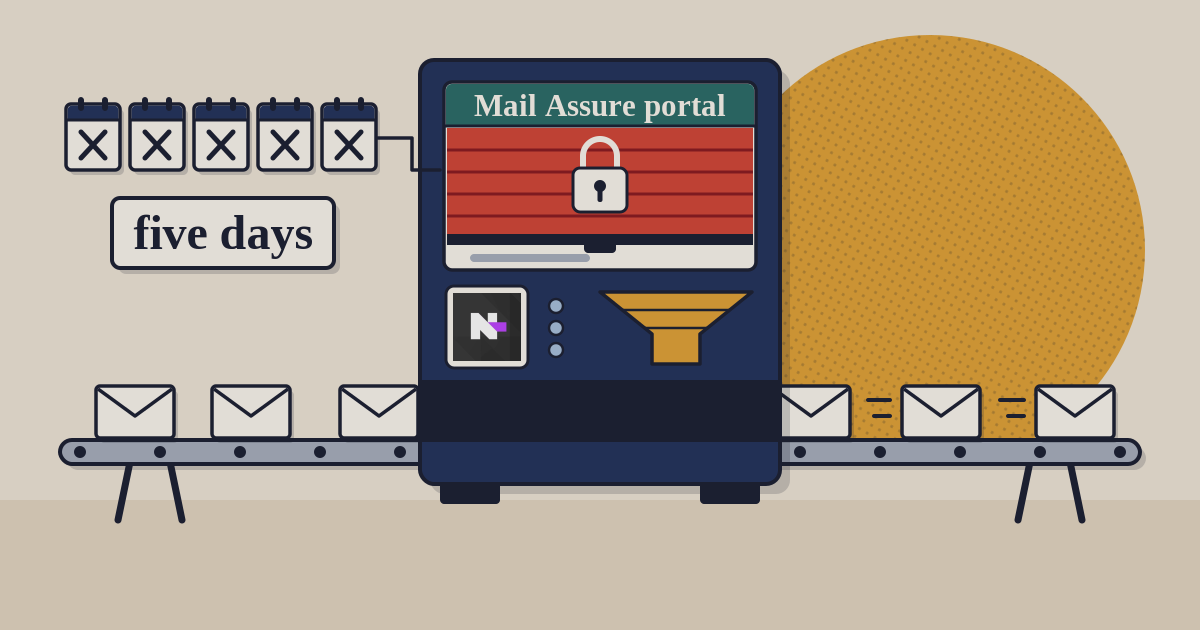
N-able kept the management portal and API of its hosted email-filtering service, Mail Assure and SpamExperts Hosted Cloud, offline from 03:00 UTC on 17 November, the evening of 16 November in the US, to 23:44 UTC on 21 November: just under five days. The cause, it says, was “unauthorized access to one of the servers”. Mail kept flowing and being filtered throughout.1 The flaw N-able found while investigating, CVE-2026-134624, went onto CISA’s list of exploited vulnerabilities on 23 November, with a fix due by 26 November.3
01An outage that became a security incident a day later
Mail Assure sits in front of a mailbox provider and filters mail for spam and malware on the way in and out. Managed service providers run their customers’ domains from its portal. N-able’s first explanation was not an attack: on 17 November it traced the disruption to “a combination of platform configuration and service dependencies”. At 03:05 UTC on 18 November it said otherwise: “we determined that the disruption was caused by a security incident”. It had “proactively disabled UI and API access”, had at that time no evidence “that customer data was compromised, including access to tenants’ mailboxes”, and added: “This is unrelated to the N-central incident.”1
While the portal was down, customers could not sign in, view or release quarantined messages, review logs, or add and remove domains.1 SecurityWeek reports that the attackers reached a web server and likely accessed certain credentials stored there, and that N-able changed credentials and revoked API tokens and OAuth tokens. N-able told it that exploitation “was confined to a single N-able hosted server” and promised a formal root cause analysis within two weeks.4 None of these accounts says how many partners were affected.
N-able took a second hosted service offline a week after the first; it says the two are unrelated
N-able’s N-central and Mail Assure incidents and CISA’s listing, 9 to 26 November 2026 (times in UTC; the last date is CISA’s deadline)
Show tableHide table
| Date | Event | Detail |
|---|---|---|
| 9 Nov 2026 | Hosted N-central taken offline | After 33 exploits were published; 14:00 UTC |
| 11 Nov 2026 | N-central hosted servers upgraded | Hotfix 2; 01:04 UTC |
| 17 Nov 2026 | Mail Assure portal and API offline | 03:00 UTC; first called a service disruption |
| 18 Nov 2026 | N-able: a security incident | Unauthorised access to one server; 03:05 UTC |
| 21 Nov 2026 | Portal and API restored | 23:44 UTC, after 116 hours 44 minutes |
| 22 Nov 2026 | CVE-2026-134624 published | Rated 9.3; fixed in build 20261121.1943 |
| 23 Nov 2026 | CISA lists the flaw as exploited | |
| 26 Nov 2026 | CISA’s deadline | Three days; forensic triage required |
Source: N-able status page; CVE record CVE-2026-134624; CISA KEV catalogue, version 2026.11.23 · as of 24 November 2026, 7:45pm IST · 17 November, 03:00 UTC is the evening of 16 November in the US, the date N-able uses
02The flaw, and why it got three days
CVE-2026-134624 is a server-side request forgery. When a relay was configured, Mail Assure’s LDAP synchronisation connection check did not restrict where it connected, so “an authenticated API user can cause the server to connect to arbitrary internal hosts and ports, determine which are reachable, and send crafted data to internal services”. In plain terms, the server can be made to reach machines that are closed to the outside. N-able rates it 9.3 out of 10 and lists every build before 20261121.1943 as affected.2
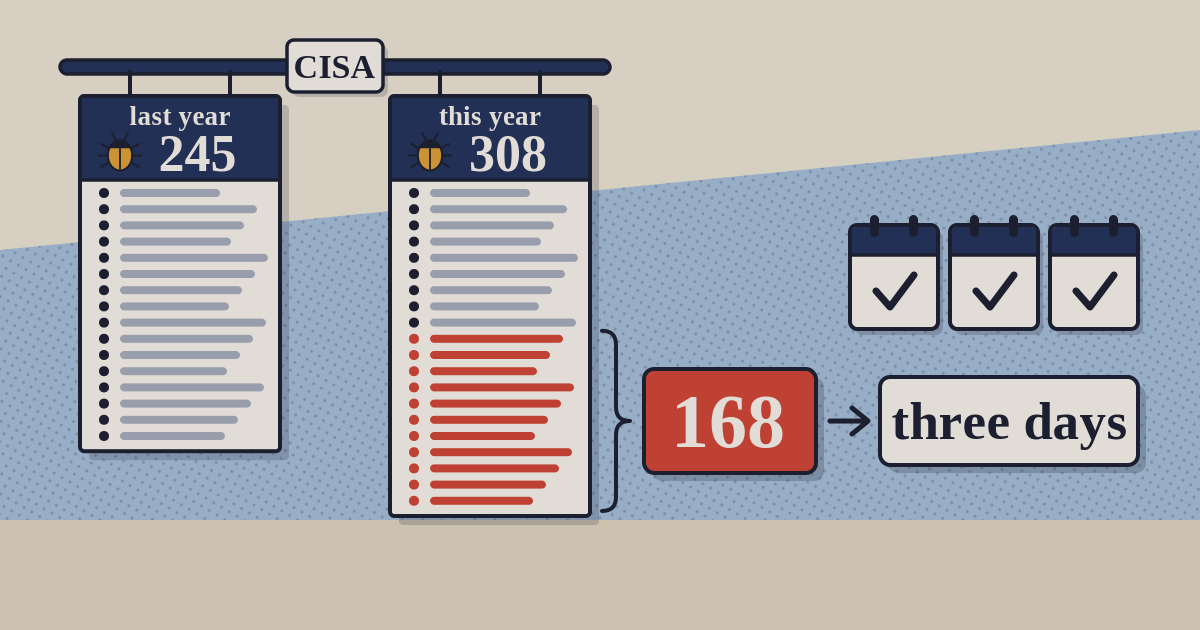
CISA listed it a day after the record was published and marked it for forensic triage, which means US federal agencies must also check whether their systems were compromised.3 Its assessment, attached to the record: exploitation active, not automatable, technical impact total.2 Why that draws three days is in our Analysis of CISA’s patch clock. It is N-able’s fourth entry on the list this year and the first outside N-central.3
03What a Mail Assure partner does now
Find the email. N-able says it wrote to Hosted Cloud partners directly on 18 November “with information relevant to their environment and whether action is required or not”; anyone who did not receive it should contact N-able support.1 Reissue the tokens: any integration that used an API token or an OAuth connection N-able revoked needs a new one.4 Check the quarantine and logs for 17 to 21 November now that they are readable again. And if you run SpamExperts on your own servers, confirm the build: N-able’s status posts cover only the Hosted Cloud, while the CVE record covers every earlier build.12
Sources
- N-able, status page: Security Incident – Mail Assure and SpamExperts Hosted Cloud, All regions — 17 to 21 November 2026 (20 updates, UTC)
- CVE Program, record CVE-2026-134624 (N-able as assigning authority; CISA Vulnrichment assessment) — 22 November 2026, updated 24 November 2026
- CISA, Known Exploited Vulnerabilities catalogue, version 2026.11.23 (N-able entries) — 23 November 2026
- SecurityWeek, N-able Patches Critical Flaw Discovered After Mail Assure Cyberattack (Ionut Arghire) — 23 November 2026
Disclosure. TechBag is a software reseller: it earns when companies buy through it, including from vendors named here. The analysis is TechBag’s own; no vendor paid for or saw this piece before publication. Facts are labelled reported, TechBag count or our view. How the Journal works.
Keep reading