OpenAI’s API now runs inside India: one model, at a 10% premium
What OpenAI’s data-controls guide said on 12 November: in-India processing at in.api.openai.com for GPT-6 Luna only, with Zero Data Retention required and a 10% premium.

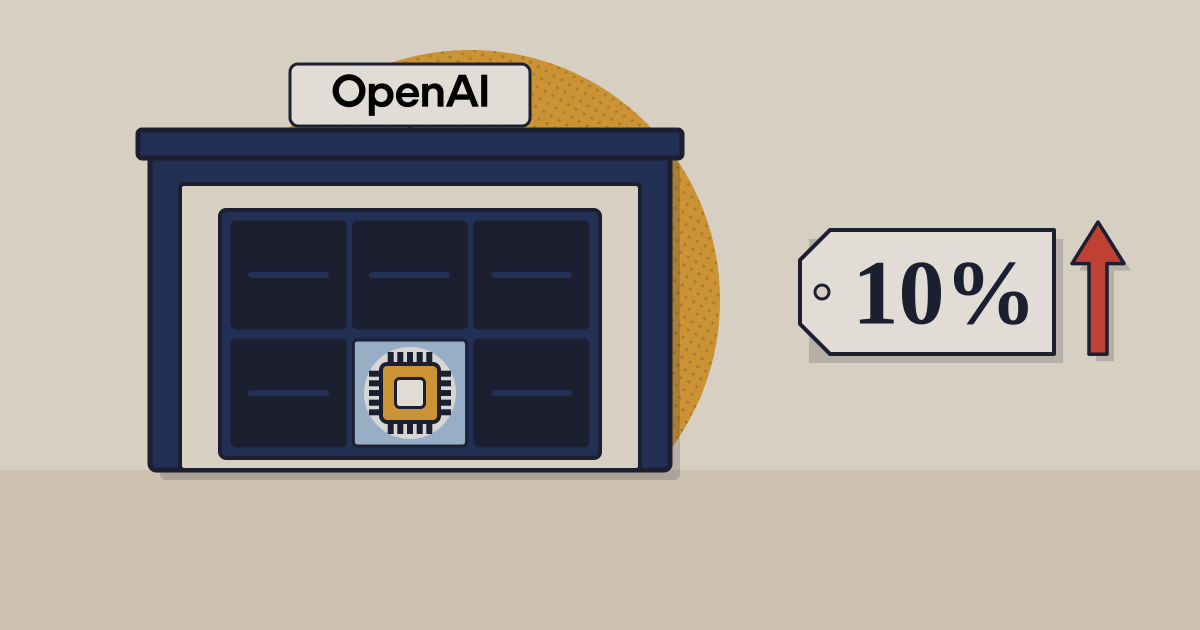
OpenAI now runs API requests inside India: a project set to India and called at in.api.openai.com keeps both the model’s processing and stored customer content in the country, its data-controls guide says. The terms are narrow. One model, GPT-6 Luna; text and image in, text out, through the Responses and Chat Completions APIs only; no hosted tools; Standard pay-as-you-go only; and active Zero Data Retention, where Modified Abuse Monitoring alone is “insufficient”. Regional processing adds a 10% premium.12 Inc42 reported the launch on 12 November, quoting Nitin Bawankule, who heads OpenAI’s enterprise business in India: “Some Indian businesses have not fully deployed AI for important work because they need the information involved to be processed within the country.”3
India gets in-country processing for one OpenAI model, at a 10% premium
Terms of OpenAI's API regional processing in India, as published on 12 November 2026
1 model
GPT-6 Luna, through the Responses and Chat Completions APIs
OpenAI
+10%
on regional processing: US$0.11 in and US$0.55 out per million tokens
OpenAI
ZDR
Zero Data Retention must be active, on OpenAI's approval
OpenAI
6 of 10
OpenAI residency regions that also process requests in-region
TechBag count
Source: OpenAI data-controls guide and GPT-6 Luna model page; region count is TechBag's · as of 12 November 2026
01Where the data sits, and where the model runs
Data residency and inference residency are different promises. Residency at rest means customer content is stored in the chosen region where an endpoint has to keep data, as for batch jobs. Inference residency means the model also does its work there. OpenAI lists ten regions: Canada, Singapore, South Korea and the UK store only, and there OpenAI “may also process and temporarily store Customer Content outside of the Region”. The US, Europe, the UAE, Australia, Japan and now India also process; Australia, Japan and India share the one-model limits.1
Two things never move. System data, meaning account details, metadata, usage and billing records, “may be processed and stored outside the selected region”. And by default OpenAI keeps abuse-monitoring logs, which can contain prompts and responses, for up to 30 days; Zero Data Retention keeps customer content out of them. Any region outside the US needs OpenAI’s approval and a Modified Retention amendment.1 GPT-6 Luna lists at US$0.10 per million input tokens and US$0.50 per million output tokens before the premium.2
02Why Indian banks ask for it
The Reserve Bank of India’s circular of 6 April 2018 requires that “the entire data relating to payment systems” be stored “in a system only in India”, including end-to-end transaction details.4 Its FAQs of 26 June 2019 apply this to banks and to the vendors they engage, and allow processing abroad only if the data is deleted there and brought back within one business day or 24 hours, whichever is earlier.5 The rule covers payment data, not every record a bank holds. A model call made inside India keeps that data out of the foreign-processing case.
OpenAI is not the first to offer this. Since 29 September, Amazon Bedrock has served Anthropic’s Claude Opus 5, Claude Sonnet 5 and Claude Haiku 4.5 with an India profile that keeps inference between AWS’s Mumbai and Hyderabad regions.6 For a model built in India, our note on Sarvam’s Prism gives its price in rupees.
Sources
- OpenAI: Data controls in the OpenAI platform (data residency controls; abuse monitoring) — undated page, as published 12 November 2026
- OpenAI: GPT-6 Luna model page (pricing; regional processing premium) — undated page, as published 12 November 2026
- Inc42: OpenAI Brings API Inference Residency To India To Deepen Enterprise AI Adoption — 12 November 2026
- Reserve Bank of India: Storage of Payment System Data, RBI/2017-18/153, DPSS.CO.OD No.2785/06.08.005/2017-2018 — 6 April 2018
- Reserve Bank of India: FAQs, Storage of Payment System Data — 26 June 2019
- AWS Machine Learning Blog: Amazon Bedrock expands Claude model availability to in-country inferencing in India — 29 September 2026
Disclosure. TechBag is a software reseller: it earns when companies buy through it, including from vendors named here. The analysis is TechBag’s own; no vendor paid for or saw this piece before publication. Facts are labelled reported, TechBag count or our view.
Keep reading