Data & privacyNote
La Poste’s Maileva leaked the names and addresses of 22 million mail recipients
Maileva’s notice and La Poste’s confirmation of 14 November: whose names and addresses were stolen in a mid-September attack, why they are not Maileva’s customers, and what to watch for.

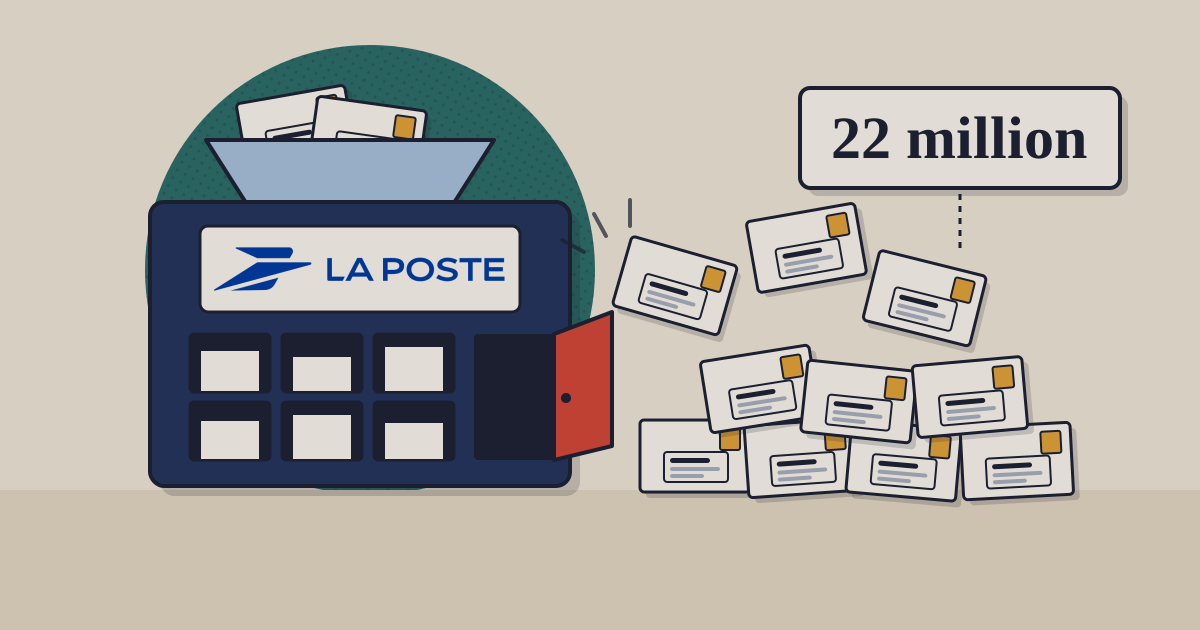
The names and postal addresses of 22 million people who received letters sent through Maileva, a La Poste subsidiary that prints and posts documents for businesses, were stolen in a cyberattack in mid-September. La Poste confirmed the theft to AFP on Saturday 14 November, nearly two months later, in a statement from Maileva’s management; bank details are not affected.2 The 22 million are not Maileva’s customers. They are the people its client companies and institutions wrote to, Maileva says in a notice on its website.1
22m
people whose name and postal address leaked
Maileva; La Poste to AFP
~1 in 3
of France’s 69.1 million residents, if all live in France
TechBag, from INSEE
180m
documents Maileva says it sent in 2024
Maileva
20,000
client organisations Maileva says it serves
Maileva
01Whose data, and what else was in the letters
Maileva belongs to Docaposte, La Poste’s digital arm. Companies send it payslips, registered letters, invoices and notices of shareholder meetings, and it prints and posts them.2 Its notice says it was hit by a “complex” attack in mid-September, found no data altered or destroyed, and began informing affected clients within days of identifying the incident. It has notified the CNIL, France’s data protection regulator, filed a complaint, and a judicial investigation is under way.1
The leak may reach beyond names and addresses. Maileva says the contents of the documents belong to the relationship between its clients and their recipients, and that clients were told so they could warn recipients about exposed data “whose nature is linked to the contents of the documents sent”.1 AFP, citing the specialist site Cyberattaque.org, reports that the recipients include tenants of social landlords and patients of medical laboratories, and that payment reminders for patients of Hôpital Foch in Suresnes, sent through a medical debt-collection firm that uses Maileva, were read, with invoice numbers, dates of care and amounts due.2
02What a recipient should expect
A recipient hears from the organisation that sent the letter, not from Maileva, since that client holds the relationship. The CNIL says it cannot confirm whether a person is in a leaked file; the organisation can. It advises against websites that offer to check.3
Sources
- Maileva, Cyberattaque de Maileva, ce qu’il faut savoir (notice on its homepage, in French) — undated notice, read 17 November 2026
- AFP, Une filiale de La Poste victime d’un vol de données massif, 22 millions de personnes concernées (in French, as syndicated by Fortuneo) — 14 November 2026, 21:46 CET
- CNIL, Fuite ou vol de données : comment savoir si cela vous concerne et que pouvez-vous faire ? (in French) — 18 March 2024
- INSEE Première 2087, Bilan démographique 2025 (in French) — 13 January 2026
Disclosure. TechBag is a software reseller: it earns when companies buy through it, including from vendors named here. The analysis is TechBag’s own; no vendor paid for or saw this piece before publication. Facts are labelled reported, TechBag count or our view.
Keep reading