SecurityThreats & vulnerabilitiesNote
Shonan Beauty Clinic’s operator lost 1.62m customers’ data, passwords unencrypted
SBC Medical Group’s filing of 18 November and Japanese notice of 19 November: what was taken from records back to 2004, a second break-in at a booking site, and what customers should change.

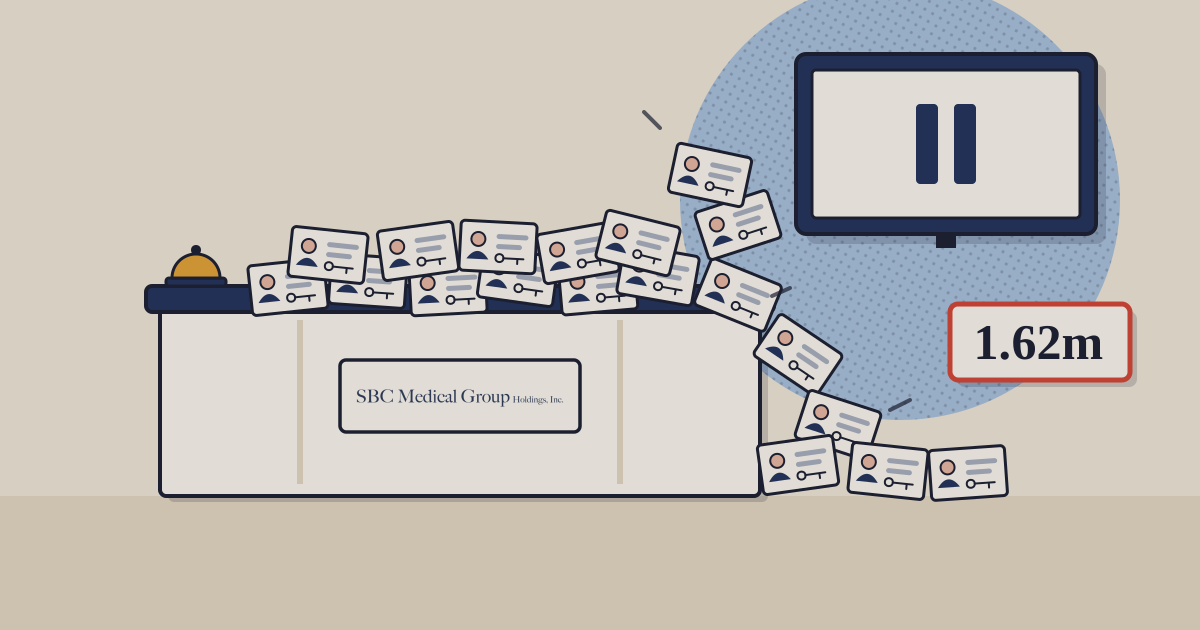
An attacker took names, phone numbers, email and home addresses, dates of birth and passwords for 1,624,000 customers of Shonan Beauty Clinic and the other clinics SBC Medical Group manages in Japan, from a database SBC runs, on 16 November. The records date from 2010 to 2023.1 In its Japanese notice the next day, SBC said those passwords had been stored without encryption at the time, and warned that they could be used to sign in to other services where customers had reused them.2
SBC Medical Group Holdings, listed on Nasdaq since September 2024, does not run the clinics itself: it provides management services to the medical corporations that do, and its Japanese subsidiary operated the website system that was breached.1 The notice lists 35 clinic brands, as named when customers used them, from Shonan Beauty Clinic and Shonan AGA Clinic to Shinjuku Kinshi (myopia) Clinic and Roppongi Ladies Clinic.2
01What was taken
Beyond the basic records, the attacker took 255,416 reservation requests made through advertising, affiliate and campaign pages (2007–2026), 217,769 messages sent through website inquiry forms (2004–2026), 15,007 reviews (2015–2018) and 4,513 treatment-monitor records with treatment descriptions and the file names of stored images, not the images. Fourteen inquiries included credit-card details; SBC says every one of those cards had expired or could no longer be charged.1 About 20,000 staff account records, with names, IDs and passwords, were also taken, and for 459 employees the bank, pension and tax papers they gave on joining.1
SBC gives no single total, and the categories overlap: the reservation and inquiry rows also hold some or all of the basic details, and the combination differs from person to person. Separately, it counts another 1,030,349 people in the first category whose stolen data was only a patient card number or an email address without a name, which cannot identify them without SBC’s other records.2 SBC has not found any theft of electronic medical records or of data in mySBC, its reservation site, and says clinical systems were outside the breached database.1
1.62m customers’ basic records are the largest of the categories SBC counted
People (staff: records) affected in each category SBC Medical Group disclosed, break-ins found on 16 November 2026; the categories overlap and are not added together
Source: SBC Medical Group Holdings, Form 8-K exhibit 99.1, 18 November 2026 · as of 18 November 2026 · Staff accounts are about 20,000 records; Tribeau is a separate break-in at a booking platform
02How it was found, and a second break-in
SBC’s monitoring flagged unusual activity on 16 November; it isolated the server, preserved the logs and reported the breach to Japan’s Personal Information Protection Commission the same day.1 Its notice says the attack came from overseas, late at night, and ran to about 770,000 attempts; how the attacker got in is still being investigated by outside specialists.2
The same day, the operator of Tribeau, an outside booking service, told SBC that someone had logged into the administrator accounts of 56 of its clinics there: 55 Shonan Beauty Clinic branches and Ritz Beauty Surgery’s Tokyo clinic. The logins came from many sources in Japan and abroad.2 They exposed reservations for 12,641 people (name in kana, phone number, age, requested treatment and free-text notes) and, for 6,804, the treatment received, its date and its fee. No email addresses, home addresses, card details or passwords were in that data. Tribeau has cancelled every clinic account’s password.1
The medical corporations have paused television and some other advertising for a limited period, and SBC expects fewer new patient inquiries while it lasts. It says it cannot yet estimate the cost; part may be covered by its Japanese subsidiary’s cyber insurance.1 SBC filed the news under Item 8.01, “Other Events”, of its 8-K.1
The Journal’s analysis of ARARA’s 81.3 million email addresses shows the same shape one level up: a service provider whose breach reached up to 380 client companies’ customers in Japan.
Sources
- SBC Medical Group Holdings, Form 8-K (Item 8.01) and exhibit 99.1: SBC Medical Group Reports Cybersecurity Incidents in Japan (SEC EDGAR) — 18 November 2026
- SBC Medical Group, SBCメディカルグループへの不正アクセス被害による個人情報流出に関するお詫びとお知らせ(第1報) (notice on unauthorised access and personal-data leak, first report; in Japanese) — 19 November 2026
Disclosure. TechBag is a software reseller: it earns when companies buy through it, including from vendors named here. The analysis is TechBag’s own; no vendor paid for or saw this piece before publication. Facts are labelled reported, TechBag count or our view.
Keep reading